
What Does Organism Mean?
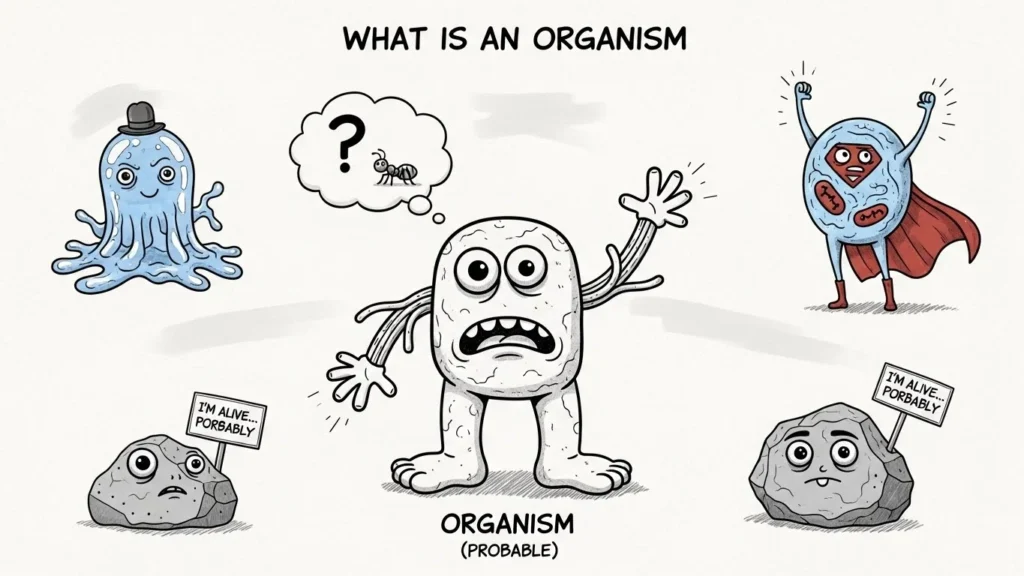
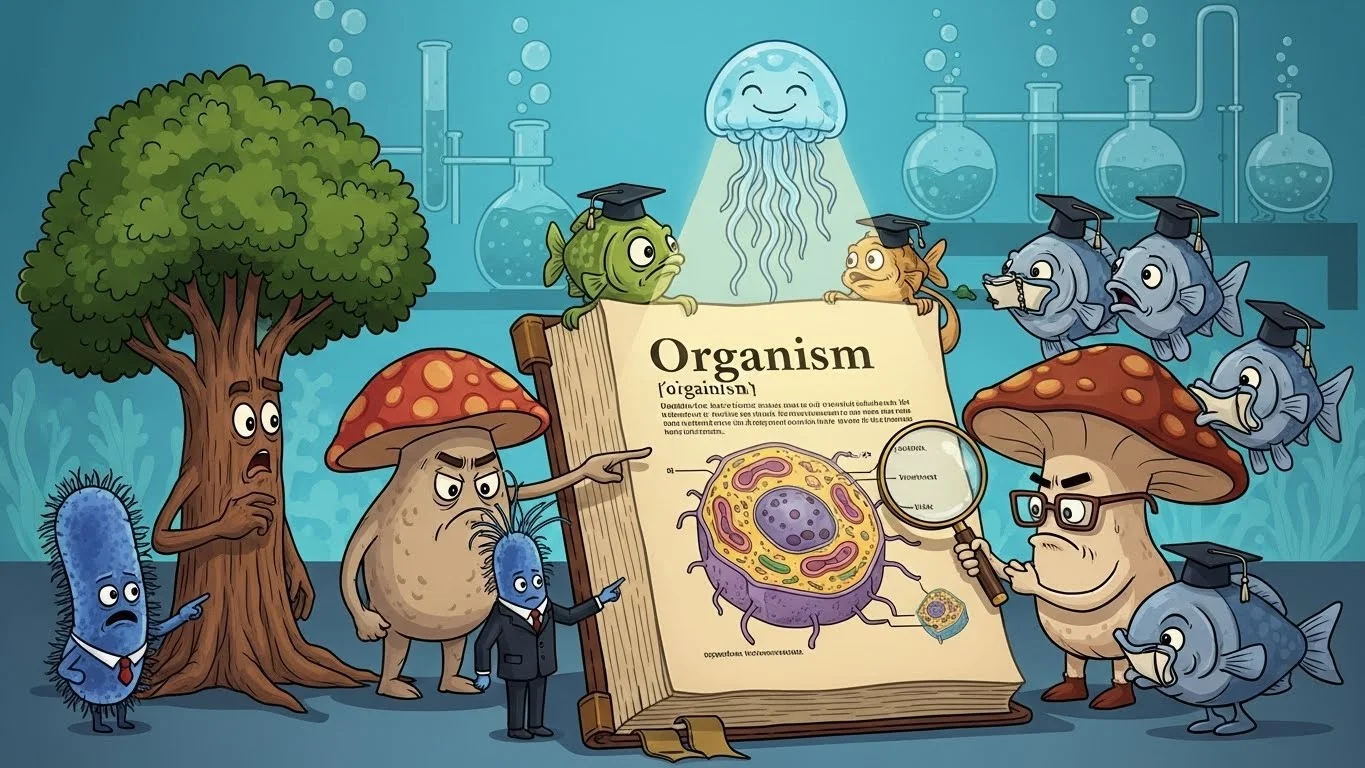
The organism meaning refers to any living thing that can carry out life processes on its own. This includes growing, using energy, responding to its environment, and reproducing. An organism can be as small as a bacterium or as large as a whale. If something is alive and functions as an individual life unit, it is considered an organism.
Simple Definition of Organism
In the simplest terms, an organism is any individual living thing. If it eats, grows, reacts to its surroundings, and eventually reproduces or dies, it fits the definition. Humans, plants, animals, fungi, and microorganisms are all organisms.
Organism Meaning in Biology
In biology, the organism meaning is more precise. It describes a living system that works as a complete unit. Biologists study organisms to understand how life functions, evolves, and survives. An organism may be made of one cell or many cells, but it always operates as a whole.
Organism Meaning in Daily Life
In everyday language, people often use the word organism when talking about living things in nature, food, or health. For example, people may refer to harmful organisms in water or helpful organisms in soil. In daily use, it usually means any living thing, especially one too small to see easily.
Living Things That Are Considered Organisms
All forms of life are organisms. This includes humans, animals, plants, insects, trees, algae, fungi, and bacteria. Whether something lives on land, in water, or inside another living being, it is still considered an organism if it carries out life processes.
Single-Celled Organisms Explained
Single-celled organisms are living things made of just one cell. Despite their small size, they perform all life functions within that single cell. Bacteria and amoebas are common examples. Understanding these organisms is important because they play major roles in health, digestion, and the environment.
Multicellular Organisms Explained
Multicellular organisms are made up of many cells that work together. Humans, animals, and plants fall into this category. Each group of cells has a specific job, such as breathing, thinking, or growing. Together, these cells keep the organism alive and functioning.
Are Humans Considered Organisms?
Yes, humans are organisms. Each person is a complex multicellular organism made up of trillions of cells. Humans meet all the requirements of life, including growth, movement, reproduction, and response to the environment.
Plants as Organisms
Plants are organisms even though they do not move the way animals do. They grow, respond to light, use energy from the sun, and reproduce. Trees, flowers, grass, and crops are all examples of plant organisms that support life on Earth.
Animals as Organisms
Animals are organisms that usually move freely and rely on other organisms for food. From tiny insects to large mammals, all animals are living organisms with specialized systems that help them survive and reproduce.
Microorganisms and Their Role as Organisms
Microorganisms are tiny organisms that often cannot be seen without a microscope. These include bacteria, viruses, and some fungi. While some microorganisms cause disease, many are helpful and necessary for digestion, medicine, and environmental balance.
Organism Meaning in Ecology
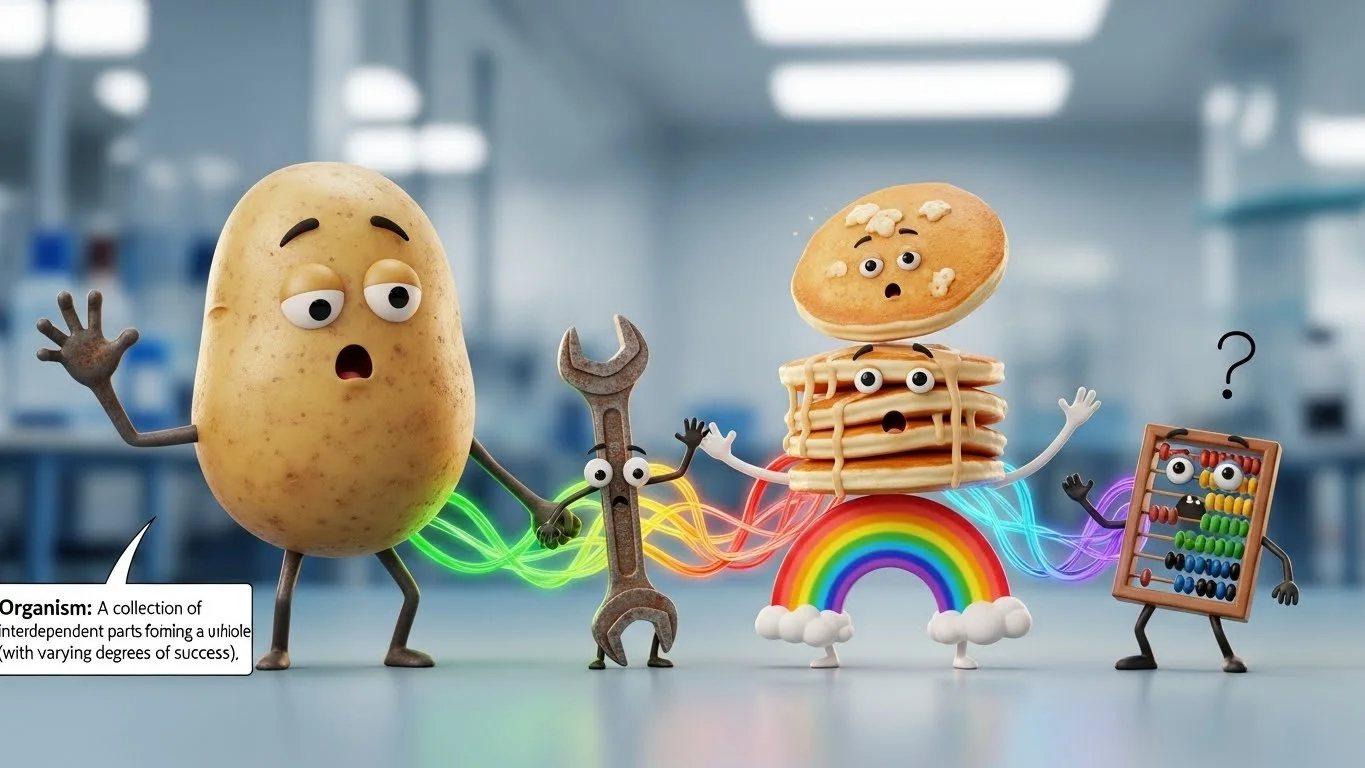
In ecology, the organism meaning focuses on how living things interact with their environment. An organism depends on food, water, shelter, and other organisms to survive. Studying organisms helps scientists understand ecosystems and protect natural habitats.
Organism Meaning in Health and Medicine
In health and medicine, the term organism often refers to bacteria, viruses, or parasites that affect the human body. Doctors may talk about harmful organisms causing infections or beneficial organisms living in the gut and supporting digestion.
Organism vs Living Being
The terms organism and living being are closely related. However, organism is more scientific and specific. Living being is commonly used in casual speech, while organism is used in education, research, and medical fields to describe life in a structured way.
Organism vs Cell
A cell is the basic unit of life, but not all cells are organisms. Some organisms are made of only one cell, while others have many cells. An organism is the complete living entity, while a cell is just one part of it.
Organism vs Species
An organism is a single living individual, while a species is a group of similar organisms that can reproduce together. For example, one dog is an organism, but all dogs together belong to the same species.
Common Misunderstandings About Organisms
Many people think organisms only refer to tiny germs or bacteria. This is incorrect. While microorganisms are organisms, so are humans, animals, and plants. Another misunderstanding is that viruses are always organisms, which is debated because viruses cannot survive on their own.
Why Understanding Organism Meaning Is Important
Understanding the organism meaning helps people make sense of science, health information, and environmental issues. It improves basic biological knowledge and helps individuals understand how life works and how different living things are connected.
Modern Usage of the Word Organism
In modern usage, the word organism appears in discussions about genetics, artificial life, environmental protection, and food safety. As science advances, the term is used more often in everyday conversations, especially in education and media.
How Children Learn About Organisms
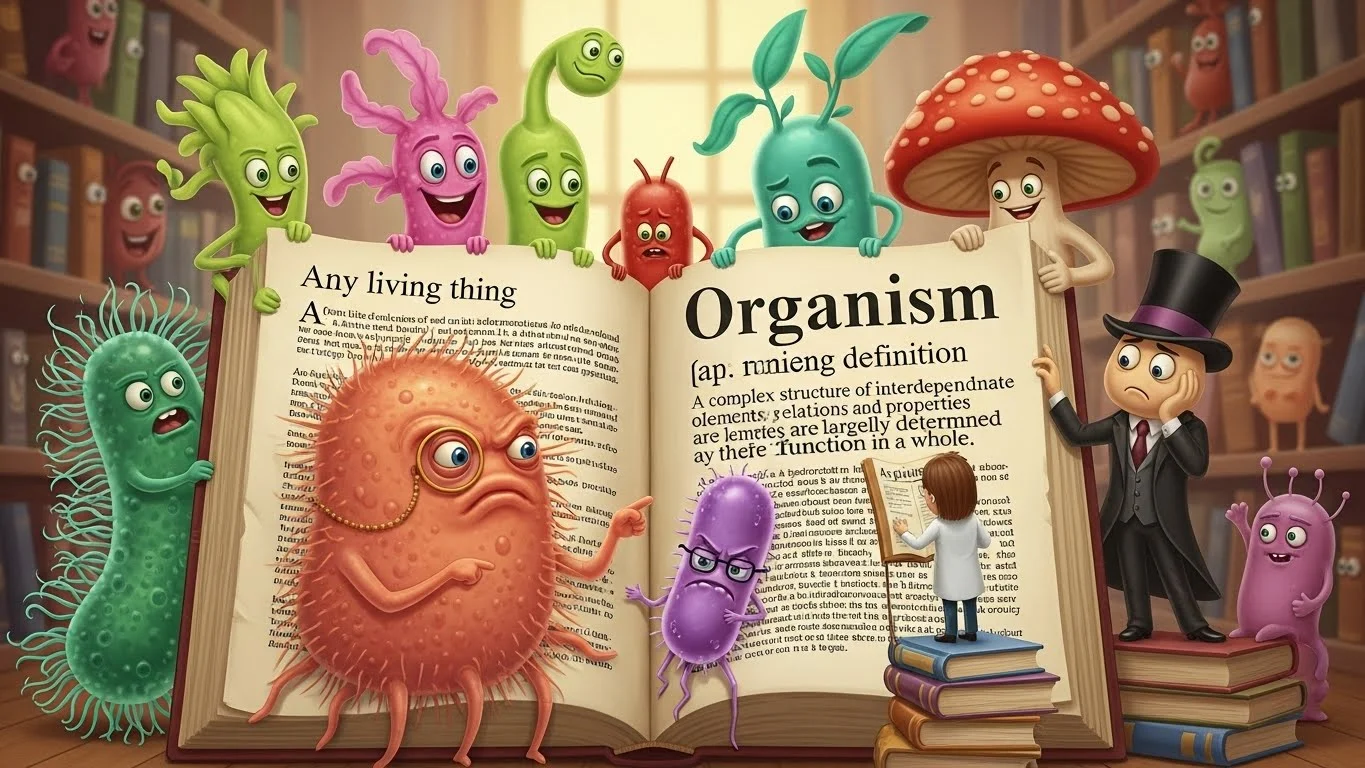
Children usually learn the organism meaning early in school through plants, animals, and simple experiments. This basic understanding builds a foundation for more advanced topics like biology, ecology, and health later in life.
Organism Meaning in Simple Words
In simple words, an organism is any living thing that can live on its own. If it grows, uses energy, and responds to its surroundings, it is an organism. This simple idea applies to all forms of life.