
What does job outlook mean
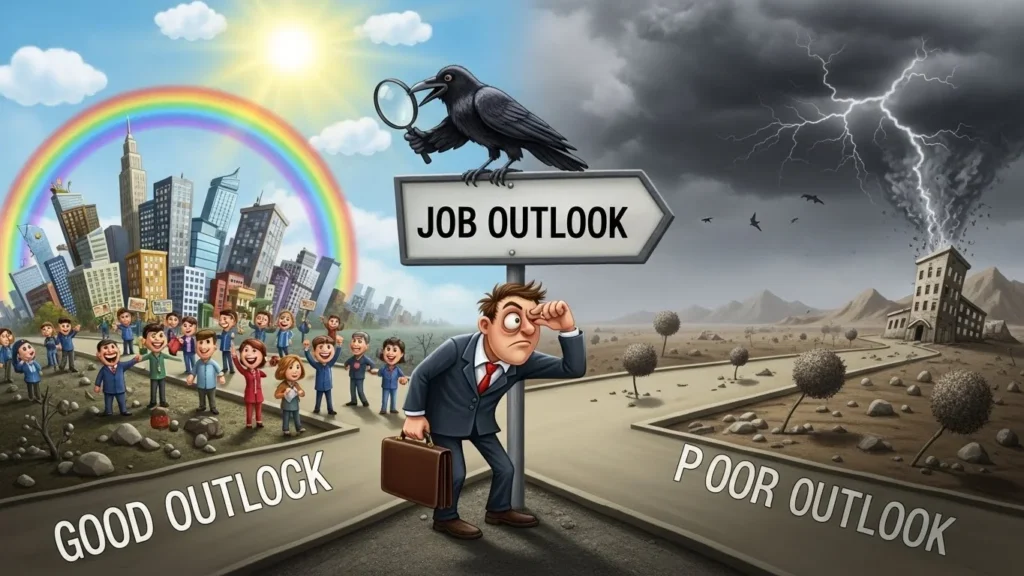
Job outlook refers to how a job or career is expected to grow, decline, or stay the same in the future. It predicts whether there will be more jobs, fewer jobs, or stable demand for a specific role over time.
Simple definition of job outlook
In simple terms, job outlook means the future demand for a job. It tells you if employers are likely to hire more people in that role or reduce hiring.
Job outlook in career planning
When planning a career, job outlook helps you decide whether a job is worth pursuing. A strong outlook suggests better chances of employment, while a weak outlook may mean more competition or fewer opportunities.
Job outlook vs job market
Job outlook focuses on the future of a specific job. The job market describes current hiring conditions overall. A job can have a good outlook but still be hard to get right now, or the opposite.
Why job outlook is important
Understanding job outlook helps you:
Choose stable careers
Avoid shrinking industries
Plan education and training
Reduce long-term career risk
It gives you a realistic view beyond job titles and salaries.
Job outlook in daily life
People use job outlook when choosing college majors, switching careers, or deciding whether to learn new skills. Parents, counselors, and employers also rely on it for guidance.
How job outlook is measured
Job outlook is usually measured using:
Employment growth rates
Industry trends
Technology changes
Economic data
Retirement and replacement needs
Government labor departments often publish this data.
Short-term vs long-term job outlook
Short-term outlook looks at the next 1–3 years. Long-term outlook usually covers 5–10 years or more. Long-term outlook is more useful for students and career planners.
Positive job outlook explained
A positive job outlook means the number of jobs is expected to grow. This often happens in healthcare, technology, renewable energy, and skilled trades.
Negative job outlook explained
A negative job outlook means job numbers are expected to decline. Automation, outsourcing, or reduced demand are common causes.
Average or stable job outlook
A stable job outlook means employment levels are expected to stay about the same. These jobs can still be good choices, especially if they offer security or strong wages.
Job outlook and salary expectations
A strong job outlook doesn’t always mean high pay, but growing demand can lead to better wages over time. Weak outlook jobs may face wage pressure.
Job outlook by industry
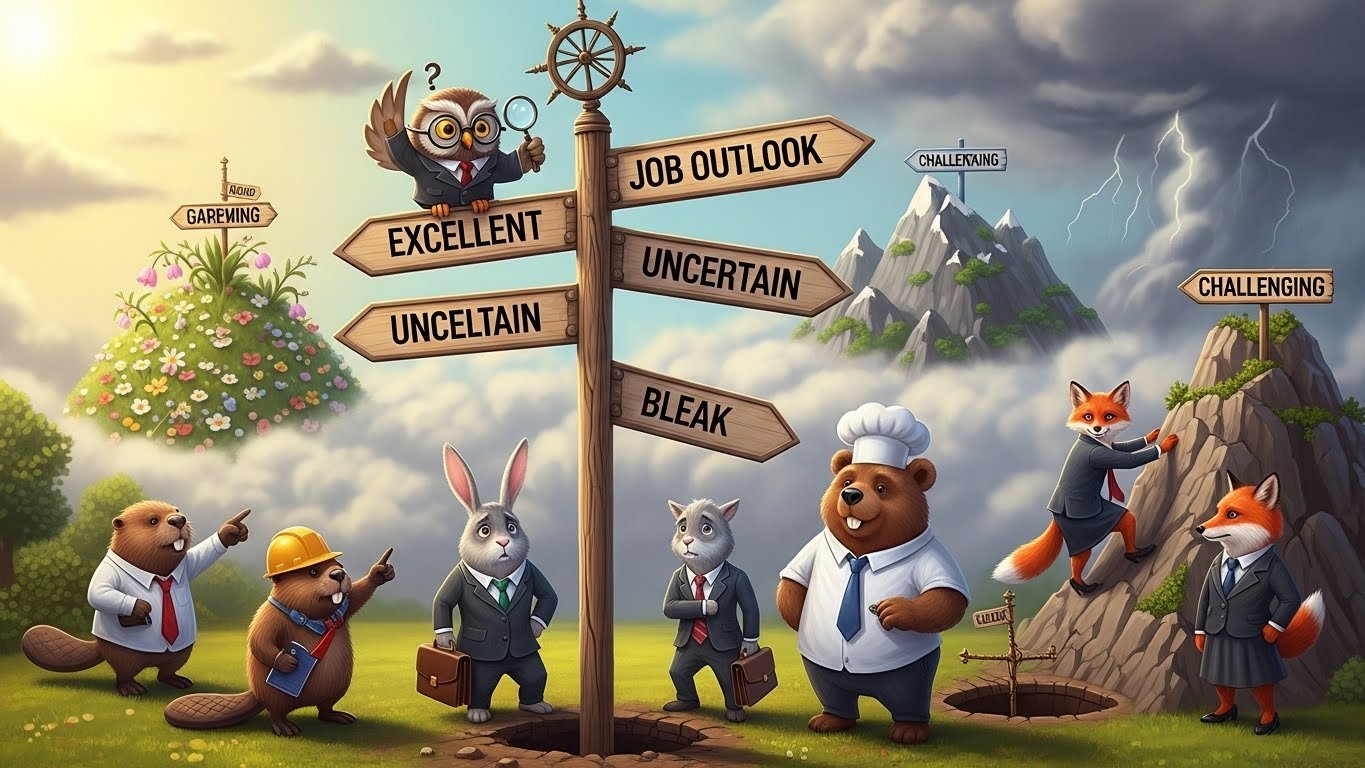
Job outlook varies by industry. Technology, healthcare, and logistics often grow faster, while some manufacturing or routine office roles may shrink.
Job outlook and education choices
Students use job outlook data to decide what degrees or certifications to pursue. Choosing a field with strong outlook can improve job security after graduation.
Job outlook for students
For students, job outlook helps answer one key question: Will there be jobs when I graduate? It’s especially useful when choosing majors or training programs.
Job outlook for career changers
Career changers use job outlook to avoid moving into declining fields. It helps identify growing industries where existing skills can transfer.
Common misunderstandings about job outlook
Many people think job outlook guarantees a job. It doesn’t. It only shows trends. Location, experience, and skills still matter a lot.
Where to find job outlook information
Reliable sources include:
Government labor websites
Career planning platforms
Industry reports
Educational institutions
These sources update outlook data regularly.

Job outlook in 2026 and beyond
In 2025, job outlook is heavily influenced by technology, AI, remote work, and sustainability. Jobs requiring human skills, creativity, and problem-solving show strong growth.
How to use job outlook wisely
Use job outlook as a guide, not a rule. Combine it with your interests, strengths, and lifestyle goals to make balanced career decisions.