
What the Hierophant Is in Tarot
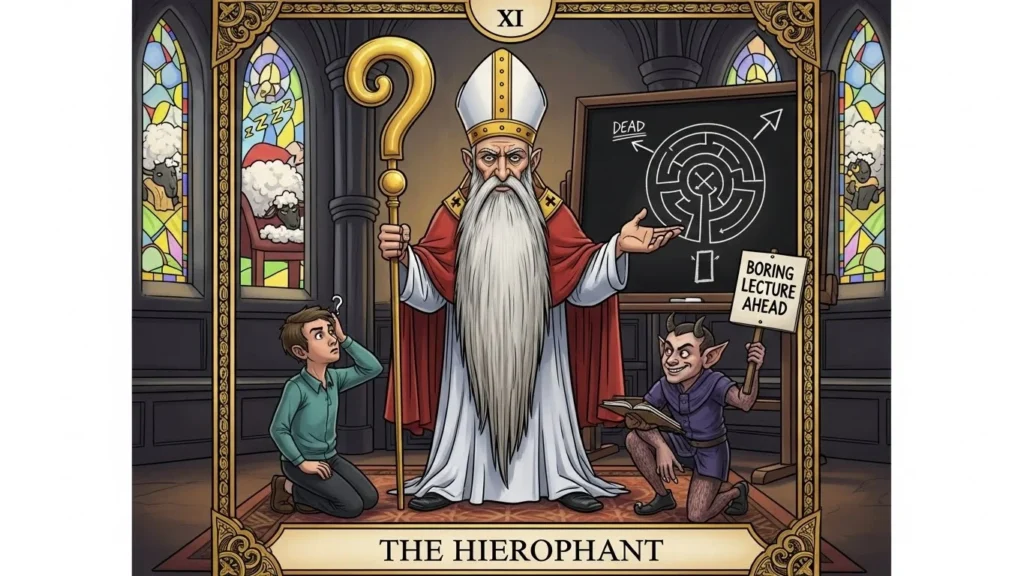
In tarot, the Hierophant is the fifth card of the Major Arcana. Major Arcana cards represent major life themes and long-term influences. The Hierophant focuses on shared values, belief systems, and structured guidance rather than personal ego or emotion.
The Core Meaning of the Hierophant
At its core, the Hierophant meaning is about tradition, learning, and moral guidance. It represents established systems such as religion, education, cultural rules, and social norms. The card asks you to respect wisdom that has been passed down over time.
The Hierophant as a Symbol of Tradition
The Hierophant often appears when tradition matters. This can include religious practices, family customs, or long-standing rules in society. The card reminds you that traditions exist for a reason, even if they sometimes need to be questioned.
Spiritual Meaning of the Hierophant
Spiritually, the Hierophant represents a spiritual teacher or guide. It encourages learning through structured spiritual paths rather than personal experimentation. This could mean studying sacred texts, following rituals, or learning from a mentor.
The Hierophant in Daily Life
In everyday life, the Hierophant can show up as institutions like schools, churches, workplaces, or governments. It reflects situations where rules, systems, and expectations guide behavior rather than personal freedom.
Psychological Meaning of the Hierophant
Psychologically, the Hierophant represents internalized beliefs. These are ideas you learned from parents, teachers, or society. The card encourages you to examine which beliefs still serve you and which ones may need updating.
The Hierophant and Moral Values
The Hierophant meaning is closely tied to ethics and morality. It reflects what is considered “right” or “acceptable” within a group or culture. This card may appear when you are facing a moral decision influenced by tradition or authority.
Upright Hierophant Meaning
When upright, the Hierophant suggests stability, guidance, and trust in established systems. It can mean seeking advice from a teacher, following proven methods, or committing to traditional paths such as marriage or formal education.
Reversed Hierophant Meaning
Reversed, the Hierophant often represents rebellion against tradition. It may suggest questioning authority, breaking free from outdated beliefs, or choosing an unconventional path. In some cases, it can warn against blind rebellion without wisdom.
The Hierophant in Love and Relationships
In love readings, the Hierophant often points to commitment and traditional relationships. This could mean marriage, shared values, or long-term planning. Reversed, it may suggest non-traditional relationships or conflicts over beliefs.
The Hierophant in Career and Work
Career-wise, the Hierophant represents structured environments such as corporations, institutions, or regulated professions. It can suggest success through following rules, certifications, or mentorship. Reversed, it may point to dissatisfaction with rigid work systems.
The Hierophant in Money and Finances
For finances, the Hierophant encourages conservative and traditional approaches. This includes saving, long-term investments, and trusted financial advice. It discourages risky or impulsive decisions.
The Hierophant as a Teacher Archetype
The Hierophant embodies the teacher archetype. This does not always mean a literal teacher. It can be anyone who passes on wisdom, values, or cultural knowledge, including elders or community leaders.
The Hierophant and Social Expectations
This card highlights social roles and expectations. It can reflect pressure to conform, follow societal norms, or meet family expectations. Understanding this helps you decide whether to comply or redefine those expectations.
The Hierophant in Modern Times
In modern life, the Hierophant can represent online education, professional certifications, or belief systems shaped by media and culture. The meaning has expanded beyond religion to include any shared system of understanding.
Common Misunderstandings About the Hierophant
Many people think the Hierophant is always negative or restrictive. In reality, it can provide stability, wisdom, and support. The problem arises only when tradition is followed blindly without reflection.
When the Hierophant Appears in a Reading
When this card appears, it often asks you to seek guidance, respect structure, or evaluate your beliefs. It may also indicate a lesson learned through formal means rather than personal trial and error.
The Hierophant Compared to Other Tarot Cards
Unlike the High Priestess, who represents inner wisdom, the Hierophant focuses on external teachings. Compared to the Fool, which symbolizes freedom, the Hierophant emphasizes structure and order.

Lessons the Hierophant Teaches
The main lesson of the Hierophant is balance. Respect tradition, but do not let it limit growth. Learn from the past while allowing space for change and personal truth.
How to Apply the Hierophant Meaning to Your Life
You can apply the Hierophant meaning by seeking mentors, studying trusted systems, or reflecting on your beliefs. Ask yourself whether your current values come from wisdom or habit.