
What Is the Meaning of Species?
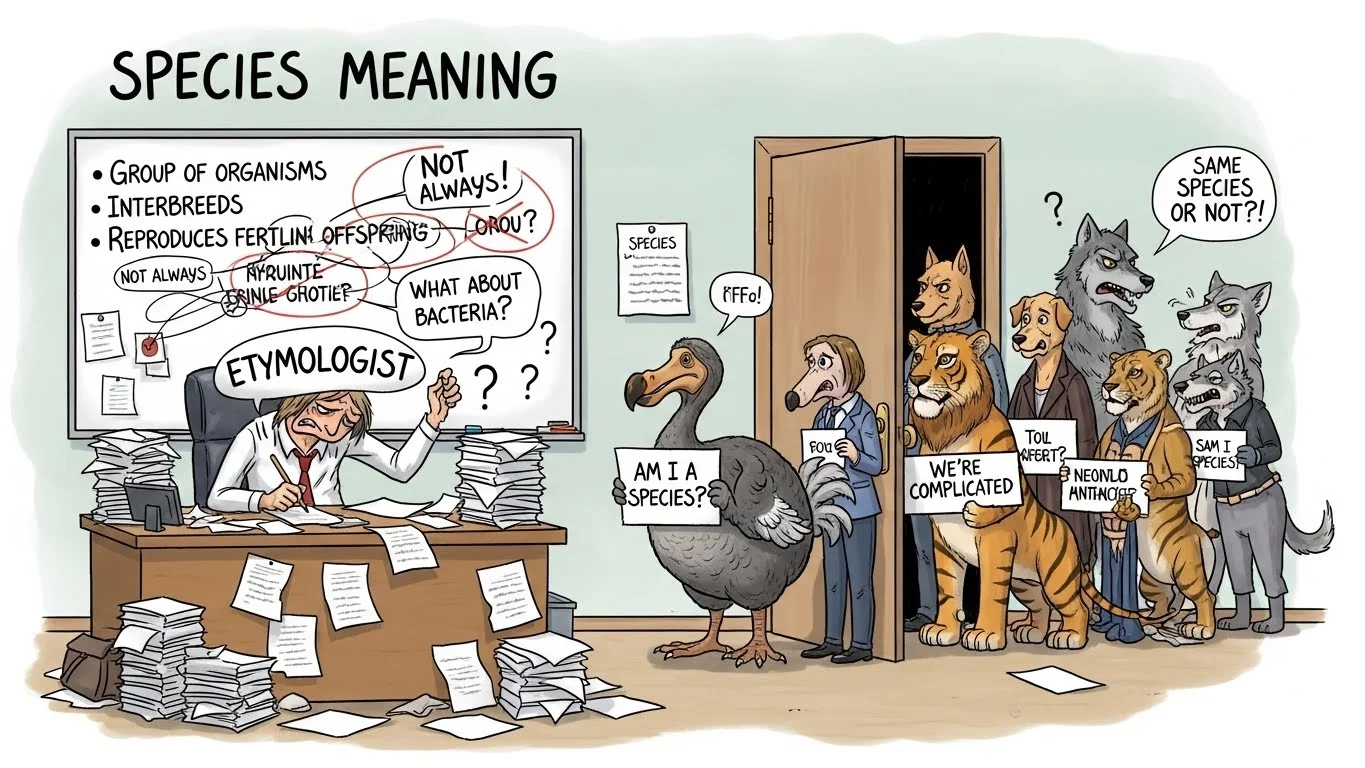
The species meaning refers to a group of living organisms that share similar characteristics and can reproduce naturally with one another. Members of the same species are closely related and produce offspring that can also reproduce.
The Basic Dictionary Meaning of Species
In dictionaries, species is defined as a distinct group of plants or animals that are similar in appearance and behavior. It is a singular and plural word, meaning “species” can refer to one or many.
Species Meaning in Simple Words
In very simple terms, a species is a type of living thing. Dogs are one species, cats are another, and humans are their own species.
Species Meaning in Biology
In biology, species is a fundamental classification. Scientists define a species as organisms that can mate with each other and produce fertile offspring under natural conditions.
Why Species Classification Matters
Understanding species helps scientists:
Study evolution
Protect endangered life
Organize biodiversity
Understand ecosystems
Species Meaning in Daily Life
In everyday language, people use species to mean a kind or type of animal, plant, or organism.
Example:
This species of bird migrates every winter.
Species Meaning in Plants
Plants also belong to species. A plant species includes all plants with similar structure, genetics, and reproduction methods.
Species Meaning in Animals
Animal species include mammals, birds, reptiles, fish, and insects. Each species has unique traits that separate it from others.
Species Meaning for Humans
Humans belong to the species Homo sapiens. This means all humans, regardless of race or culture, belong to the same species.
Species vs Genus Explained Simply
Species: the most specific classification
Genus: a group of closely related species
For example, lions and tigers are different species but belong to the same genus.
Species Meaning in Evolution
In evolution, species change over time. New species can form when populations become isolated and develop different traits.
Species Meaning in Conservation
Species classification is crucial for conservation. Endangered species are protected to prevent extinction and preserve biodiversity.
Species Meaning in Science and Research
Scientists use species to collect data, compare organisms, and track changes in ecosystems and climate impact.
Modern Usage of the Word Species
Today, species is used not only in science but also in discussions about:
Environmental protection
Climate change
Wildlife preservation
Genetic research
Common Misunderstandings About Species
Many people think:
Species only apply to animals (false)
Humans are separate from nature (false)
Different races are different species (false)
Is Species the Same as Breed?
No.
Species is a natural classification
Breed is a human-made category within a species
All dog breeds are the same species.
Species Meaning in Education
Students learn species early in school to understand life science, classification, and environmental awareness.
Species Meaning in Law and Policy
Some species are legally protected. Laws are created to prevent harm to endangered or threatened species.
Species as Singular and Plural
The word species does not change form:
One species
Multiple species
Why Species Meaning Is Important Today
Understanding species helps people respect nature, support conservation, and make informed decisions about the environment.
How to Use Species in a Sentence
Examples:
This species lives in tropical forests.
Scientists discovered a new species.
Humans are one species worldwide.