
What Is Transubstantiation?
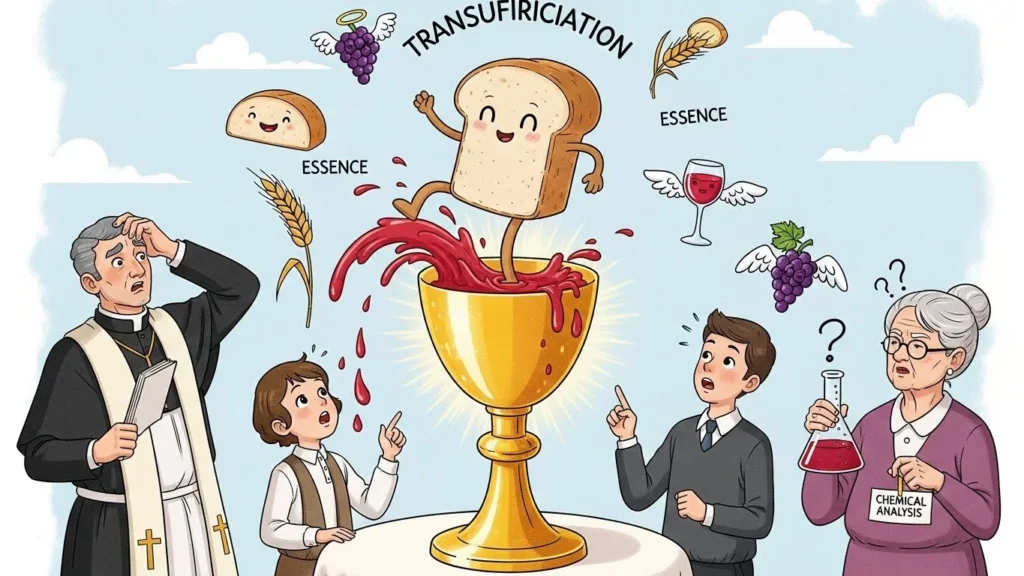
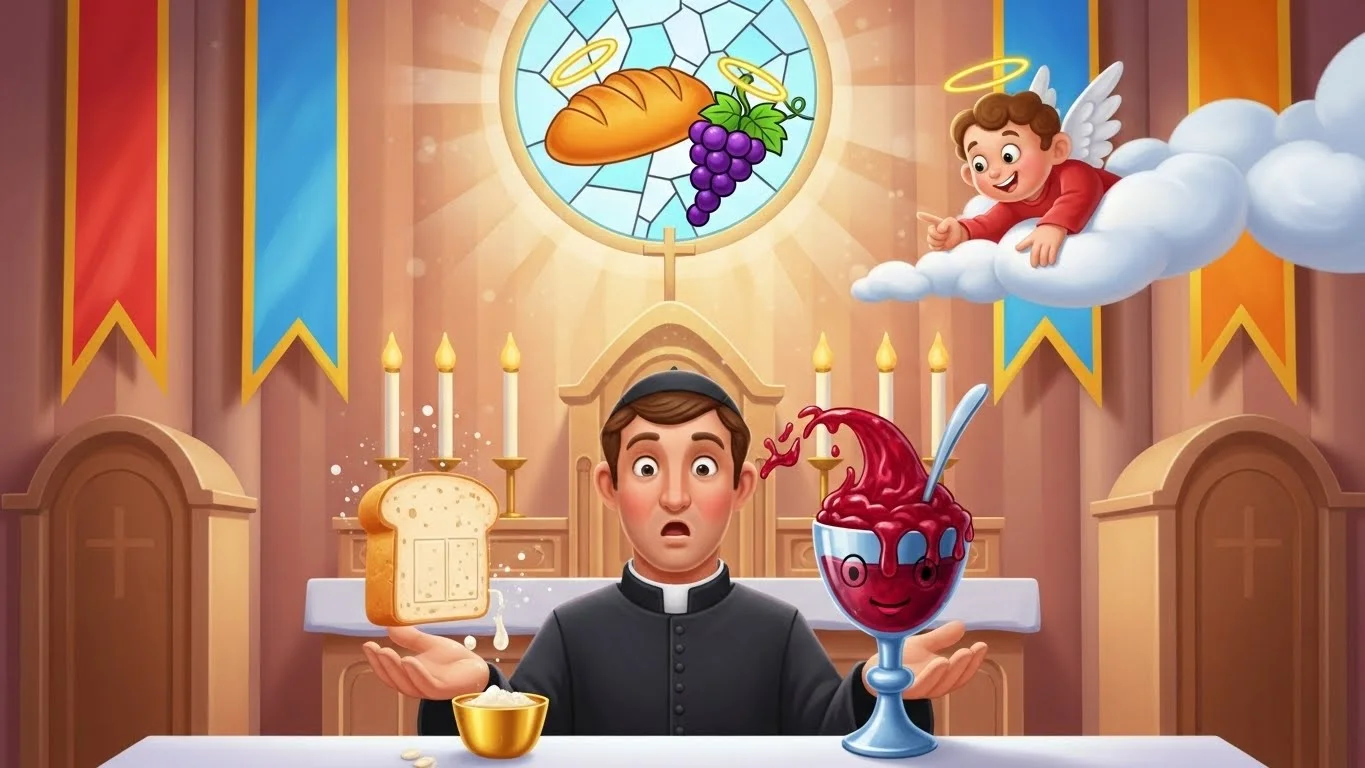
Transubstantiation is a religious concept, especially in Christianity, where bread and wine are believed to become the body and blood of Christ during the Eucharist or Holy Communion. The outer appearance stays the same, but the substance changes.
Origin of the Word
The word comes from Latin: “trans” meaning “across” or “change,” and “substantia” meaning “substance.” So, it literally means “change of substance.”
Historical Background
The idea has roots in early Christian theology and became formalized in the Middle Ages. It was officially defined by the Catholic Church at the Fourth Lateran Council in 1215.
Transubstantiation in the Bible
Certain passages in the Bible, especially the words of Jesus at the Last Supper—“This is my body… This is my blood”—are interpreted by the Catholic Church as the basis for transubstantiation.
Difference Between Transubstantiation and Symbolism
Some Christian denominations see the bread and wine as symbolic rather than literal. Transubstantiation is about a real, spiritual change, not just a symbol.
How It Works in the Mass
During the Mass, the priest consecrates the bread and wine. According to the belief, this ritual transforms them into the body and blood of Christ while keeping their appearance unchanged.
Philosophical Explanation
Philosophers like Thomas Aquinas explained transubstantiation using the concept of “substance” versus “accidents.” The substance changes, but the accidents (appearance, taste, smell) stay the same.
Common Misunderstandings
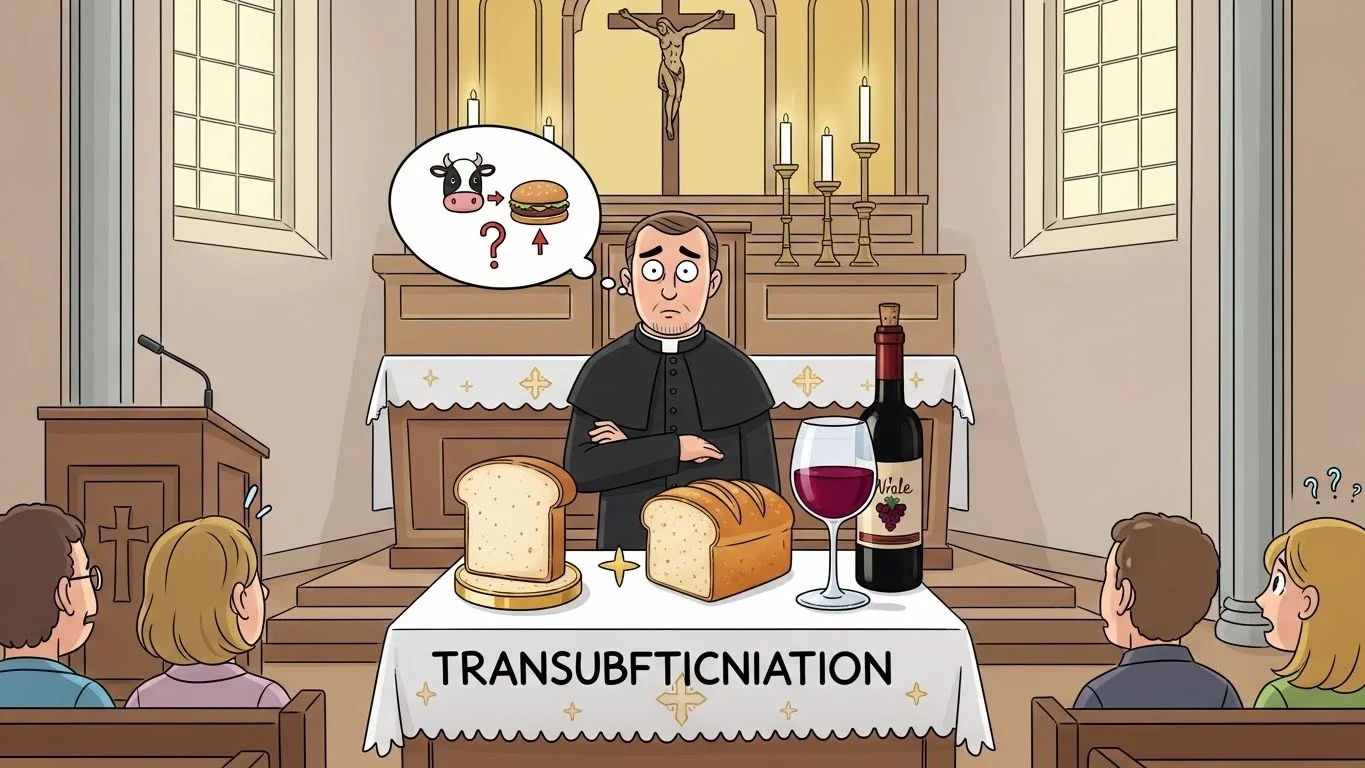
Many people think transubstantiation means the bread physically turns into flesh. Actually, it’s considered a spiritual transformation, not a physical one visible to the eye.
Modern Catholic Teaching
Today, the Catholic Church continues to teach transubstantiation as a central part of faith. It’s viewed as a mystery that cannot be fully understood but is experienced through belief and worship.
Transubstantiation in Other Denominations
Protestant denominations like Lutherans or Anglicans interpret the Eucharist differently. Some believe in a symbolic presence rather than a literal change.
Daily Life Relevance
Even outside church, understanding transubstantiation helps explain why certain rituals are meaningful for believers. It’s about faith, tradition, and spiritual connection.
Misuse of the Term
Sometimes, people use “transubstantiation” incorrectly to mean any kind of change or transformation. Its proper use is strictly religious.
Cultural References
The term occasionally appears in literature, movies, or academic discussions to illustrate deep transformation or mystery, but always with a nod to its religious origin.
Simplifying for Beginners
Think of transubstantiation as a hidden transformation: what you see is the same, but its meaning or essence has changed according to belief.
Symbolic vs. Literal Debate
The debate between literal and symbolic interpretation has shaped centuries of Christian thought and even caused major historical conflicts.
Role in Spiritual Life
For believers, transubstantiation is more than theology. It’s a source of comfort, guidance, and a way to feel closer to the divine.
Modern Discussions
Modern theologians sometimes discuss it in relation to science and philosophy, exploring how faith and reason interact without diminishing spiritual significance.
How to Explain It to Children
A simple way: “The bread and wine look the same, but in church, we believe they become something very special inside.”
Common Questions People Ask
Many wonder how something can change without changing appearance. The answer lies in faith—believers see substance beyond physical senses.
Controversies Over the Concept
Throughout history, transubstantiation has been controversial, leading to debates and even wars between religious groups with different interpretations.

Why It Matters Today
Even in modern society, understanding transubstantiation helps respect religious traditions and conversations about faith, ritual, and meaning.
Transubstantiation in Everyday Language
Rarely, people use it metaphorically to describe a profound change in character or situation, but the true meaning remains religious.