
What Does Attenuation Mean?
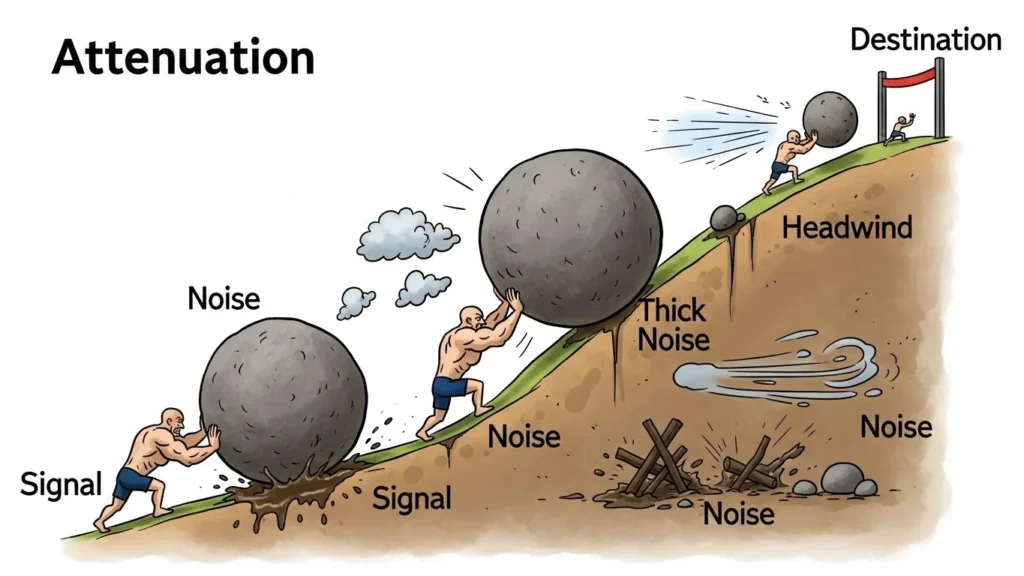
Attenuation means a reduction in strength, intensity, or effect of something.
When something is attenuated, it becomes weaker, smaller, or less powerful than it was before.
Attenuation Meaning in Simple Terms
In the simplest words, attenuation means weakening or reducing.
If something is too strong and then becomes less strong, attenuation has occurred.
Attenuation in Everyday Language
In daily life, attenuation can describe things like:
Sound becoming quieter as you move away
Light becoming dimmer through fog
Pain becoming less intense over time
Even if people don’t use the word often, the idea is very common.
The Origin of the Word Attenuation
Attenuation comes from the Latin word attenuare, which means “to make thin” or “to weaken.”
Over time, the meaning evolved to describe any process that reduces strength or intensity.
Attenuation Meaning in Science
In science, attenuation refers to the loss of energy or strength as something moves through a medium.
This applies to:
Sound waves
Light waves
Radiation
Signals
The farther or more obstacles involved, the more attenuation occurs.
Attenuation in Physics Explained Simply
In physics, attenuation describes how waves lose power as they travel.
For example:
Sound waves lose energy in air
Light waves weaken when passing through water or glass
This loss of energy is called attenuation.
Attenuation Meaning in Medicine
In medicine, attenuation often refers to a decrease in severity or intensity.
Examples include:
Reduced symptoms of a disease
Weakened viruses used in vaccines
Changes seen in medical imaging like CT scans
In medical contexts, attenuation is usually measured and carefully analyzed.
Attenuation in Medical Imaging
In CT scans, attenuation describes how much X-rays are absorbed by different tissues.
Bone has high attenuation
Soft tissue has moderate attenuation
Air has low attenuation
Doctors use attenuation values to identify health conditions.
Attenuation Meaning in Biology
In biology, attenuation can describe weakened microorganisms, especially viruses or bacteria.
For example, attenuated viruses are used in some vaccines because they trigger immunity without causing severe illness.
Attenuation in Telecommunications
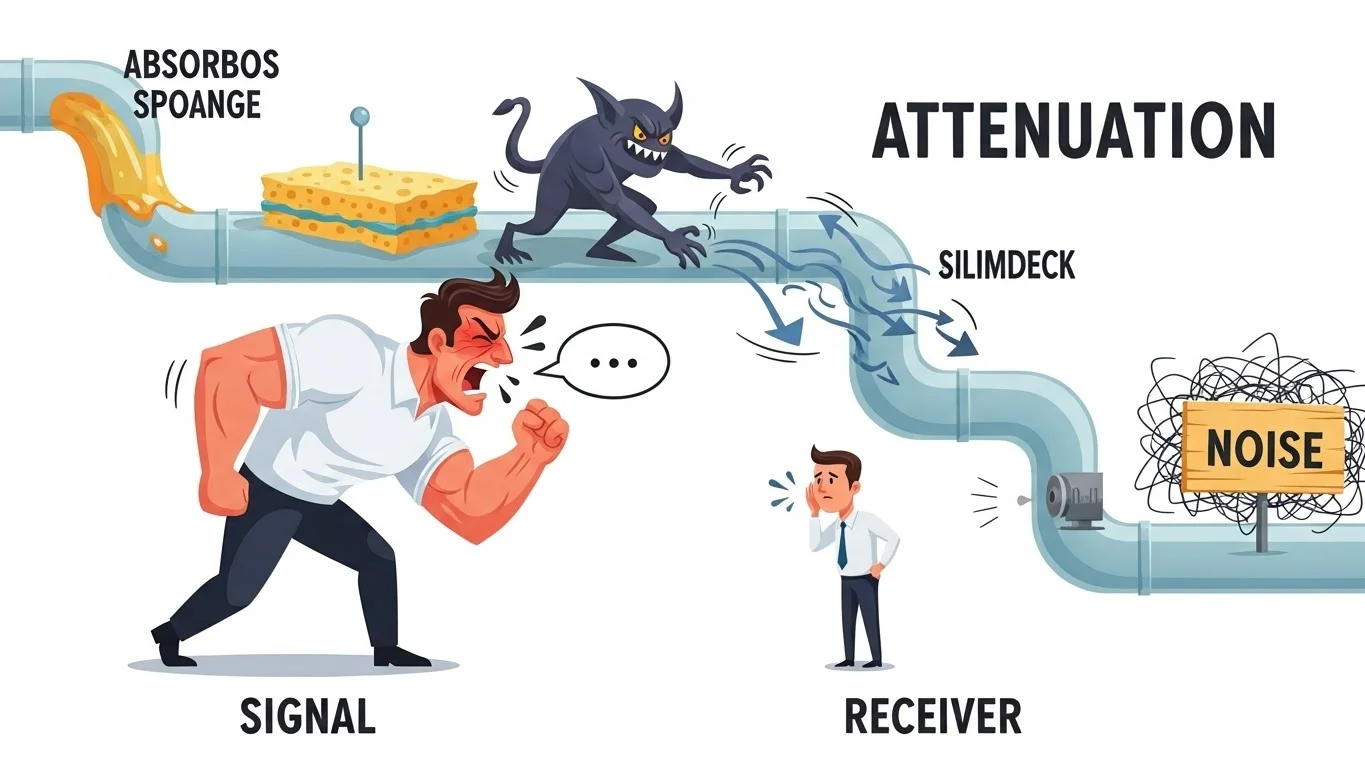
In telecommunications, attenuation means signal loss.
As data travels through cables or wireless signals, its strength decreases due to distance, interference, or materials. This reduction is called attenuation.
Attenuation Meaning in Audio and Sound
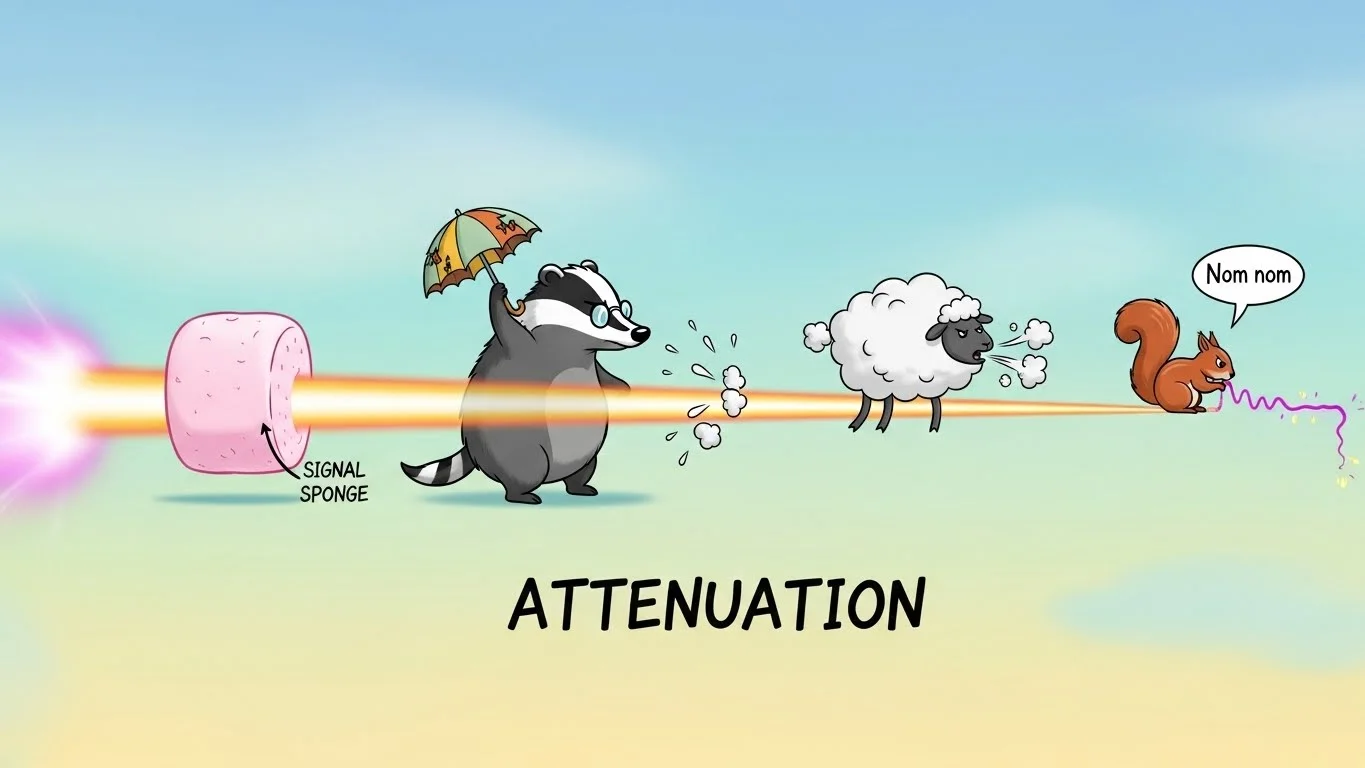
In audio, attenuation refers to reducing sound volume or intensity.
Examples include:
Turning down a microphone
Soundproofing a room
Noise-canceling materials absorbing sound
Attenuation in Environmental Science
In environmental studies, attenuation can describe natural reduction of pollution or contaminants.
For instance:
Chemicals breaking down in soil
Pollutants becoming less concentrated over time
This is often called natural attenuation.
Attenuation vs Reduction: Are They the Same?
Attenuation and reduction are similar, but not identical.
Reduction is general.
Attenuation often implies a gradual or technical weakening process.
Attenuation is more precise and commonly used in scientific contexts.
Attenuation vs Amplification
Amplification is the opposite of attenuation.
Attenuation makes something weaker
Amplification makes something stronger
Both terms are often used together in physics, sound engineering, and electronics.
Common Examples of Attenuation
Some everyday examples include:
Sunglasses attenuating sunlight
Walls attenuating noise
Distance attenuating radio signals
Time attenuating pain
Common Misunderstandings About Attenuation
Many people think attenuation means:
Complete removal
Total disappearance
This is incorrect. Attenuation means reduction, not elimination.
Is Attenuation Always Intentional?
No. Attenuation can be:
Natural (sound fading over distance)
Accidental (signal loss due to poor wiring)
Intentional (noise reduction, medical treatments)
Why Attenuation Is Important
Attenuation helps:
Improve safety (radiation shielding)
Improve comfort (noise reduction)
Improve accuracy (medical diagnostics)
Control systems (signal processing)
Understanding attenuation helps professionals manage strength and exposure.
Attenuation Meaning in Technology Today
In 2025, attenuation is especially important in:
Wireless networks
Medical imaging
Audio engineering
Environmental protection
As technology advances, controlling attenuation becomes even more critical.
How Attenuation Is Measured
Attenuation is measured using different units depending on context, such as:
Decibels (dB) for sound and signals
Hounsfield units (HU) in CT scans
Percentage or ratios in biology
Attenuation Meaning in Plain English Summary
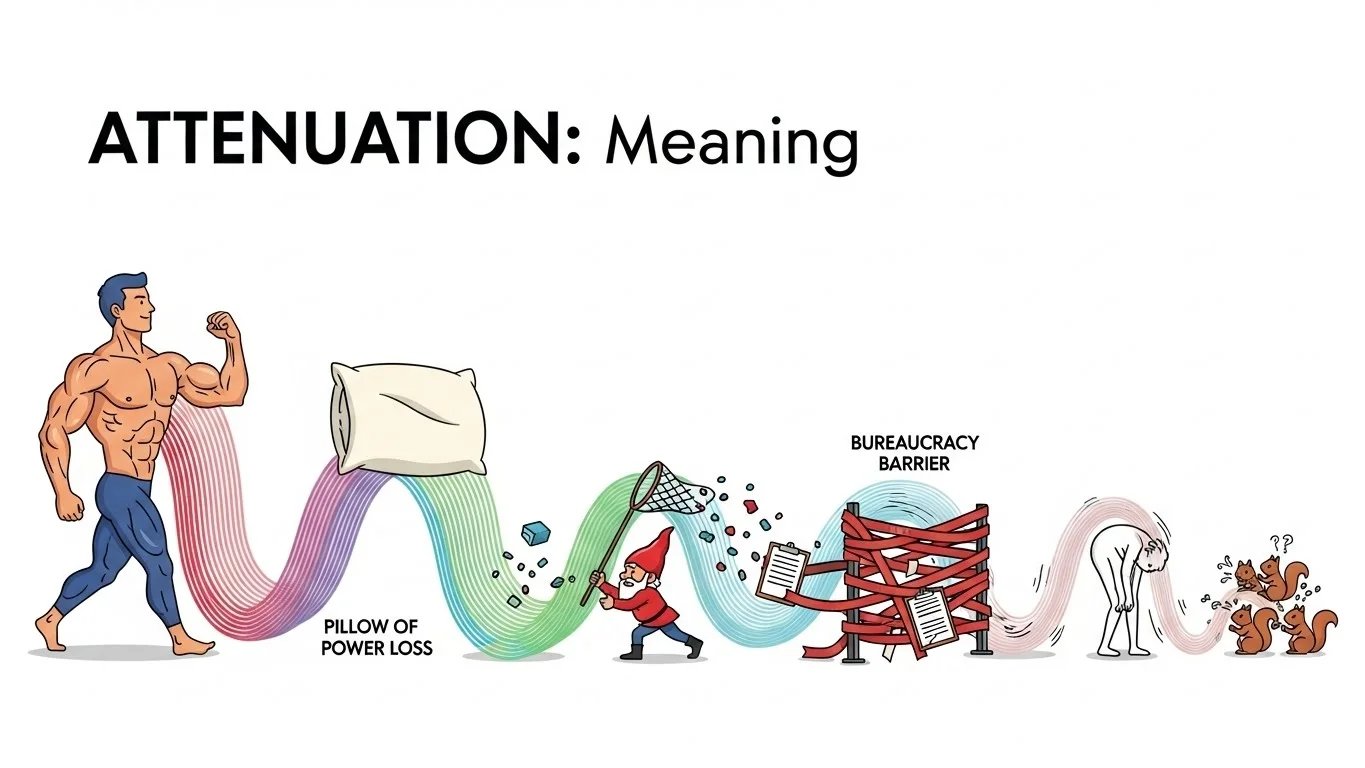
In plain English, attenuation means something becoming weaker over time, distance, or exposure.
It applies to sound, light, signals, illness, and even emotions.