

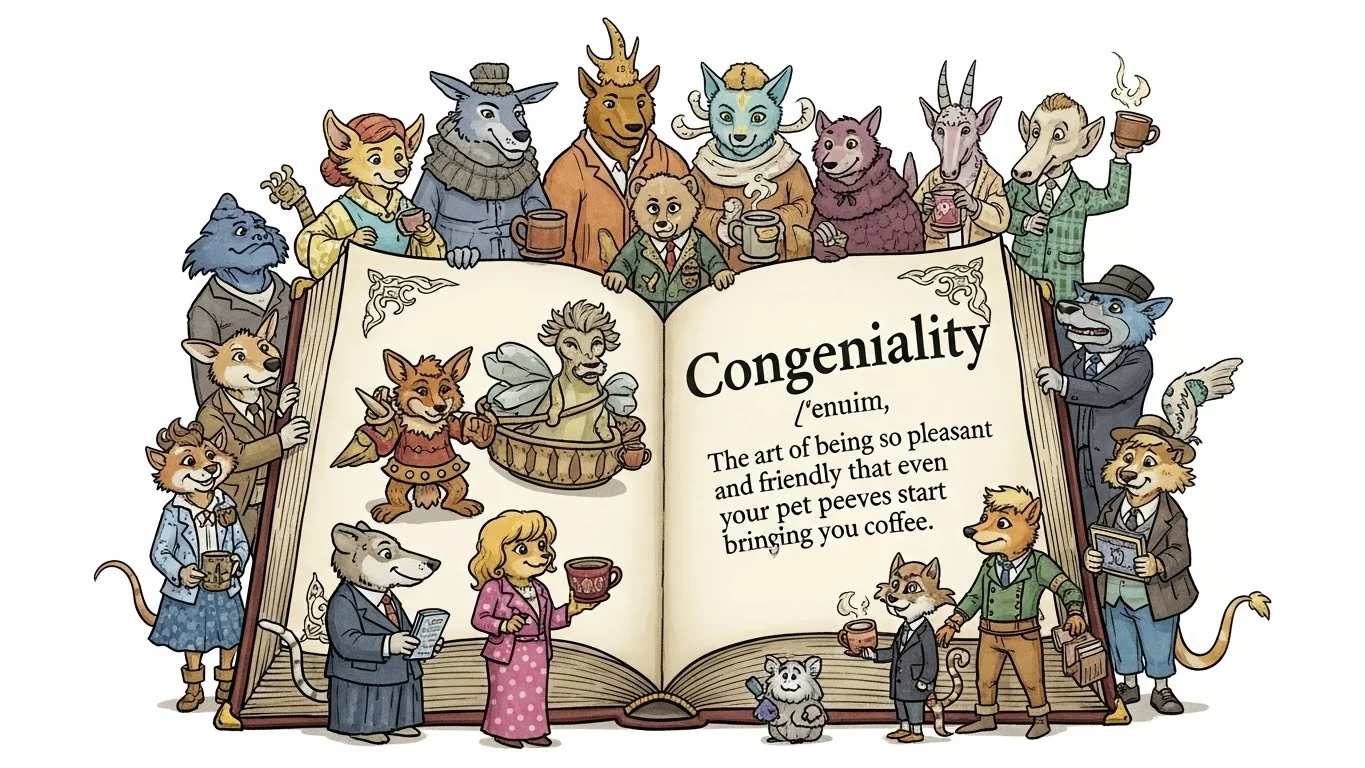
What Does Congeniality Mean?
Congeniality means being friendly, pleasant, and easy to get along with.
A person with congeniality creates a comfortable and positive atmosphere around others.
Congeniality Meaning in Simple Terms
In simple terms, congeniality means having a nice and likable personality.
It describes someone who makes others feel relaxed and welcome.
The Origin of the Word Congeniality
Congeniality comes from the Latin word congenialis, meaning “agreeable” or “kindred in nature.”
Over time, the word came to describe people who naturally connect well with others.
Congeniality as a Personality Trait
Congeniality is a personal quality, not a skill.
People with congeniality are often:
Warm
Approachable
Cooperative
Respectful
It reflects how someone interacts socially.
Congeniality Meaning in Everyday Life
In daily life, congeniality shows up in:
Friendly conversations
Polite behavior
Positive attitudes
Easy social interactions
It helps relationships feel natural and comfortable.
Congeniality in the Workplace
At work, congeniality is highly valued.
Employees with congeniality often:
Work well in teams
Communicate respectfully
Reduce tension
Build strong relationships
It contributes to a healthy work environment.
Congeniality vs Friendliness
Congeniality and friendliness are similar, but not identical.
Friendliness is about being kind
Congeniality includes compatibility and ease of interaction
Someone can be friendly but not always congenial in every setting.
Congeniality vs Charisma
Charisma attracts attention.
Congeniality builds comfort.
A charismatic person may impress you, while a congenial person makes you feel at ease.
Congeniality in Social Situations
In social settings, congeniality helps people:
Connect faster
Avoid conflict
Enjoy conversations
It’s especially important in group interactions.
Congeniality Meaning in Relationships
In relationships, congeniality refers to:
Mutual understanding
Emotional comfort
Shared respect
Congenial relationships feel natural rather than forced.

Is Congeniality a Compliment?
Yes, congeniality is always positive.
Calling someone congenial means you appreciate their personality and presence.
How Congeniality Is Shown Through Behavior
Congeniality is shown through:
Active listening
Kind tone
Patience
Respectful disagreement
It’s more about behavior than words.
Can Congeniality Be Learned?
Congeniality comes naturally to some people, but it can also be developed by:
Practicing empathy
Improving communication
Being open-minded
Small changes can increase congenial behavior.
Congeniality Meaning in Leadership
Leaders with congeniality tend to:
Gain trust
Encourage teamwork
Create positive culture
Congeniality strengthens leadership effectiveness.
Common Misunderstandings About Congeniality
Some people think congeniality means:
Being fake
Agreeing with everything
Avoiding honesty
This is incorrect. Congeniality includes honesty with respect.
Congeniality vs Politeness
Politeness is about manners.
Congeniality is about genuine warmth.
Someone can be polite without being truly congenial.
Congeniality Meaning in Professional Descriptions
In professional settings, congeniality often appears in:
Job reviews
Performance evaluations
Recommendation letters
It signals strong interpersonal skills.
Examples of Congeniality in Real Life
Examples include:
A coworker who makes meetings pleasant
A neighbor who is easy to talk to
A host who makes guests feel comfortable
These are everyday signs of congeniality.

Why Congeniality Still Matters Today
In 2026, congeniality is important because:
Workplaces value collaboration
Social interactions are more diverse
Emotional intelligence matters more
It supports healthy human connection.
Congeniality Meaning in Plain English Summary
In plain English, congeniality means being pleasant, friendly, and easy to be around.
It’s about how comfortably you connect with others.