
What Does Strait Mean?
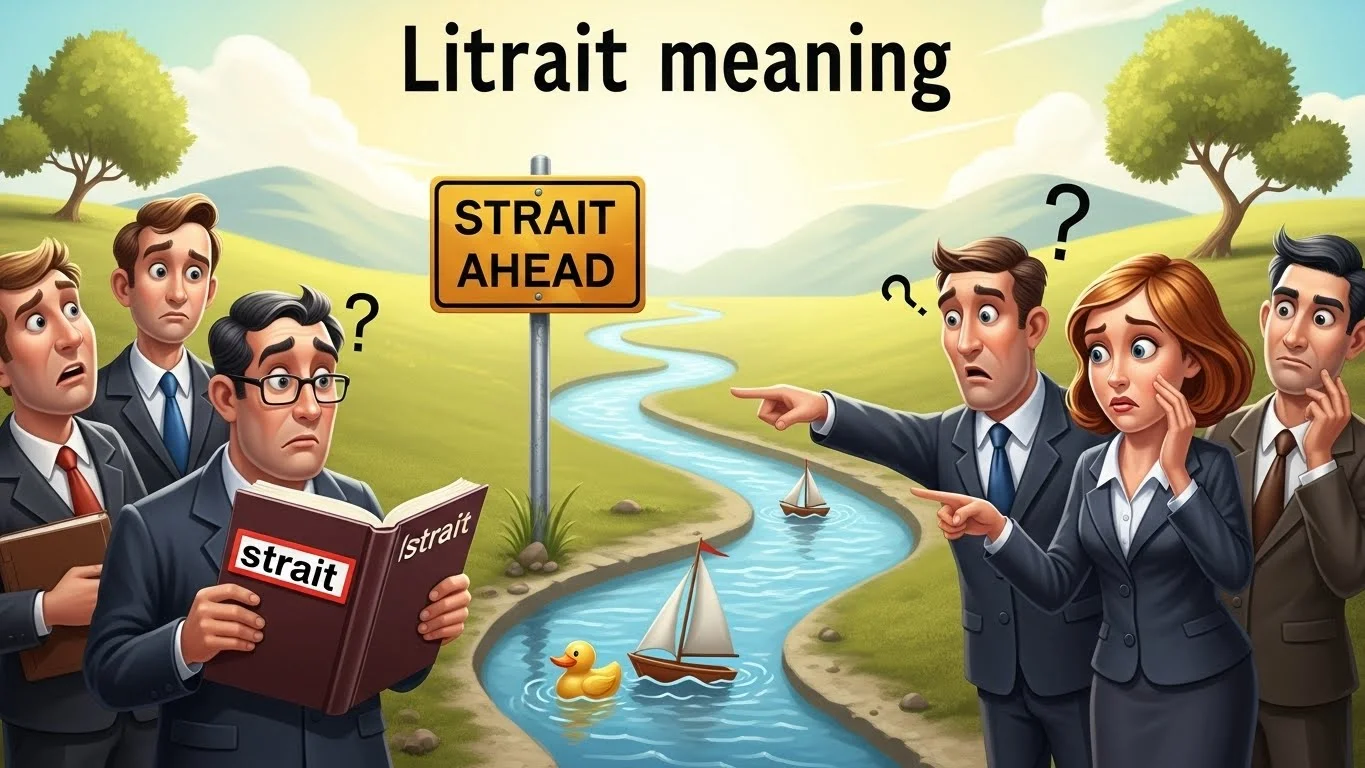
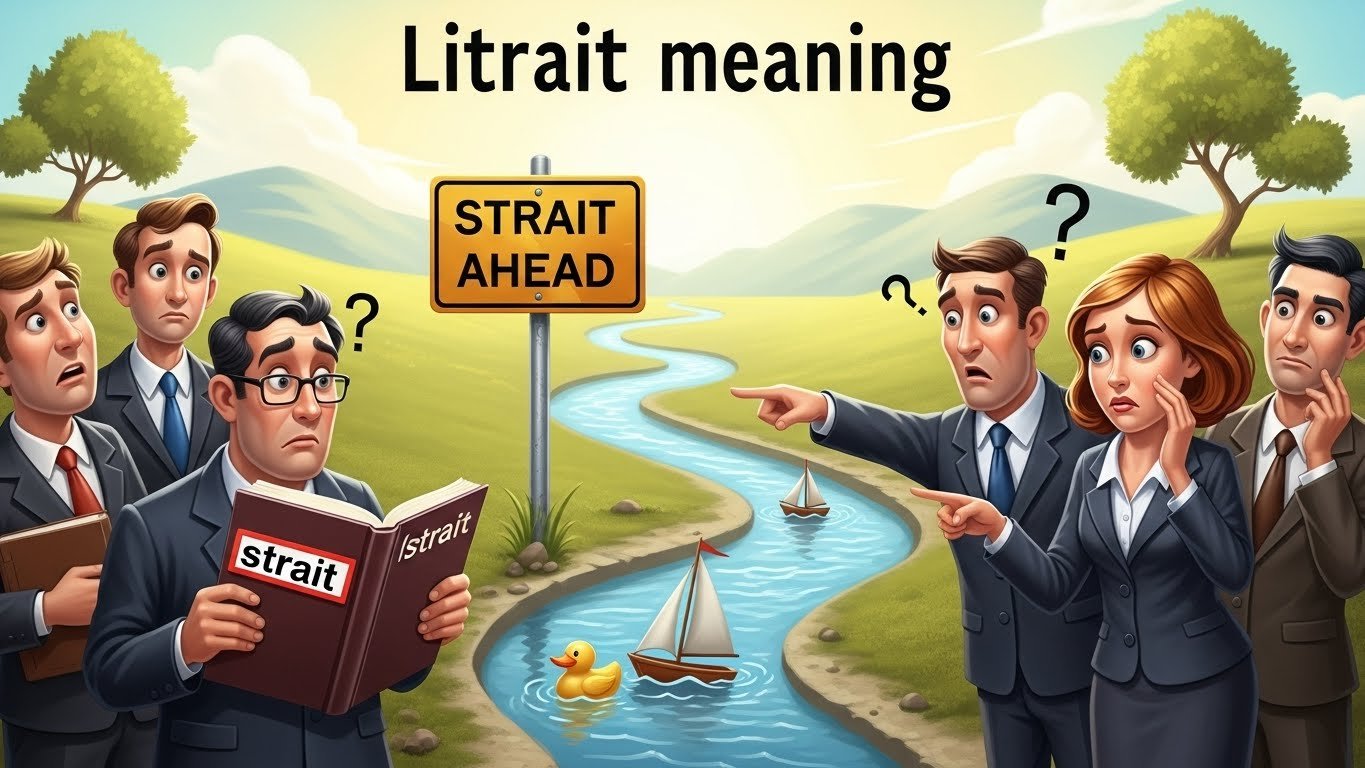
Strait means narrow, tight, or restricted.
It can describe a physical space, a difficult situation, or a narrow body of water.
Strait Meaning in Simple Terms
In simple terms, strait means not wide or easy.
It often refers to something limited, tight, or confined.
The Origin of the Word Strait
Strait comes from the Latin word strictus, meaning “drawn tight.”
This origin explains why the word often implies restriction or narrowness.
Strait Meaning in Geography
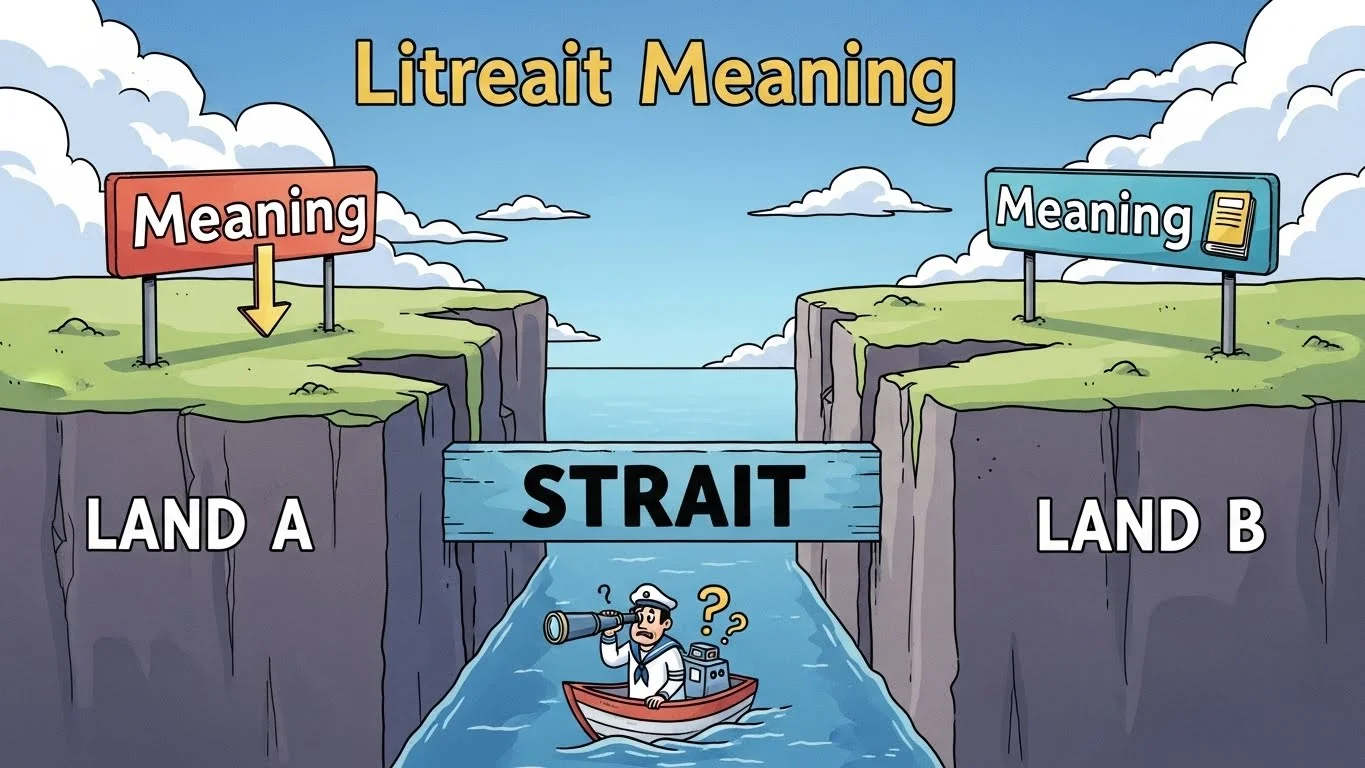
In geography, a strait is a narrow passage of water connecting two larger bodies of water.
Straits are important for travel, trade, and navigation.
Examples of Famous Straits
Well-known straits include:
The Strait of Gibraltar
The Bering Strait
The Strait of Hormuz
These locations are narrow but strategically important.
Strait Meaning in Everyday Language
In everyday language, strait often appears in phrases describing difficulty or limitation.
It suggests pressure or lack of freedom.
Strait Meaning in Difficult Situations
Strait is commonly used to describe hardship.
For example, being in “dire straits” means being in serious trouble.
What Does “Dire Straits” Mean?
“Dire straits” means a very difficult or dangerous situation.
It has nothing to do with water and is purely figurative.
Strait Meaning in Historical Writing
In older or formal writing, strait often describes:
Strict rules
Limited choices
Tight control
This usage is less common today but still correct.
Strait vs Straight: Why People Get Confused
Strait and straight sound similar but have different meanings.
This is one of the most common word confusions in English.
Strait vs Straight Explained Clearly
Strait: narrow, restricted, or difficult
Straight: not curved, or honest
They are never interchangeable.
Examples of Strait in a Sentence
Examples include:
The ship passed through a narrow strait.
The company is in financial straits.
Supplies were limited, and times were strait.
Examples of Straight for Comparison
For clarity:
Draw a straight line.
Go straight ahead.
She gave a straight answer.
These use a different word entirely.
Is Strait a Common Word?
Strait is less common than straight, but it’s still widely used in:
Geography
News writing
Formal English
Strait Meaning in Modern Usage
In 2025, strait is most often used:
In geographic descriptions
In fixed phrases like “dire straits”
Its meaning has remained consistent.
Common Misunderstandings About Strait
People often think strait:
Means the same as straight
Only refers to water
Is outdated
All of these are incorrect.
Is Strait Always Negative?
No. While strait often suggests difficulty, it can also be neutral, especially in geography.
Context determines tone.
Strait Meaning in Literature
Writers use strait to:
Create tension
Describe confinement
Emphasize struggle
It adds emotional weight to writing.
How to Remember the Strait Meaning
A helpful tip:
Strait contains “ai” like “constraint”
Both suggest restriction
This makes it easier to remember.
Strait Meaning in Plain English Summary
In plain English, strait means narrow, tight, or restricted.
It can describe physical spaces or difficult situations.