
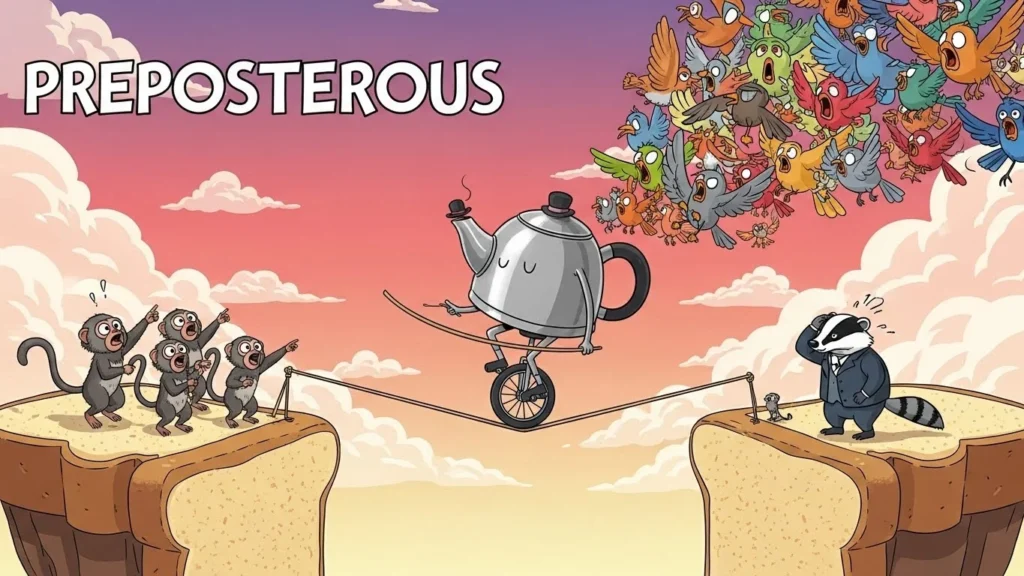

What Does Preposterous Mean in Simple Terms
Preposterous means something is so unreasonable or illogical that it is hard to take seriously.
The Basic Definition of Preposterous
Preposterous is an adjective used to describe ideas, statements, or actions that seem absurd or completely against common sense.
Where the Word Preposterous Comes From
The word comes from Latin roots meaning “backward” or “upside down,” which reflects how unnatural or illogical something feels.
Preposterous in Everyday Conversation
In daily speech, people use preposterous to strongly reject an idea they find ridiculous or unbelievable.
Common Examples of Preposterous Situations
Claiming the earth is flat
Asking someone to work without pay
Expecting instant success without effort
These examples go against logic or reality.
Preposterous vs Ridiculous
Both words suggest something is laughable, but preposterous emphasizes lack of logic rather than humor alone.
Preposterous vs Absurd
Absurd often sounds lighter or playful, while preposterous carries a stronger sense of disbelief.
Preposterous vs Impossible
Something preposterous may still be possible, but it feels highly unreasonable or unrealistic.
Preposterous in Modern Language Usage
Today, preposterous is commonly used in debates, opinions, and social media to express strong disagreement.
Emotional Tone of Preposterous
The word often carries frustration, disbelief, or criticism, depending on tone and context.

Using Preposterous in Formal Writing
Preposterous can be used in formal writing, but carefully, as it clearly shows judgment.
Using Preposterous in Informal Speech
In casual speech, it adds emphasis when rejecting an idea strongly.
How to Use Preposterous in a Sentence
The accusation was completely preposterous
Her demands sounded preposterous to the team
Common Misunderstandings of Preposterous
Some people think it means “funny,” but it mainly means unreasonable or illogical.
Can Preposterous Describe People
It usually describes ideas or actions, not people themselves.
When Not to Use Preposterous
Avoid using it for minor disagreements or harmless mistakes.
Preposterous in Literature and Media
Writers use the word to express disbelief or highlight extreme behavior.
Synonyms of Preposterous
Common synonyms include ridiculous, absurd, unreasonable, and illogical.

Why Preposterous Is a Strong Word
It clearly communicates rejection and disbelief without needing long explanations.
Importance of Context for Preposterous Meaning
Context helps readers understand why something is considered illogical or unreasonable.