


What Does Demographics Mean in Simple Terms
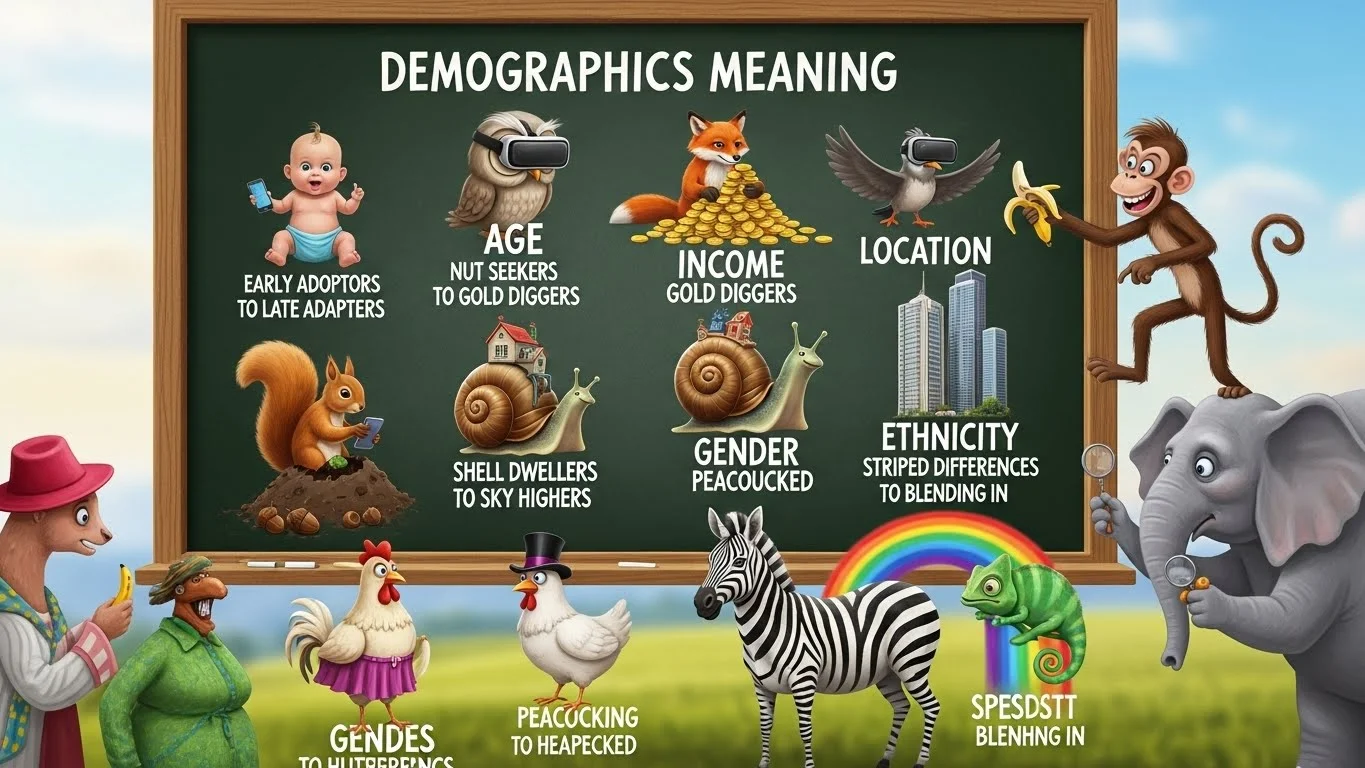
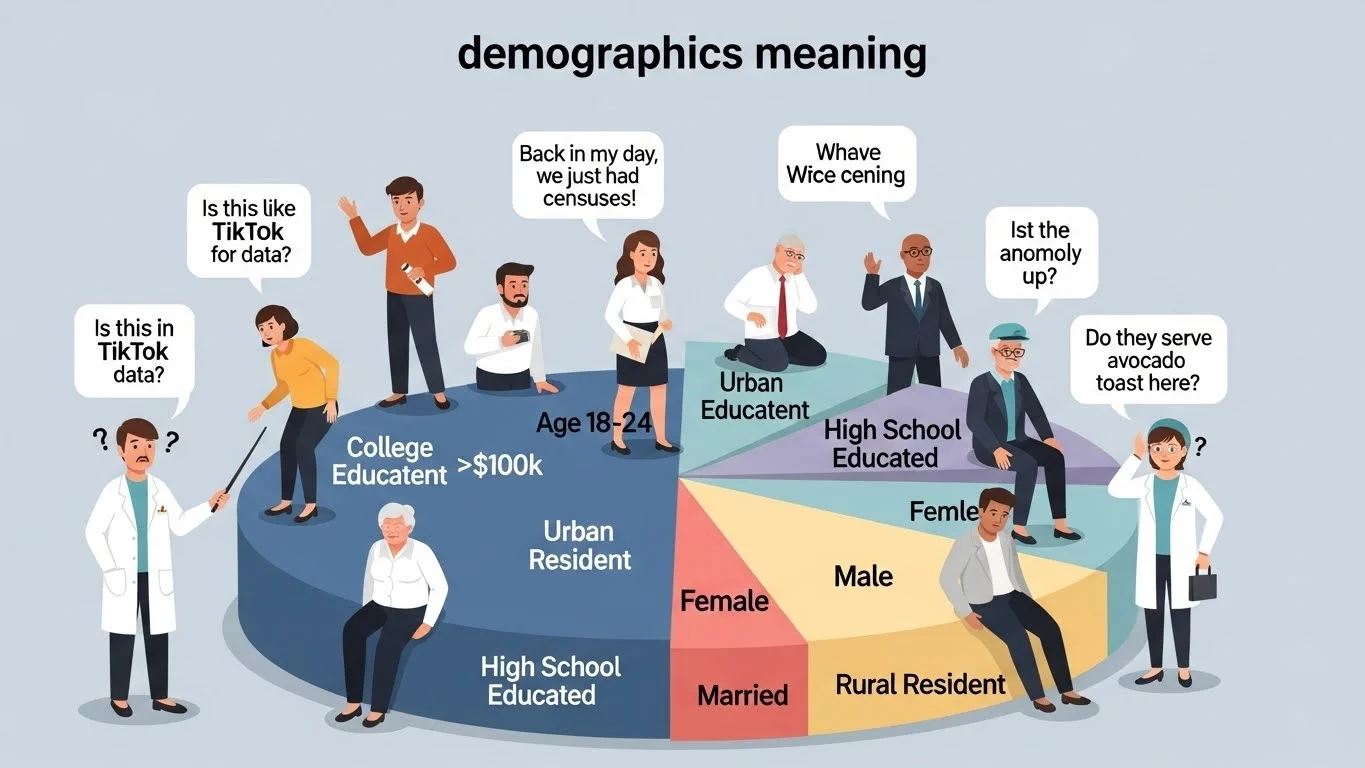
Demographics means information about groups of people, such as their age, gender, income, education, or location.
The Basic Definition of Demographics
Demographics is a plural noun that refers to statistical data describing the characteristics of a population or group.
Why Demographics Are Important
Demographics help organizations understand who people are, how they live, and what they need.
Common Types of Demographic Data
Typical demographic factors include age, gender, income, education level, occupation, and location.
Demographics in Everyday Life
Demographics affect everyday things like school planning, healthcare services, and public transportation.
Demographics in Business and Marketing
Businesses use demographics to identify their target audience and create relevant products or advertisements.
Demographics in Government and Policy
Governments use demographic data to plan services, allocate budgets, and create policies.
Demographics in Education
Schools and universities use demographics to understand student populations and improve learning resources.
Demographics in Healthcare
Healthcare providers use demographics to study health trends and plan medical services.
Demographics in Research and Statistics
Researchers rely on demographics to analyze patterns and draw conclusions about populations.
Demographics vs Statistics
Statistics is a broad field of data analysis, while demographics focus specifically on population characteristics.
Demographics vs Psychographics
Demographics describe who people are, while psychographics describe interests, values, and lifestyles.
Demographics in Digital Marketing
Online platforms use demographic data to show ads to specific audiences.
Demographics in Social Media Platforms
Social media demographics help creators and brands understand their followers.
Examples of Demographics in Use
A report on youth demographics
Customer demographics for a product
Urban and rural demographics
Common Misunderstandings of Demographics
Some think demographics refer to individuals, but the term always applies to groups.
Are Demographics Always Accurate
Demographic data is based on surveys and estimates, so it may not be perfectly exact.
Demographics in Population Studies
Population studies use demographics to track growth, migration, and aging trends.
How Demographics Change Over Time
Demographics change due to births, deaths, migration, and social development.
Importance of Context in Demographics
Demographic data must be interpreted within social, economic, and cultural context.
Ethical Use of Demographics
Responsible use of demographics avoids bias, discrimination, and misuse of data.
Why Demographics Matter Today
In a data-driven world, demographics help shape decisions in business, policy, and society.