
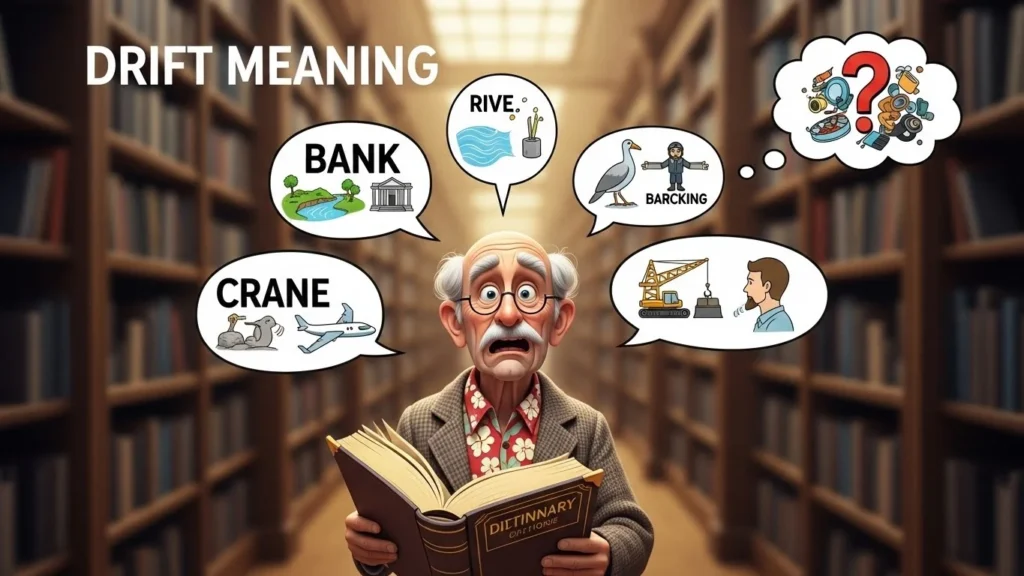
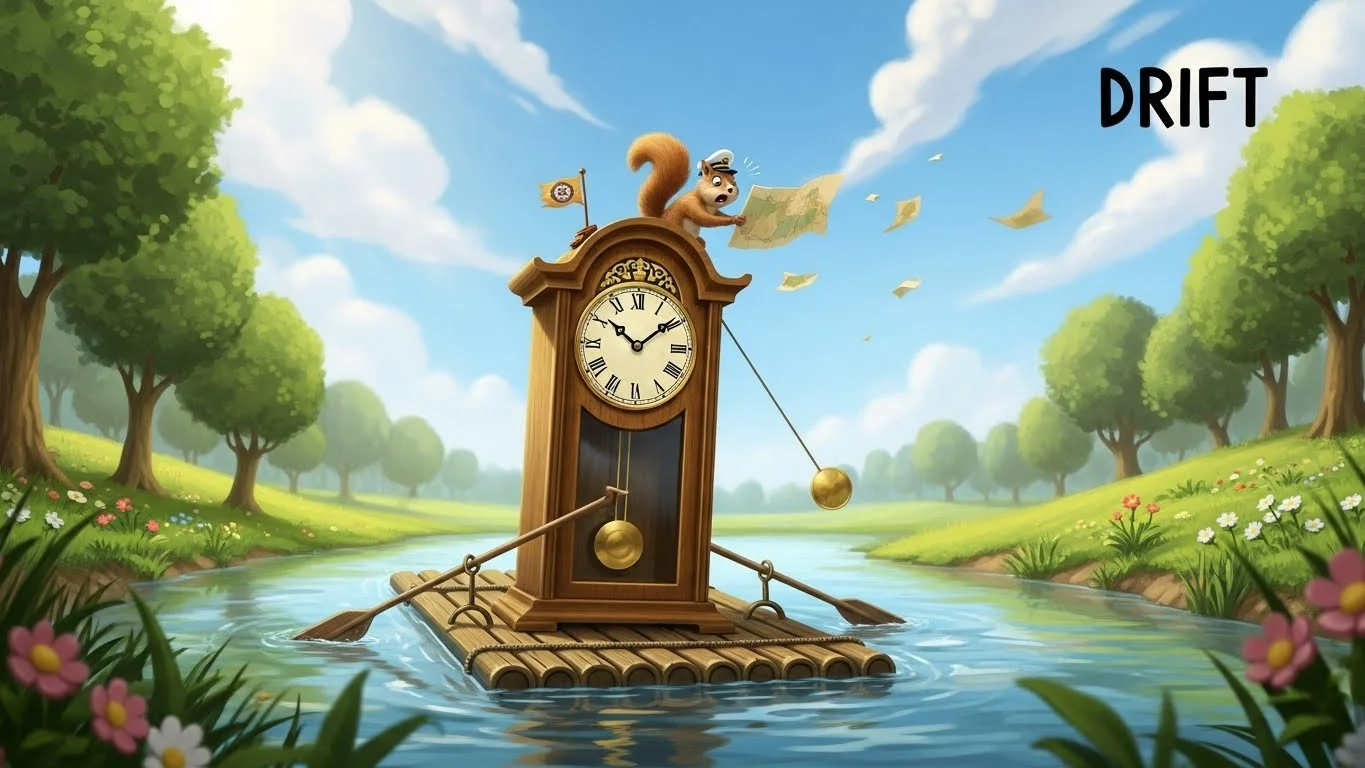
What Does Drift Mean?
Drift means to move slowly or gradually without a clear direction or strong control.
Simple Explanation of Drift
In simple words, drift means to move or change little by little, often without planning.
Drift Meaning in Daily Life
In everyday life, drift can describe people, objects, or situations that slowly change or move over time.
Drift as a Verb
As a verb, drift means to move gently or slowly, such as drifting away or drifting apart.
Drift as a Noun
As a noun, drift refers to the movement itself or a general idea, such as “the drift of the conversation.”
Drift Meaning in Conversations
In conversations, drift often means the main idea or message, as in “I get the drift.”
Drift Meaning in Emotions and Relationships
Emotionally, drift can describe people slowly growing apart without conflict or intention.
Drift Meaning in Life and Goals
In life contexts, drifting means living without clear direction or purpose, letting things happen naturally.
Drift Meaning in Driving
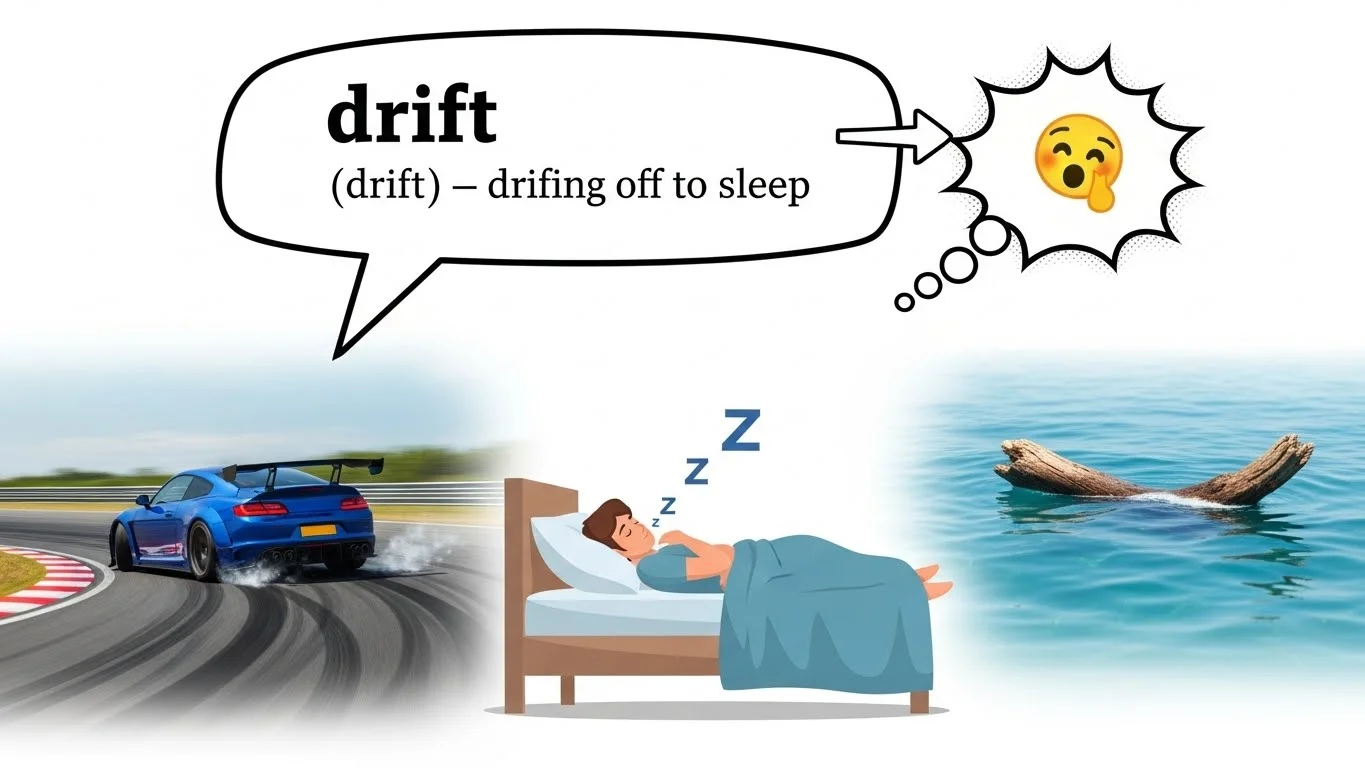
In driving, especially motorsports, drifting means intentionally sliding a car sideways while maintaining control.
Drift Meaning in Weather and Nature
In nature, drift describes slow movement caused by wind or water, such as snowdrifts or drifting clouds.
Drift Meaning in Science
In science, drift refers to gradual movement or change, like genetic drift or continental drift.
Drift Meaning in Technology
In technology, drift can describe small changes over time, such as data drift or signal drift.
Drift Meaning in Music and Art
In music or art, drift can describe smooth transitions or flowing movement without sharp changes.
Drift vs Float
Float usually suggests staying on the surface, while drift emphasizes slow movement without direction.
Drift vs Wander
Wander implies intentional movement, while drift suggests passive or uncontrolled movement.
Modern Usage of the Word Drift
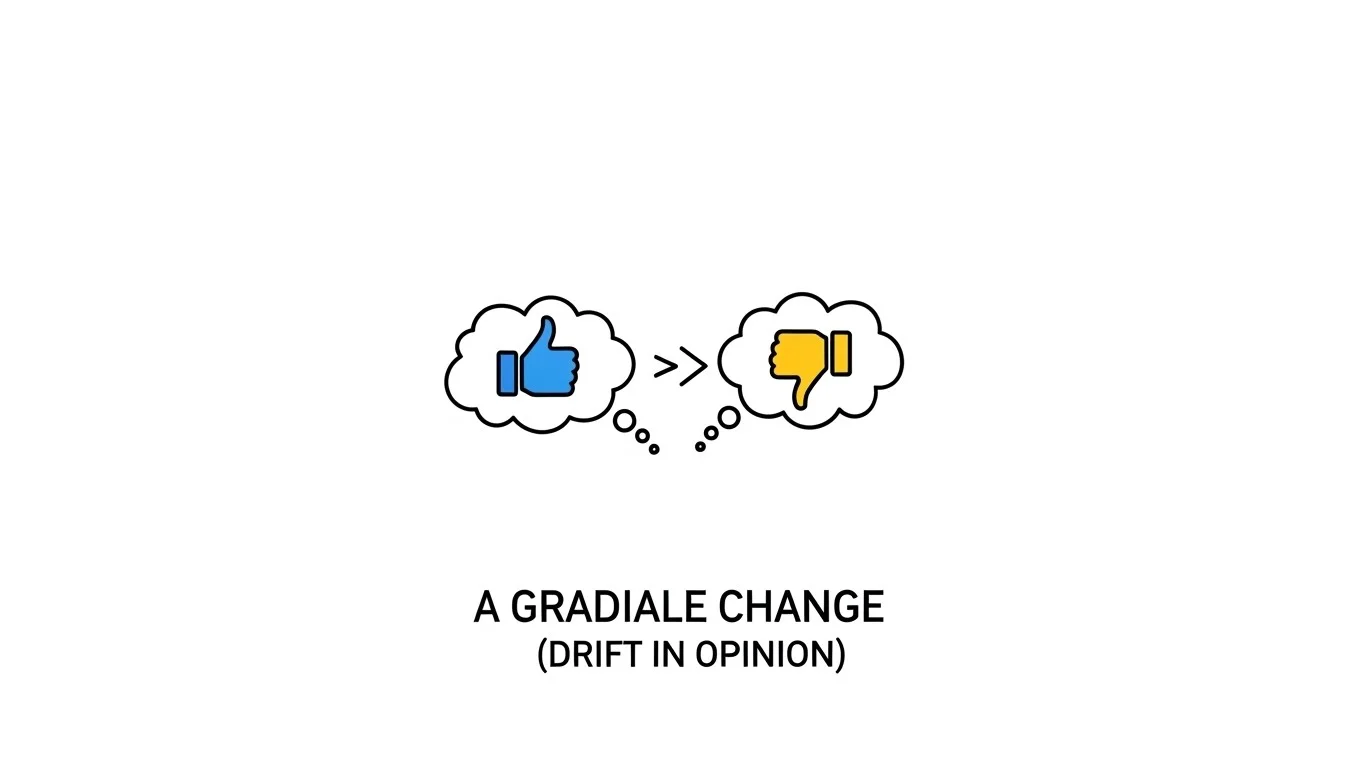
Today, drift is often used metaphorically to describe thoughts, emotions, trends, or lifestyles.
Is Drift a Positive or Negative Word?
Drift is neutral. It can feel peaceful or negative depending on the situation and context.
Common Misunderstandings About Drift
Some think drift always means lack of control, but it can also be gentle, natural, or intentional.
Why Context Matters for Drift Meaning
The meaning of drift depends heavily on context—emotional, physical, or abstract.
Drift Meaning for English Learners
For learners, drift means slow movement or gradual change without strong direction.