Font Meaning in Simple Terms
The font meaning refers to the style and appearance of text. A font controls how letters, numbers, and symbols look when written or printed.
In short, a font is how text looks, not what it says.
What a Font Is Exactly
A font is a specific design of text that includes:
Letter shape
Thickness
Spacing
Style
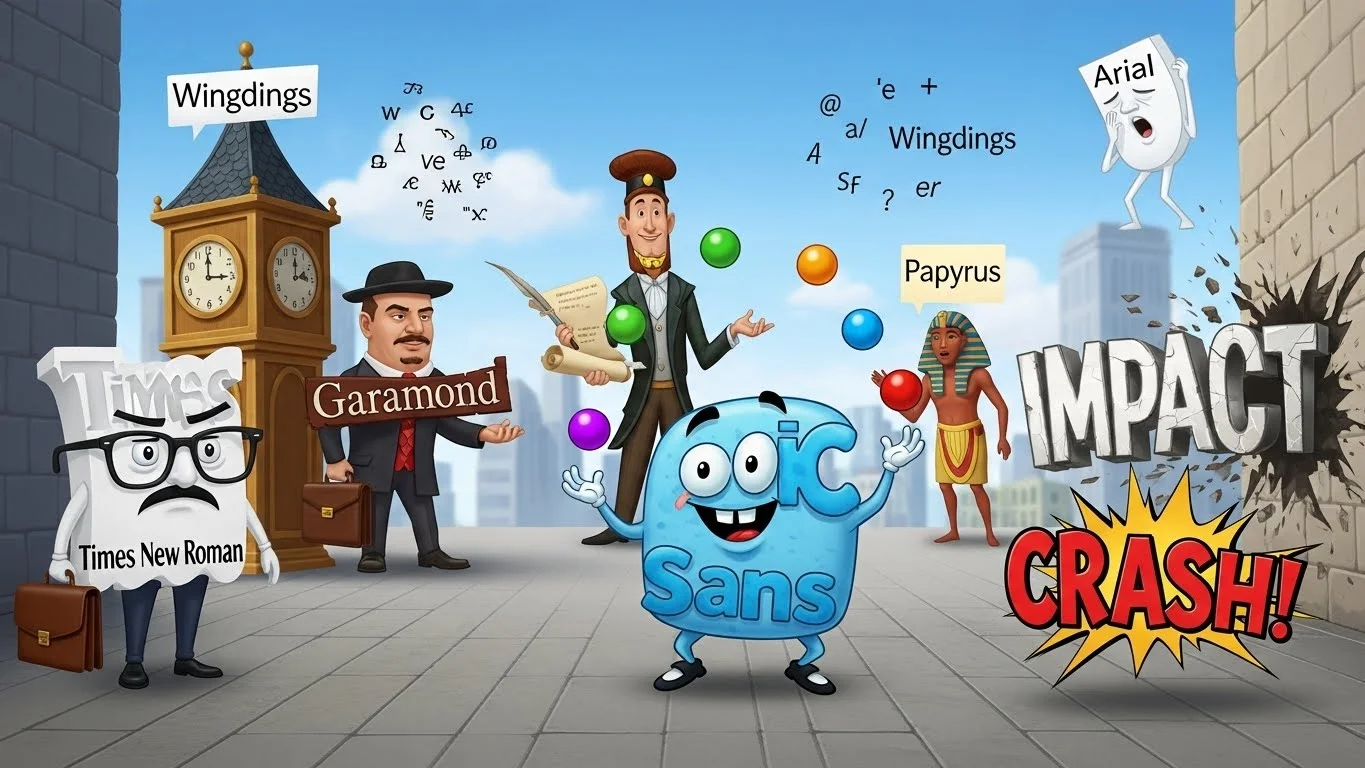
Examples of fonts include Arial, Times New Roman, and Calibri.
Font Meaning in Daily Life
In everyday life, fonts appear in:
Mobile phones
Websites
Books and newspapers
School assignments
Advertisements
Fonts help make text readable, attractive, or expressive.
Difference Between Font and Typeface
Many people confuse these terms:
Typeface: The overall design family (e.g., Arial)
Font: A specific style within that family (e.g., Arial Bold 12pt)
In modern usage, people often use “font” for both.
Why Fonts Matter in Communication
Fonts affect how messages are perceived. They can make text feel:
Professional
Casual
Fun
Serious
Creative
The right font helps communicate tone without words.
Font Meaning in Design and Branding
In branding, fonts help shape identity. Companies choose fonts that reflect their personality, such as:
Clean fonts for technology brands
Elegant fonts for luxury brands
Playful fonts for children’s products
Fonts influence trust and recognition.
Common Types of Fonts
Fonts are usually grouped into main categories:
Serif fonts
Sans-serif fonts
Script fonts
Display fonts
Monospaced fonts
Each type has a different purpose and feel.
Serif Fonts Meaning
Serif fonts have small lines or strokes at the ends of letters. They are often used in books and newspapers because they feel traditional and readable.
Examples include Times New Roman and Georgia.
Sans-Serif Fonts Meaning
Sans-serif fonts do not have extra strokes. They look clean and modern and are widely used on websites and apps.
Examples include Arial and Helvetica.
Script Fonts Meaning
Script fonts look like handwriting or cursive writing. They are decorative and often used for invitations or creative designs.
They are not ideal for long text.
Display Fonts Meaning
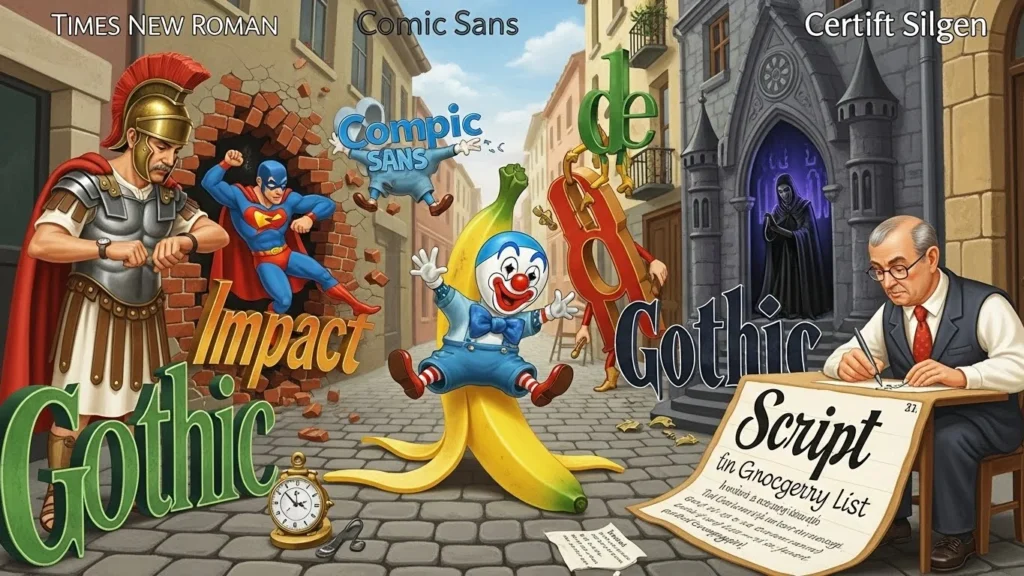
Display fonts are bold, unique, and eye-catching. They are designed for titles, logos, and posters rather than paragraphs.
They prioritize style over readability.

Font Meaning in Digital Text
In digital content, fonts affect:
Readability on screens
User experience
Accessibility
Choosing the right font helps users read comfortably on devices.
Font Meaning in Printing
In print, fonts influence:
Clarity
Professional appearance
Visual balance
Printed materials often use different fonts than digital ones.
Font Size and Font Meaning
Font meaning also includes size. Larger fonts draw attention, while smaller fonts provide detail. Size helps organize information and guide the reader.
Font Weight and Style Explained
Fonts can vary in:
Weight (light, regular, bold)
Style (italic, normal, condensed)
These variations change emphasis and tone.
Font Meaning in Education
In schools and learning materials, fonts are chosen for:
Readability
Clarity
Reduced eye strain
Simple fonts help learners focus on content.
Font Meaning in Social Media
On social media, fonts are used to:
Stand out
Show personality
Match aesthetic styles
Some platforms allow font variations for captions and bios.
Common Misunderstandings About Fonts
Many people believe:
Fonts don’t matter
All fonts look the same
Fancy fonts are always better
These assumptions are incorrect. Fonts strongly affect perception.
How Fonts Influence Emotions
Fonts can trigger emotional responses. For example:
Rounded fonts feel friendly
Sharp fonts feel serious
Handwritten fonts feel personal
Fonts communicate emotion visually.
Choosing the Right Font
The right font depends on:
Purpose
Audience
Platform
Tone
Good font choice improves understanding and engagement.

Modern Font Trends in 2026
Modern font trends include:
Minimalist fonts
Clean sans-serif styles
Accessible font designs
Custom brand fonts
Clarity is prioritized over decoration.
Key Point to Remember About Font Meaning
The key takeaway is that a font is the visual style of text that shapes how information is seen and felt.