What Does Opt In Mean in Simple Terms
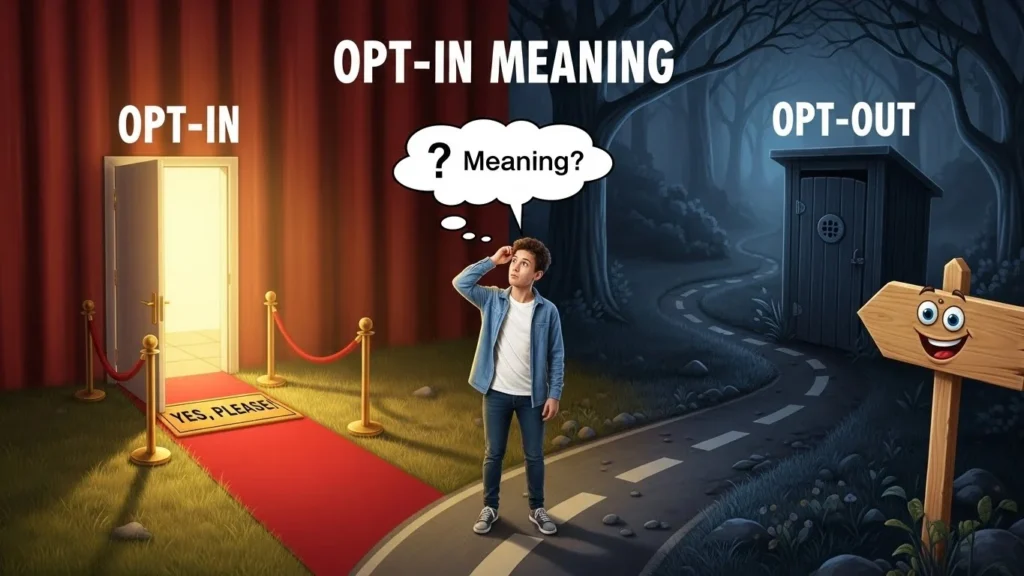
Opt in means to choose to participate or agree to something actively.
In simple words:
You say yes
You give permission
You take action to join
Nothing happens unless you agree.
The Basic Definition of Opt In
Opt in refers to a system where a person must actively give consent before something applies to them.
This could include:
Receiving emails
Sharing personal data
Joining a service
Participating in a program
Where the Term Opt In Comes From
The term comes from decision-making and legal language, where people must clearly indicate agreement rather than being included automatically.
It became widely used with:
Digital marketing
Online privacy laws
Subscription-based services
Opt In Meaning in Everyday Life
In daily life, opting in means:
Signing up for a newsletter
Checking a consent box
Clicking “Yes, I agree”
If you do nothing, you are not included.
Opt In Meaning in Email Marketing
In email marketing, opt in means:
You agreed to receive emails
You signed up voluntarily
Your consent was given clearly
This protects users from unwanted messages and spam.
What Is Double Opt In
Double opt in is a two-step process.
It means:
You sign up
You confirm via email
This ensures the signup was intentional and accurate.
Opt In Meaning in Data Privacy
In privacy terms, opt in means:
You allow your data to be collected
You agree to data use policies
You give informed consent
This is a key part of modern privacy protection.
Opt In Meaning in Apps and Software
In apps, opt in often appears when:
Enabling notifications
Allowing location access
Joining beta programs
The app waits for your permission before acting.
Opt In vs Automatic Enrollment
There is an important difference.
Opt in: You must choose to join
Automatic enrollment: You are included unless you leave
Opt in gives more control to the user.
Opt In vs Opt Out
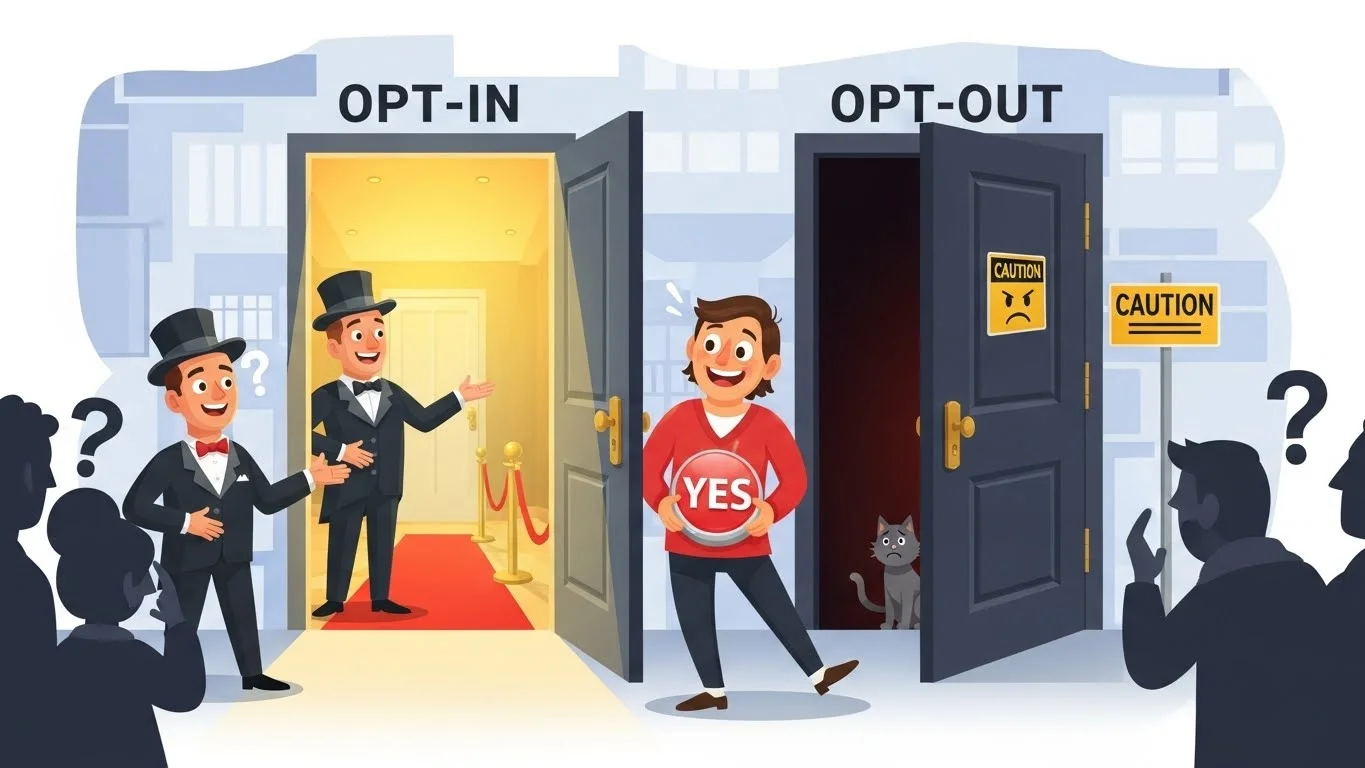
These two terms are opposites.
Opt in: You actively agree
Opt out: You are included by default but can leave
Opt in is considered more user-friendly and ethical.
Why Companies Use Opt In Systems
Companies use opt in to:
Respect user consent
Follow legal requirements
Build trust
Reduce complaints
It creates clearer communication.
Is Opt In Required by Law?
In many regions, opt in is required for:
Email marketing
Data collection
Cookies and tracking
Laws vary, but opt in is increasingly standard.
Opt In Meaning in Business and Marketing
In business, opt in means:
A customer shows interest
Permission is granted
Communication is welcome
Opt-in customers are more engaged.
Opt In Meaning in Research and Studies
In research, opt in means:
Participants volunteer
Consent is given knowingly
Participation is not forced
Ethical research depends on opt-in consent.
Common Examples of Opt In
Typical opt-in examples include:
Subscribing to newsletters
Accepting app permissions
Joining loyalty programs
Agreeing to terms and conditions
Each requires a clear action.
Common Misunderstandings About Opt In
Many people think opt in:
Happens automatically
Is hidden in small print
Cannot be changed later
In reality, opt in requires clear consent and can often be reversed.
Can You Change Your Mind After Opting In?
Yes, in most cases you can:
Unsubscribe
Turn off settings
Withdraw consent
Good systems make opting out easy.
Why Opt In Is Important for Users
Opt in helps users:
Control their data
Avoid unwanted communication
Make informed choices
It empowers personal decision-making.
Opt In Meaning in Modern Digital Culture
Today, opt in reflects:
Awareness of privacy
User rights
Ethical business practices
It is a key part of digital trust.
When You Should Be Careful About Opting In
Be cautious when:
Permissions seem unnecessary
Terms are unclear
Data use is vague
Always read before agreeing.
How to Recognize an Opt In Request
An opt-in request usually includes:
A checkbox
A confirmation button
Clear wording asking for consent
If consent is assumed, it is not opt in.
Why Understanding Opt In Matters
Knowing the opt in meaning helps you:
Protect your privacy
Make informed decisions
Avoid unwanted services
It gives you control in a digital world.