

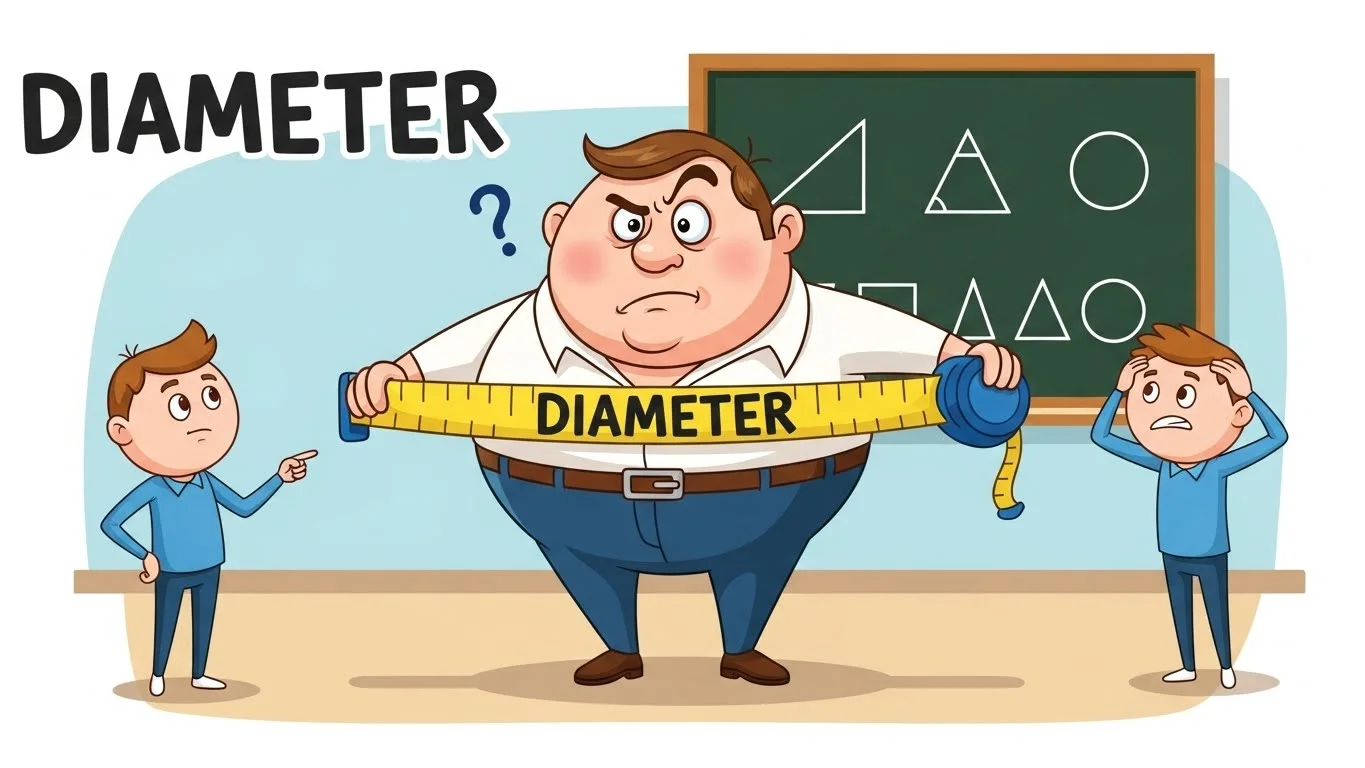
What is a Diameter?
A diameter is the longest straight line you can draw across a circle or sphere. It always passes through the center point, making it twice the length of the radius.
Diameter in Geometry
In geometry, the diameter is crucial for calculations involving circles. For example, formulas for circumference and area rely on knowing the diameter.
Diameter vs Radius
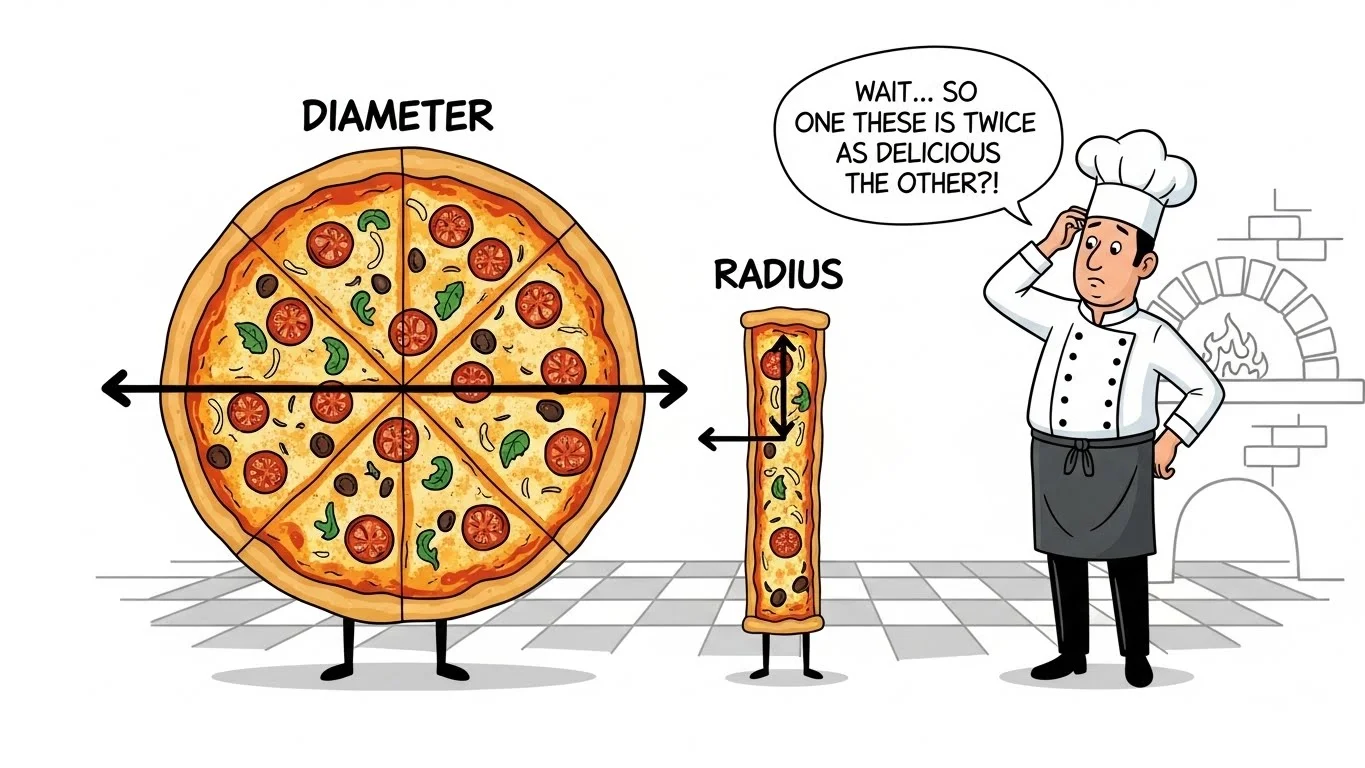
Many confuse radius and diameter. The radius is half the diameter, stretching from the center to the edge, while the diameter stretches across the whole circle.
Diameter in Everyday Life
You see diameters in real life more than you think—car tires, pizza sizes, water pipes, and plates all have diameters.
How to Measure Diameter
To measure a diameter, simply measure across the center of the circle or circular object. A ruler, tape measure, or caliper works well.
Diameter in Science
Scientists use diameters to describe planets, atoms, or particles. For example, the diameter of Earth is about 12,742 km.
Diameter in Engineering
Engineers use diameters to design machines, pipes, and tools. Precise diameter measurements ensure parts fit together correctly.
Units for Diameter
Diameters can be measured in millimeters, centimeters, meters, inches, or any unit of length depending on the object.
Circle Formulas Using Diameter
Circumference = π × diameter
Area = π × (diameter ÷ 2)²
Common Misunderstandings
Some people assume diameter and radius are the same. Remember, diameter = 2 × radius.
Diameter in Modern Design
Designers consider diameters in furniture, electronics, and even fashion. It ensures proportions are accurate.

Diameter in Sports
Sports equipment like basketballs, footballs, and golf balls have official diameters that affect gameplay.
Diameter in Architecture
Architects use diameters for round windows, columns, domes, and arches to maintain symmetry.
Diameter in Medicine
Medical tools, tubes, and even arteries are measured using diameter to ensure proper functioning and safety.
Symbol for Diameter
The diameter symbol is Ø, commonly used in engineering drawings and specifications.
Calculating Diameter from Circumference
If you know the circumference, the diameter = circumference ÷ π.
Diameter in Technology
Hard drives, CDs, and other circular tech objects have diameters important for compatibility and performance.
Diameter in Astronomy
Astronomers use diameters to describe stars, planets, and moons, helping to understand size and scale.
Diameter in Daily Objects
Everyday objects like cups, lids, and wheels all have diameters that are easy to measure and use.
Why Diameter Matters
Diameter gives a clear understanding of size, proportion, and distance across a circular object.
Tips to Remember
Diameter passes through the center
Diameter = 2 × radius
It’s the longest straight line in a circle