What Does IDTS Mean in Text?
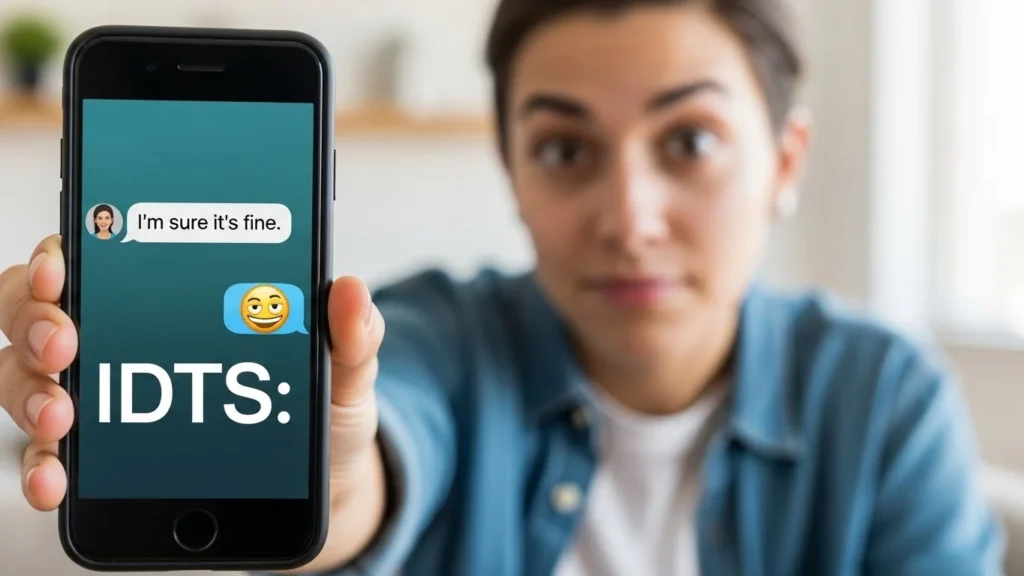
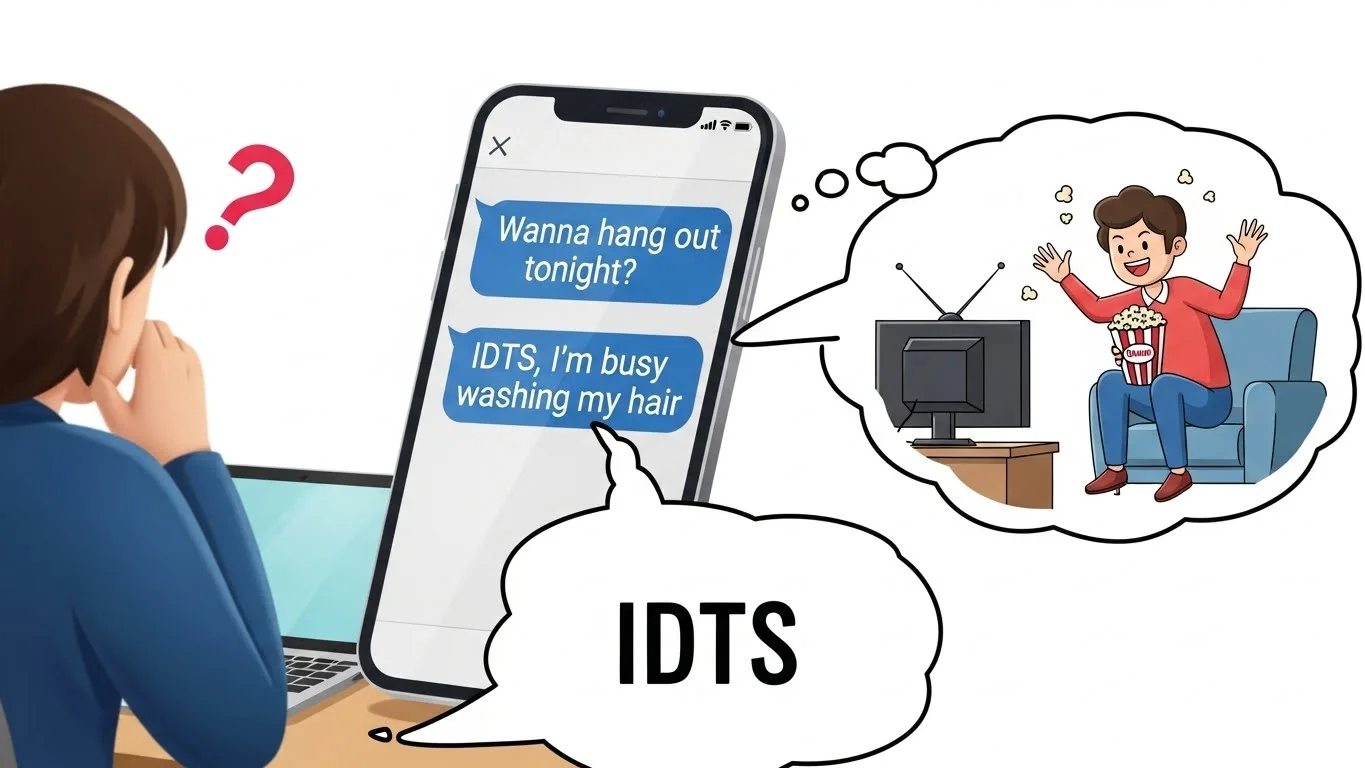
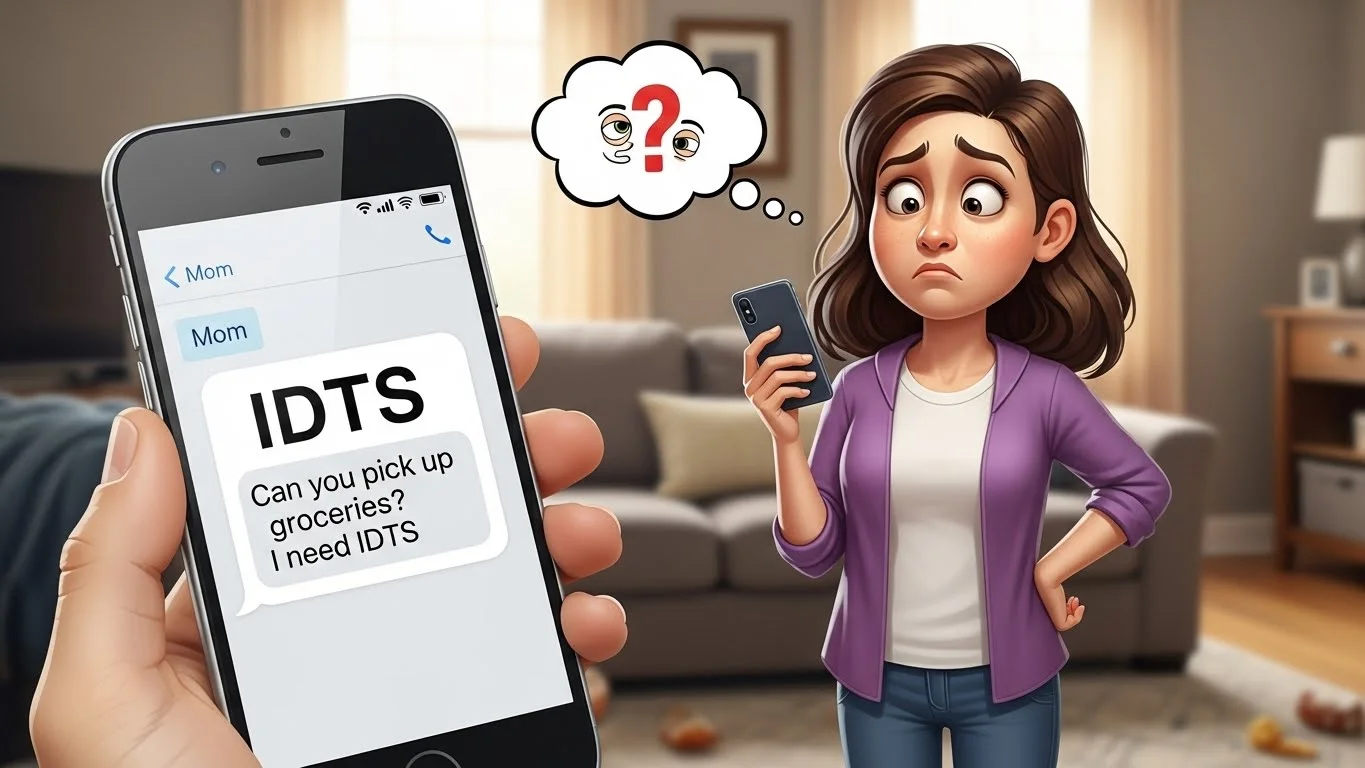
IDTS stands for “I Don’t Think So.”
It is a short, informal way to say no or express doubt.
People use IDTS when they want to respond quickly without typing the full sentence.
The Full Form of IDTS
The full form of IDTS is:
I = I
D = Don’t
T = Think
S = So
Together, it simply means “I don’t think so.”
IDTS Meaning in Simple Words
In simple terms, IDTS means:
Probably not
I disagree
I don’t believe that’s true
It’s a soft or casual way to say no.
How IDTS Is Used in Text Messages
IDTS is commonly used in:
SMS texts
WhatsApp chats
Instagram DMs
Snapchat
Online comments
It’s usually a reply to a question or suggestion.
IDTS in Casual Conversations
In everyday chatting, IDTS sounds relaxed and informal. It doesn’t feel rude unless the tone of the conversation is already negative.
Example:
“Do you think it will rain today?”
“IDTS, the sky looks clear.”
IDTS Meaning in Social Media
On social media platforms like Twitter, TikTok, or Instagram, IDTS is often used in comments or replies to show disagreement or doubt quickly.
It helps users react fast without explaining too much.
IDTS vs Saying “No” Directly
IDTS feels softer than saying “no.”
“No” → direct and firm
“IDTS” → polite, uncertain, or casual
That’s why many people prefer IDTS in friendly conversations.
Tone and Emotion Behind IDTS
The tone of IDTS depends on context:
Friendly chat → light disagreement
Serious topic → cautious doubt
Argument → passive disagreement
It usually sounds calm, not aggressive.
When Should You Use IDTS?
You can use IDTS when:
You’re unsure about something
You politely disagree
You don’t want to sound harsh
It works best in informal settings.
When You Should Avoid Using IDTS
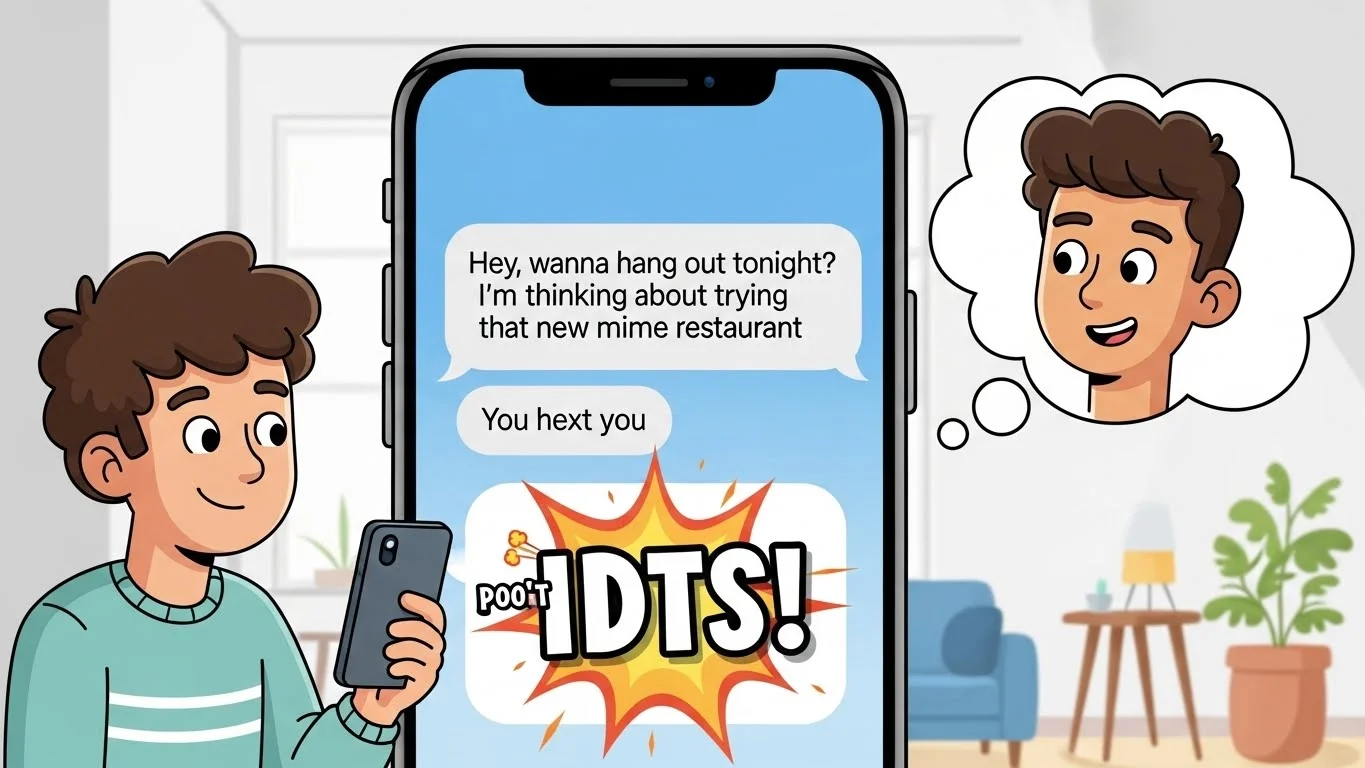
Avoid using IDTS in:
Professional emails
Formal conversations
Academic writing
Work-related messages with seniors
In formal settings, write the full sentence instead.
Examples of IDTS in Real Conversations
Here are some clear examples:
“Is the movie starting at 7?”
“IDTS, I think it’s at 8.”
“Will he agree to the plan?”
“IDTS, he seemed unsure.”
IDTS Meaning for Teenagers and Gen Z
Teenagers and Gen Z use IDTS frequently because it’s:
Fast to type
Casual
Easy to understand
It’s part of modern texting culture.
IDTS in Online Gaming and Chats
In gaming chats or Discord servers, IDTS is often used to react quickly during discussions or decisions.
Example:
“Can we win this round?”
“IDTS, they have better gear.”
Common Misunderstandings About IDTS
Some people think IDTS means:
“I don’t trust you”
“I don’t think seriously”
These are incorrect. IDTS only means “I don’t think so.”
Is IDTS Rude or Polite?
IDTS is generally polite and neutral.
It becomes rude only if:
Used repeatedly to dismiss someone
Used in a sarcastic conversation
Tone and context always matter.
IDTS vs Similar Text Slang
Here’s how IDTS compares to similar phrases:
IDK → I don’t know
IMO → In my opinion
NGL → Not gonna lie
IDTS → I don’t think so
Each has a different purpose.
How to Respond When Someone Says IDTS
You can respond by:
Asking why they think so
Explaining your point
Accepting their opinion
Example:
“IDTS.”
“Okay, what makes you say that?”
Why IDTS Is Popular in Modern Texting
IDTS is popular because it saves time and feels natural. Short replies fit fast-paced conversations, especially on mobile devices.
Is IDTS Still Relevant in 2025?
Yes, IDTS is still commonly used in 2025. While new slang appears often, this abbreviation remains simple and useful.
Should You Learn Text Slang Like IDTS?
Understanding text slang helps you:
Communicate better online
Avoid confusion
Keep up with modern language
Even if you don’t use it, knowing the meaning is helpful.