

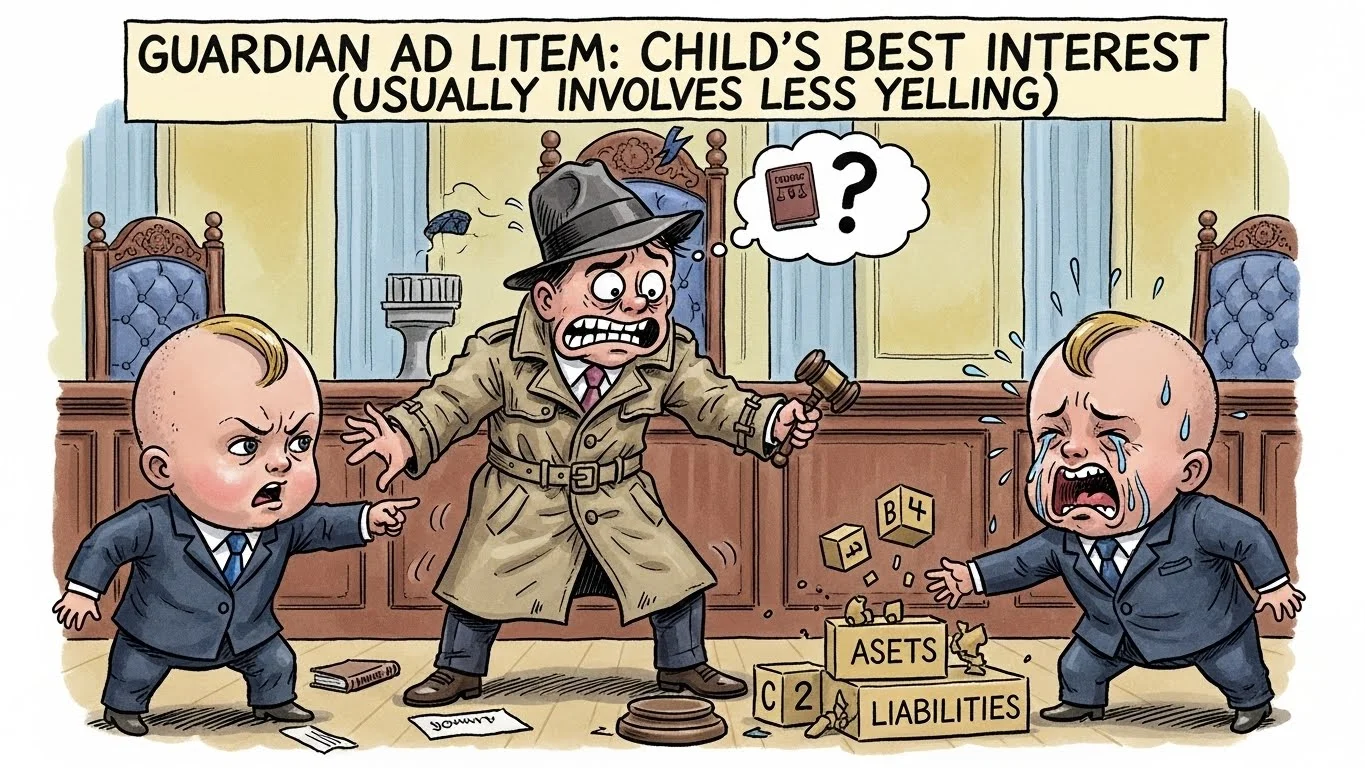
What Does Guardian ad Litem Mean
The guardian ad litem meaning refers to a person chosen by a court to represent someone who cannot fully represent themselves. Most often, this is a child. The phrase comes from Latin and means “guardian for the lawsuit.” Their main job is to speak for what is best for the child in court.
Origin of the Term Guardian ad Litem
The term ad litem is Latin and means “for the case” or “for the legal action.” Unlike a permanent guardian, a guardian ad litem is appointed only for a specific court case and does not have long-term control over the person’s life.
Who Can Be a Guardian ad Litem
A guardian ad litem is often a trained professional. They may be a lawyer, social worker, psychologist, or a specially trained volunteer. Courts choose people who understand child welfare, law, and family situations.
Why Courts Appoint a Guardian ad Litem
Courts appoint a guardian ad litem when they believe a child’s interests need special protection. This usually happens in cases where parents disagree or where a child’s safety or wellbeing could be at risk.
Guardian ad Litem in Family Law Cases
In family law, a guardian ad litem is common in divorce or child custody cases. When parents cannot agree, the guardian ad litem helps the judge understand what arrangement would be best for the child, not just what the parents want.
Role in Child Custody Disputes
In custody disputes, the guardian ad litem may interview both parents, visit homes, and speak with teachers or doctors. Their focus is always on the child’s emotional, physical, and educational needs.
Guardian ad Litem in Abuse or Neglect Cases
When abuse or neglect is suspected, a guardian ad litem plays a critical role. They investigate the situation and make sure the child’s safety is the top priority in court decisions.
Duties and Responsibilities of a Guardian ad Litem
The duties include gathering information, observing family interactions, interviewing people involved, and writing reports for the court. They may also speak directly in court on behalf of the child.

Guardian ad Litem vs Lawyer for the Child
A guardian ad litem is not the same as a child’s lawyer. A lawyer represents what the child wants, while a guardian ad litem represents what they believe is best for the child, even if the child disagrees.
Guardian ad Litem vs Legal Guardian
A legal guardian has long-term responsibility for a child’s care. A guardian ad litem is temporary and exists only during the legal case. They do not make daily parenting decisions.
How a Guardian ad Litem Makes Decisions
A guardian ad litem bases decisions on evidence, professional judgment, and careful observation. They look at the child’s environment, relationships, and overall wellbeing before making recommendations.
How Long a Guardian ad Litem Is Involved
Their involvement usually lasts only as long as the court case. Once the judge makes a final decision, the guardian ad litem’s role typically ends.
Can Parents Disagree With a Guardian ad Litem
Yes, parents can disagree with a guardian ad litem’s recommendations. However, the court gives serious weight to their opinions because they are considered neutral and child-focused.
Is a Guardian ad Litem Neutral
Yes, neutrality is a key part of the guardian ad litem meaning. They do not take sides between parents. Their only loyalty is to the child’s best interests.
Costs and Payment for Guardian ad Litem Services
In many cases, parents share the cost of a guardian ad litem. Sometimes the state covers the cost, especially in abuse or neglect cases involving child protection services.
Guardian ad Litem in Adult Cases
While most people associate the term with children, a guardian ad litem can also represent adults who are mentally or physically unable to represent themselves in court.

How Judges Use Guardian ad Litem Reports
Judges rely on guardian ad litem reports to gain insight into family dynamics and child welfare. While not binding, these reports strongly influence court decisions.
Common Misunderstandings About Guardian ad Litem
Many people think a guardian ad litem replaces parents or makes final decisions. This is incorrect. They only advise the court and do not control outcomes directly.
Why the Guardian ad Litem Role Is Important
The guardian ad litem role ensures that vulnerable individuals are not ignored in complex legal battles. Their presence helps courts make fair, informed, and child-centered decisions.
How Guardian ad Litem Protects Children’s Rights
By focusing solely on a child’s needs, a guardian ad litem ensures that the child’s voice and wellbeing are considered, even when adults disagree or emotions run high.