


What Is the Basic Meaning of Analysis
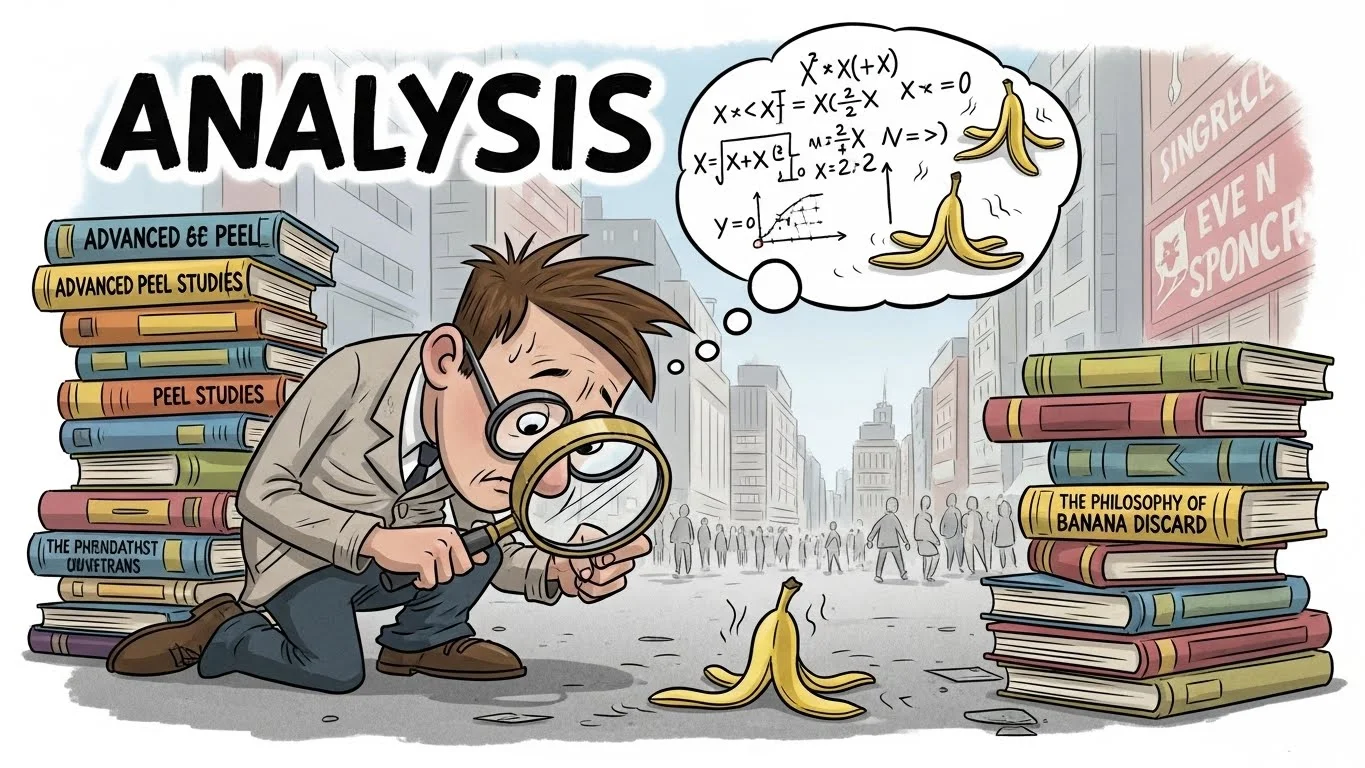
Analysis means carefully examining something to understand it better. It involves looking at details, patterns, causes, and results.
When you analyze something, you are not just looking at it—you are thinking deeply about what it means and how it works.
Simple Definition of Analysis
In simple words, analysis means breaking something into parts to study it clearly.
For example, instead of saying “This problem is confusing,” analysis helps you ask why it is confusing and how to solve it step by step.
Analysis Meaning in Everyday Language
In daily life, analysis happens more often than we realize. When you compare prices before buying a phone, you are doing analysis.
When you think about why your day went well or badly, that is also analysis.
Analysis Meaning in Education and Studies
In schools and colleges, analysis means thinking beyond memorization. Students analyze poems, stories, historical events, and scientific data.
Teachers often expect students to explain why and how, not just what.
Analysis Meaning in Business and Work
In business, analysis helps with decision-making. Companies analyze sales data, customer behavior, and market trends.
Business analysis helps organizations reduce risks and improve performance.
Analysis Meaning in Science
In science, analysis means studying data, experiments, and results to reach conclusions.
Scientists analyze numbers, chemicals, or patterns to discover facts and prove theories.
Analysis Meaning in Mathematics
In mathematics, analysis involves solving problems step by step. It focuses on understanding formulas, functions, and logical reasoning.
Mathematical analysis helps explain how and why answers are correct.
Analysis Meaning in Literature
In literature, analysis means examining characters, themes, symbols, and messages in a text.
Instead of summarizing a story, literary analysis explains the deeper meaning behind the words.
Analysis Meaning in Research
In research, analysis is the stage where collected data is reviewed and interpreted.
Researchers analyze surveys, interviews, and experiments to find useful insights.
Analysis Meaning in Technology and Data
In modern technology, analysis often refers to data analysis. This includes studying large amounts of information to find trends.
Examples include website traffic analysis and social media analysis.
Analysis Meaning in News and Media
In news, analysis goes beyond reporting facts. It explains the background, causes, and possible effects of events.
News analysis helps readers understand complex issues clearly.

Analysis Meaning in Psychology
In psychology, analysis involves studying thoughts, behavior, and emotions.
Psychological analysis helps professionals understand mental patterns and human behavior.
Analysis Meaning in Problem Solving
Problem-solving analysis means identifying the root cause of a problem.
Instead of guessing solutions, analysis helps find logical and effective answers.
Analysis vs Description: Key Difference
Description tells what something is like. Analysis explains why it is that way.
For example, describing a movie tells the story. Analyzing a movie explains its message and impact.
Analysis vs Evaluation
Analysis focuses on understanding parts and relationships. Evaluation focuses on judging value or quality.
Often, analysis comes before evaluation.
Common Examples of Analysis
Examples of analysis include:
Analyzing exam results
Analyzing a business report
Analyzing a situation before making a decision
All these involve careful thinking and understanding.
Common Misunderstandings About Analysis
Many people think analysis is too difficult or only for experts. This is not true.
Anyone can analyze by asking simple questions like “why,” “how,” and “what does this mean.”
Why Analysis Is Important
Analysis helps improve thinking skills. It leads to better decisions, clearer understanding, and smarter solutions.
In modern life, analysis is essential in education, careers, and personal growth.
How to Improve Your Analysis Skills
You can improve analysis by practicing critical thinking, reading carefully, and asking questions.
Breaking complex ideas into smaller parts makes analysis easier.
Modern Usage of the Word Analysis
Today, the word analysis is commonly used in digital marketing, data science, and artificial intelligence.
Despite modern usage, the core analysis meaning remains the same: understanding through careful examination.