
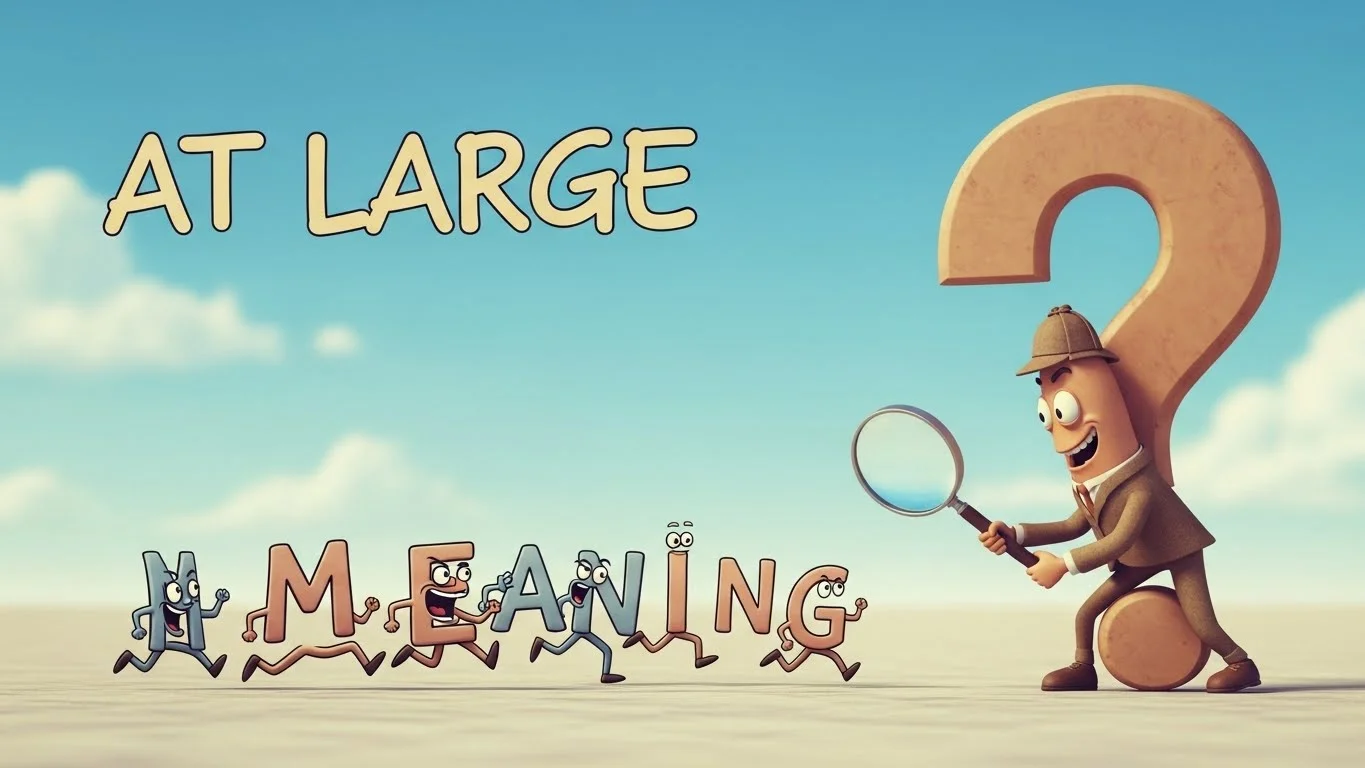
General Meaning of “At Large”
In general, “at large” refers to someone or something that is not confined or restricted. It suggests freedom of movement, often in the context of people, animals, or groups.
Legal Context: Criminals at Large
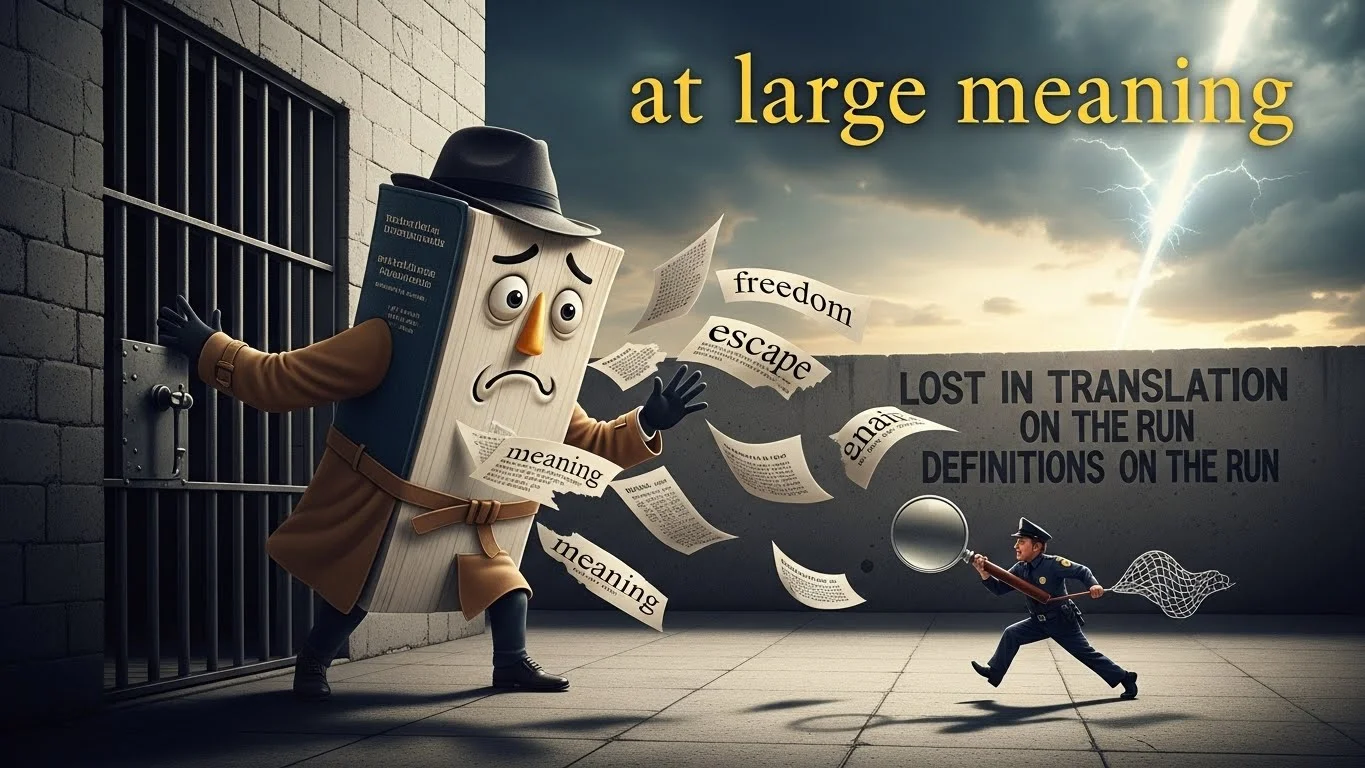
In legal or news contexts, “at large” often describes a criminal or suspect who has not been captured. For example, if someone has escaped custody, they are described as “at large.”
Political Context: Elected Officials at Large
In politics, “at large” can describe an official elected to represent an entire area rather than a specific district. For example, a city council member may serve at large, representing all residents rather than just one ward.
Everyday Usage
In everyday language, “at large” can refer to anyone or anything not limited to a specific place or group. For example, people might say, “The issue is a problem at large,” meaning it affects everyone.
Animals at Large
When talking about animals, “at large” refers to pets or wildlife that are roaming freely, not confined by a cage, fence, or leash.
Common Misunderstanding: “Overall”
Many people mistakenly use “at large” to mean “overall” or “generally,” which can sometimes work in context but is not the original meaning.
Synonyms for “At Large”
Some common synonyms include:
Free
Unconfined
Unrestricted
Escaped
Widespread
Opposite of “At Large”
The opposite would be terms like:
Confined
Captured
Restricted
Detained
Idiomatic Use
“At large” can also be used idiomatically to describe a situation or issue affecting the wider population rather than a specific part.
At Large in Journalism
Journalists often use “at large” to describe someone or something currently uncontrolled or not yet resolved. For example, “The fugitive remains at large.”
Modern Usage in Social Media
On social media, people sometimes use “at large” to describe trends or ideas that are widely spread. For example, “The rumor is still at large online.”
At Large in Literature
Writers use “at large” to convey freedom, danger, or influence, depending on context. It can add drama or tension to a story.
Grammar Tip
“At large” is usually used after a noun. Example:
Correct: “The suspect is still at large.”
Incorrect: “At large, the suspect is still.”
Plural vs. Singular
The phrase does not change for singular or plural subjects. Example:
Singular: “The tiger is at large.”
Plural: “The tigers are at large.”
At Large in Business
In business, “at large” might describe issues or trends affecting the entire market, not just one company.
Historical Origin
The phrase “at large” comes from Middle English, originally meaning “in general” or “unrestricted”, evolving to its current legal and everyday uses.
Cultural References
Movies, TV shows, and books often use “at large” when describing fugitives, escaped animals, or widespread problems.
Pronunciation and Stress
Pronounce it naturally: /ət lɑːrdʒ/. Stress usually falls on “large”.
Tips for Using “At Large” Correctly
Know your context: legal, political, everyday.
Avoid using it as a synonym for “overall” unless context clearly allows it.
Keep it after the noun it modifies.
Summary of Meanings
Legal: Fugitive not captured
Political: Representative of an entire area
General: Unrestricted, free, widespread
Animal: Roaming freely