What Does Attribute Mean in Simple Words
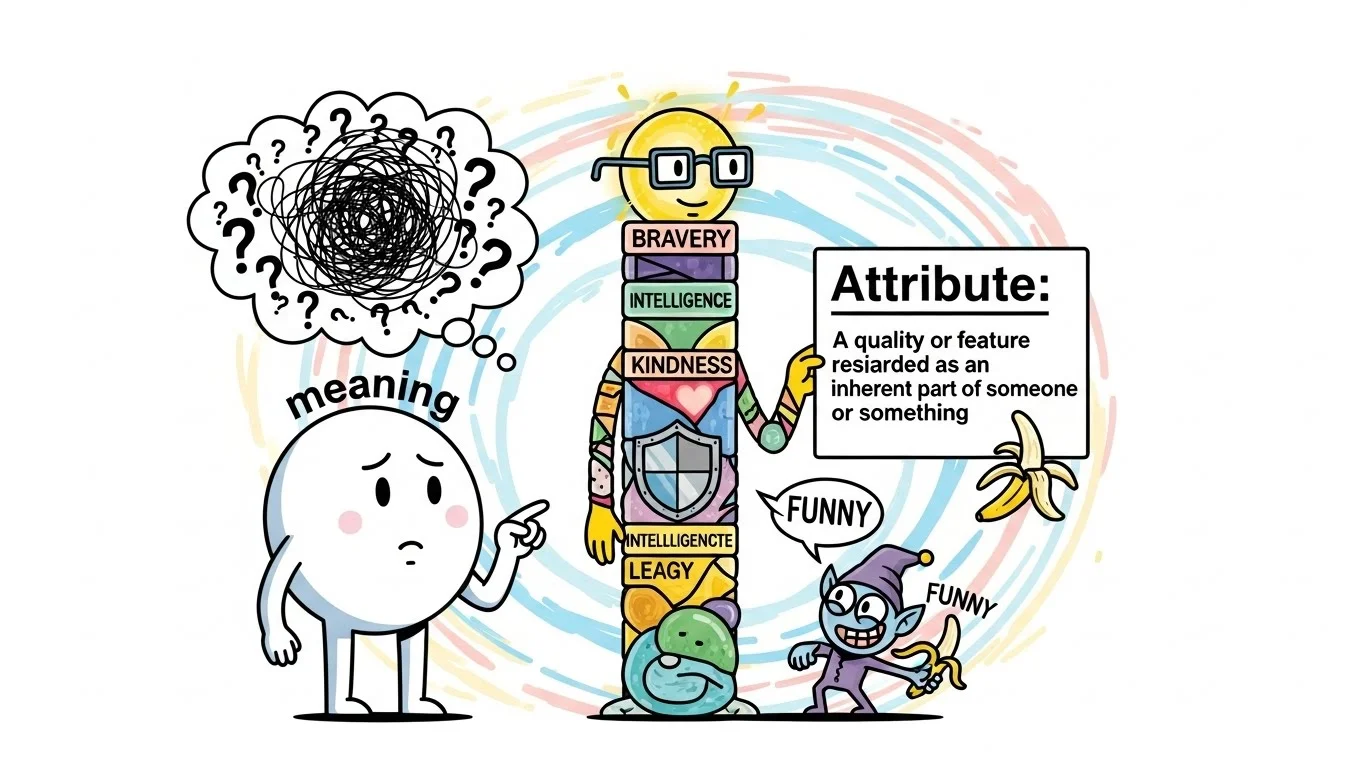
In the simplest sense, attribute means a quality or feature that something has. It describes what makes a person or thing the way it is.
For example, kindness is an attribute of a good person, and speed is an attribute of a fast car.
Attribute Meaning in Daily Life
In everyday life, attributes are the traits we notice about people and things. These can be physical, emotional, or behavioral.
For example, honesty may be an attribute of a trusted friend, while durability may be an attribute of a strong bag.
Attribute Meaning in General English
In standard English, attribute can be both a noun and a verb. As a noun, it refers to a quality or characteristic. As a verb, it means to consider something as being caused by a specific reason.
Both uses are common and important to understand.
Attribute as a Noun Explained
When used as a noun, an attribute is something that describes or defines a person or object.
Example: Patience is an important attribute of a teacher.
Here, patience describes a quality the teacher has.
Attribute as a Verb Explained
When used as a verb, attribute means to assign a cause or reason to something.
Example: She attributed her success to hard work.
This means she believes hard work is the reason for her success.
Attribute Meaning in Personality and Character
In personal development and psychology, attributes refer to personal traits like confidence, honesty, or creativity.
These attributes help define a person’s character and behavior in different situations.
Attribute Meaning in Education
In education, attributes often describe student qualities such as discipline, curiosity, or teamwork.
Schools may focus on developing positive attributes alongside academic skills.
Attribute Meaning in Business and Marketing
In business, attributes describe features of products or services. These could include price, quality, brand reputation, or customer support.
For example, reliability is a key attribute customers look for in a company.
Attribute Meaning in Technology and Computing
In technology, especially in programming and data systems, an attribute refers to a property or feature of an object or data item.
For example, in a database, a user may have attributes like name, email, and age.
Attribute Meaning in Grammar and Language
In grammar, attributes can describe words or phrases that give more information about a noun.
For example, adjectives are often used as attributes because they describe qualities like size, color, or shape.
Attribute Meaning in Science
In science, attributes are measurable characteristics of an object or system, such as weight, temperature, or color.
Scientists use attributes to observe, compare, and analyze data.
Attribute Meaning in Design and Art
In design and art, attributes refer to visual or stylistic features such as color, texture, shape, or layout.
These attributes influence how people experience and interpret a design.

Attribute Meaning in Modern Usage
In modern usage, attribute is often linked to data, analytics, and digital platforms. It is used to describe features, properties, or tracked behaviors.
For example, user attributes help apps personalize content and experiences.
Common Examples of Attribute
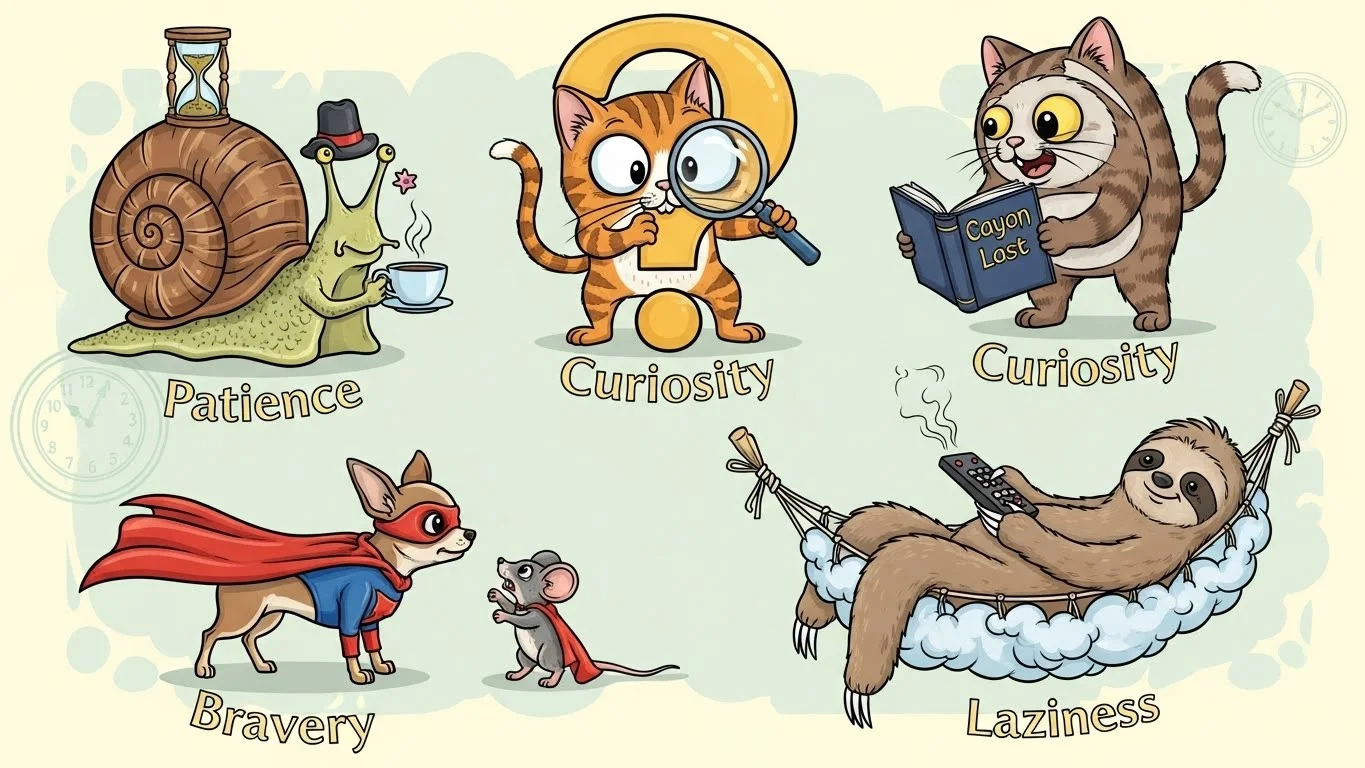
Some common examples of attributes include intelligence, strength, speed, beauty, honesty, and reliability.
Each of these describes a quality that defines or explains something.
How Attribute Is Used in Sentences
Attribute can appear in different sentence forms depending on its role.
As a noun: Creativity is her strongest attribute.
As a verb: He attributed the delay to traffic.
Difference Between Attribute and Trait
Although similar, attribute is broader than trait. A trait usually refers to a natural or long-term quality, especially in people.
An attribute can be temporary, learned, or assigned to objects, systems, or situations.
Difference Between Attribute and Quality
Quality often refers to how good or bad something is, while attribute simply describes a feature or characteristic.
For example, size is an attribute, while excellence is a quality.
Common Misunderstandings About Attribute
One common misunderstanding is thinking attribute only applies to people. In reality, it applies to objects, systems, data, and ideas.
Another confusion is mixing up the noun and verb forms, which have different meanings.
Why Understanding Attribute Meaning Matters
Understanding the attribute meaning helps you communicate clearly, especially in professional, academic, and technical settings.
It also improves reading comprehension and writing accuracy.
How to Identify an Attribute
To identify an attribute, ask what quality, feature, or characteristic describes the subject.
If the word explains what something is like or why something happened, it is likely an attribute.