
What Does Cognition Mean?
Cognition means the mental process of gaining knowledge and understanding through thinking, learning, remembering, and reasoning.
Simple Explanation of Cognition Meaning
In simple words, cognition is how your brain thinks and understands things.
Cognition Meaning in Psychology
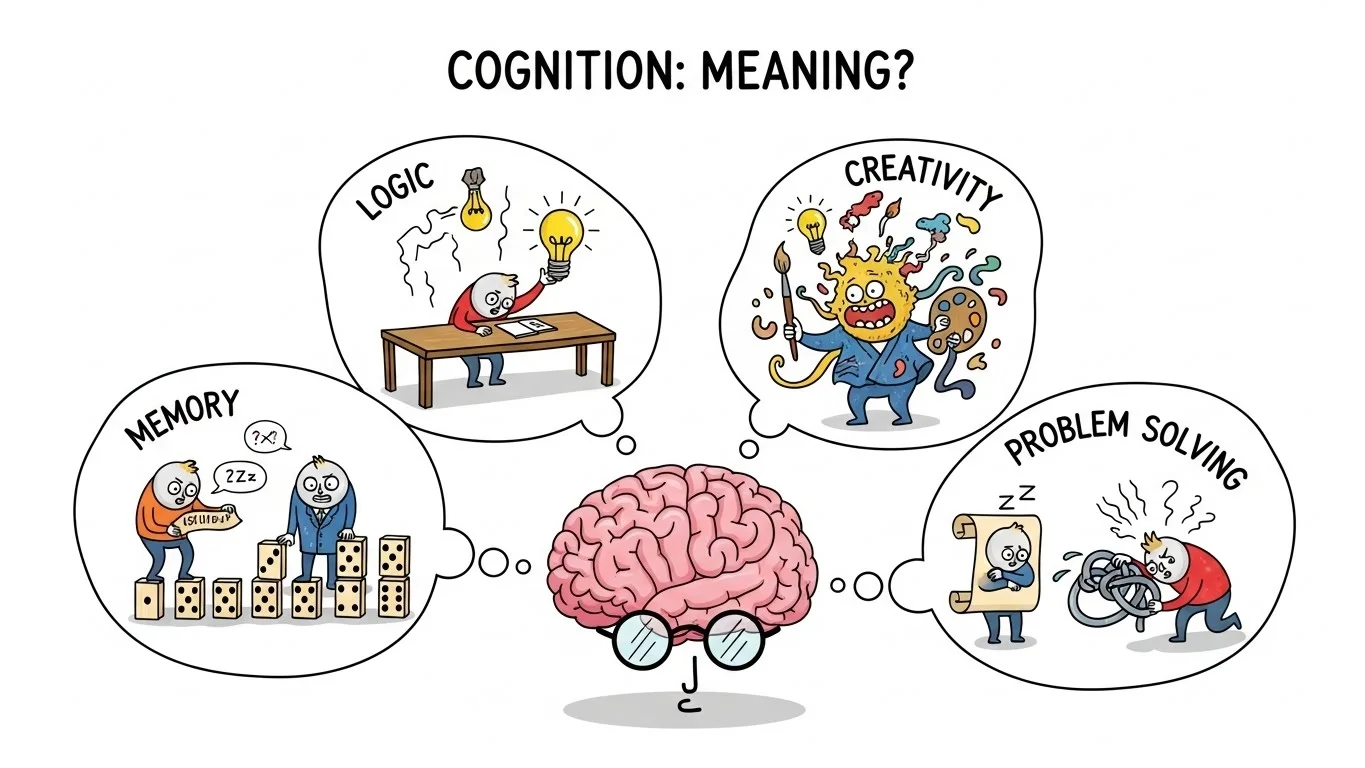
In psychology, cognition refers to all mental activities involved in processing information, such as perception, memory, and problem-solving.
Cognition Meaning in Daily Life
In everyday life, cognition is used when you read, learn, make decisions, recognize people, or solve problems.
Cognition and Thinking
Thinking is a core part of cognition and includes analyzing, comparing, judging, and imagining.
Cognition and Memory
Memory is a key cognitive function that allows you to store and recall information.
Cognition and Learning
Learning happens through cognition when the brain absorbs, processes, and understands new information.
Cognition and Perception
Perception is how the brain interprets what you see, hear, smell, taste, and touch, which is part of cognition.
Cognition and Decision-Making
Decision-making involves cognition because it requires evaluating options and choosing actions.
Cognition Meaning in Education
In education, cognition refers to how students understand, process, and apply knowledge.
Cognition Meaning in Child Development
Cognition plays a major role in how children learn language, solve problems, and understand the world.
Cognition Meaning in Aging
As people age, changes in cognition can affect memory, attention, and processing speed.
Cognition vs Intelligence
Cognition refers to mental processes, while intelligence refers to overall mental ability.
Cognition vs Consciousness
Cognition is about thinking and understanding, while consciousness is about being aware.
Types of Cognitive Processes
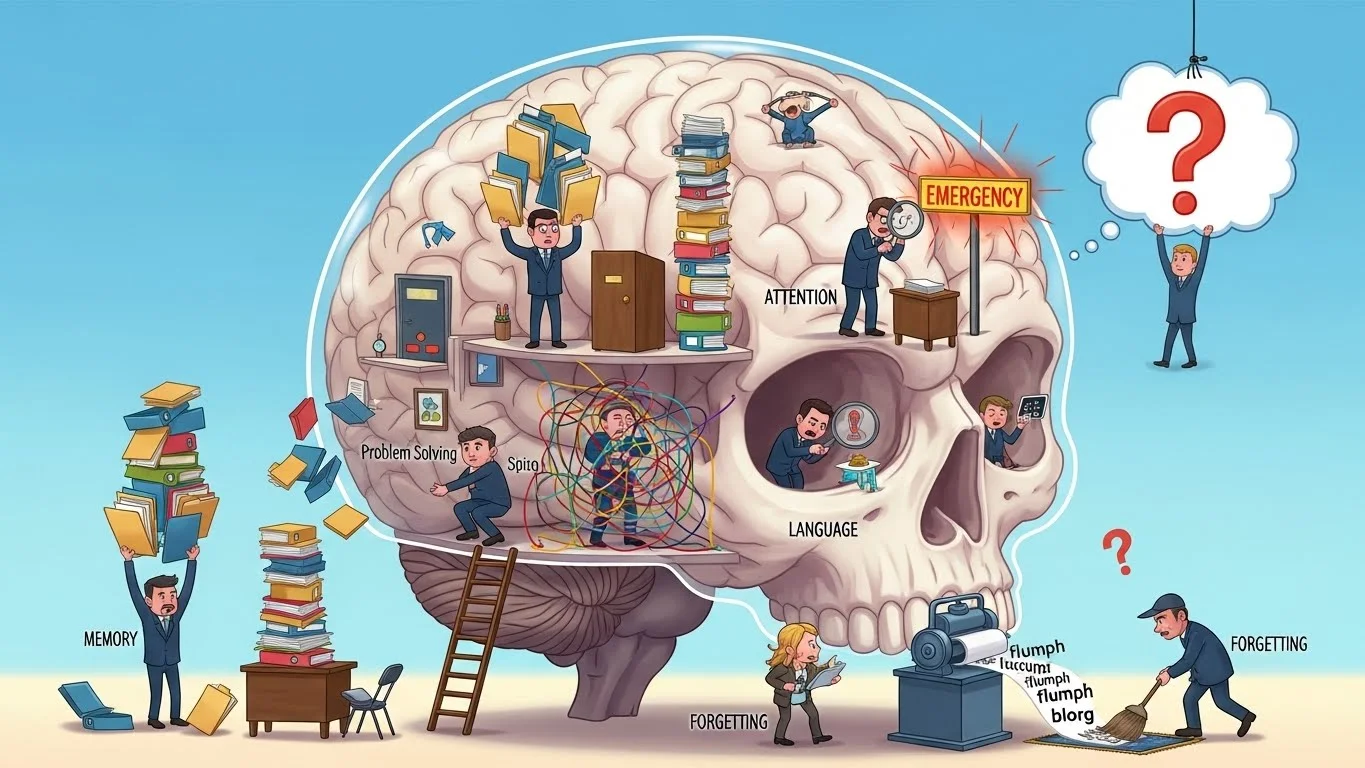
Common cognitive processes include attention, memory, language, reasoning, and problem-solving.
Cognition Meaning in Modern Science
In modern science, cognition is studied in psychology, neuroscience, and artificial intelligence.
Cognition Meaning in Technology
In technology, cognition is used to describe systems that simulate human thinking, such as cognitive computing.
Common Examples of Cognition
Examples include recognizing a face, learning a new skill, solving a puzzle, or understanding a sentence.
Common Misunderstandings About Cognition
Some people think cognition only means intelligence, but it actually includes many mental processes.

Why Cognition Is Important
Cognition affects learning, behavior, communication, and decision-making, making it essential for daily life.
Cognition Meaning for English Learners
For learners, cognition means how the mind works to understand and think.