


Damsel Meaning in Simple Words
The basic damsel meaning is a young woman or girl. Traditionally, it refers to an unmarried woman, often someone seen as gentle or delicate.
Historical Origin of the Word Damsel
The word damsel comes from the Old French word demoiselle, which meant a young lady of noble birth. Over time, the meaning spread into English and became more general.
How Damsel Was Used in the Past
In earlier centuries, damsel was a respectful term. It was commonly used in poetry, fairy tales, and medieval stories to describe young women, especially those of high status.
Damsel Meaning in Literature and Fairy Tales
In classic stories, a damsel is often portrayed as beautiful, kind, and in need of help. This image became very popular in legends and fantasy tales.
What Does “Damsel in Distress” Mean?
“Damsel in distress” describes a female character who is in danger and needs saving, usually by a hero. This phrase strongly shaped how people understand the damsel meaning today.
Damsel Meaning in Modern English
In modern English, damsel is rarely used in everyday conversation. When it is used, it often sounds old-fashioned or humorous rather than serious.
Is Damsel a Positive or Negative Word?
The word itself is neutral, but its meaning can feel negative depending on context. Some people see it as outdated because it suggests weakness or helplessness.
Why the Word Damsel Feels Outdated Today
Modern society values independence and equality. Because damsel is linked to old ideas about women needing protection, many people avoid using it.
Damsel Meaning in Movies and Pop Culture
Movies and games still use the term, often as a stereotype. Sometimes it is used seriously, and other times it is used to criticize or joke about outdated roles.
Damsel Meaning in Feminist Discussions
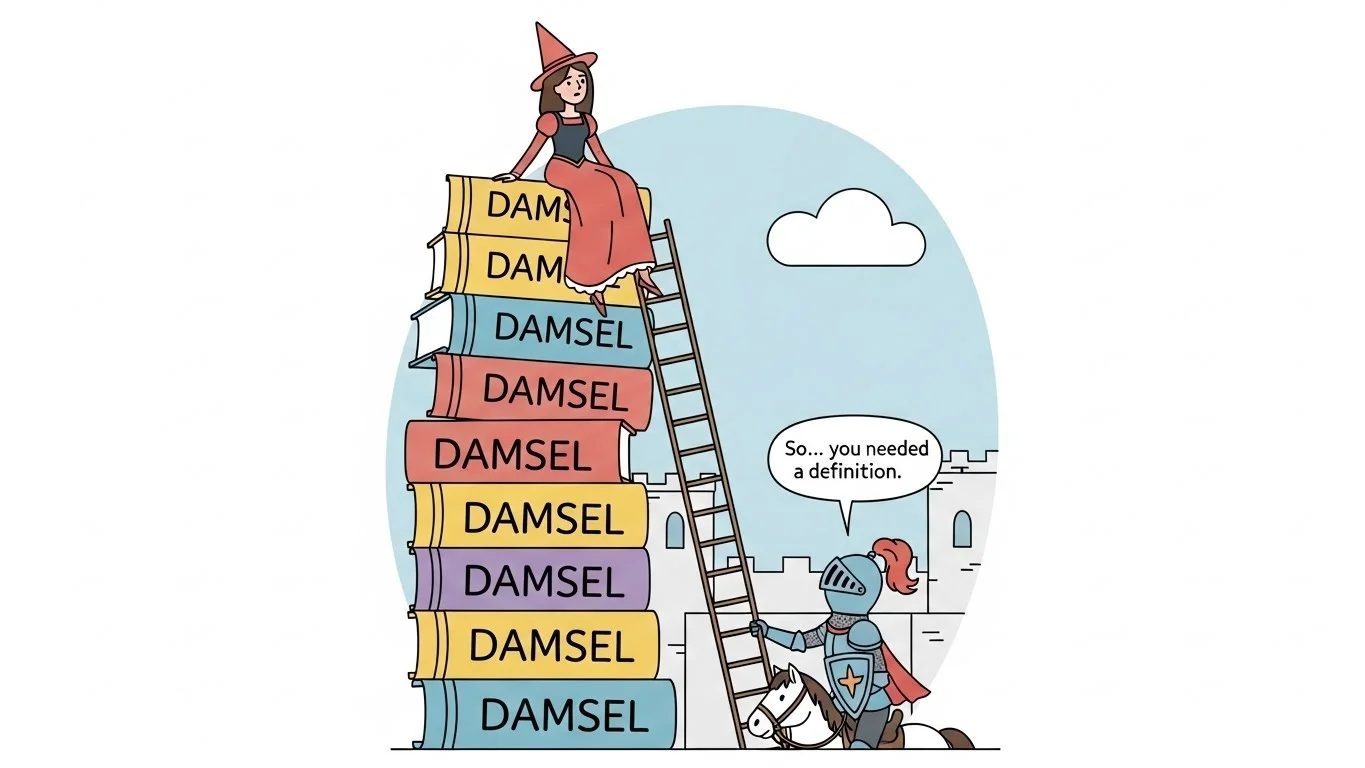
In feminist conversations, damsel often represents a harmful stereotype. It is used to describe portrayals that limit women to passive roles.
Can Damsel Be Used as a Joke?
Yes, damsel is sometimes used humorously or sarcastically. For example, someone may jokingly call themselves a damsel to mock old-fashioned thinking.
Damsel vs Girl vs Woman
Unlike “girl” or “woman,” damsel carries historical and emotional meaning. It suggests youth, innocence, and dependence, which the other words do not.
Is It Rude to Call Someone a Damsel?
Calling someone a damsel without context can sound rude or insulting. It may suggest that the person is weak or incapable, even if that was not intended.
Damsel Meaning in Daily Conversation
In daily conversation, damsel is uncommon. Most people prefer clear, modern terms like “woman,” “young woman,” or “person.”
Common Misunderstandings About Damsel Meaning
Many people think damsel simply means “girl.” In reality, it carries deeper cultural and historical ideas that affect how it is received.
How Context Changes the Meaning of Damsel
The damsel meaning changes depending on tone and setting. In literature, it may feel poetic. In real life, it may feel awkward or inappropriate.
Should You Use the Word Damsel Today?
Using damsel is best limited to storytelling, historical discussion, or humor. It is usually not suitable for formal or respectful modern conversation.
Damsel Meaning in Writing and Storytelling
Writers may still use damsel to create a classic or fantasy feel. However, many modern stories avoid it to present stronger female characters.
Modern Alternatives to the Word Damsel
Instead of damsel, use words like “woman,” “heroine,” or “character.” These terms sound more natural and respectful today.
Why Understanding Damsel Meaning Matters
Knowing the true damsel meaning helps you understand old stories and avoid misunderstandings. It also helps you choose words that fit modern values.