

What Does Emancipated Minor Mean in Simple Terms
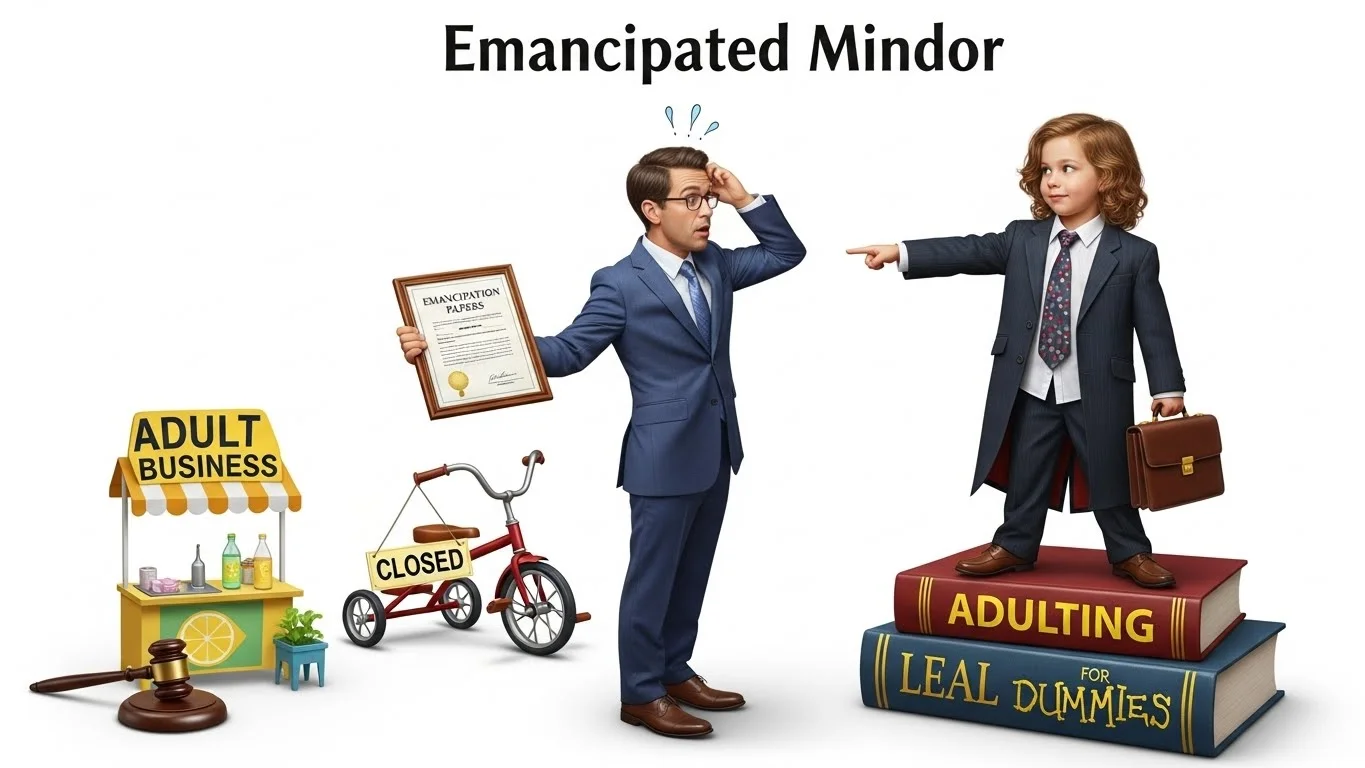
An emancipated minor is a person under the age of 18 who is legally treated as an adult for certain decisions.
This means the minor:
Is no longer under parental control
Can make some legal decisions independently
Takes responsibility for themselves
The Basic Legal Definition of an Emancipated Minor
Legally, an emancipated minor is a child who has been released from the care and authority of their parents or guardians by law.
Emancipation can happen through:
Court approval
Marriage
Military service
Financial independence (in some cases)
Why Emancipation Exists
Emancipation exists to:
Protect minors who are already living independently
Allow responsible minors to manage their own lives
Address special family or financial situations
It recognizes that some minors function as adults before age 18.
Emancipated Minor Meaning in Family Law
In family law, emancipation means:
Parents are no longer legally responsible for the child
Child support may end
The minor controls personal and financial decisions
However, rules vary by location.
How a Minor Becomes Emancipated
A minor may become emancipated by:
Filing a court petition
Proving self-support
Showing maturity and stability
Some jurisdictions allow automatic emancipation through marriage or military enlistment.
Emancipated Minor Meaning in Court
In court, emancipation means the judge recognizes the minor as capable of:
Managing finances
Making healthcare decisions
Living independently
The court’s focus is the minor’s best interest.
Rights of an Emancipated Minor
An emancipated minor may have the right to:
Sign contracts
Decide where to live
Consent to medical treatment
Manage personal income
These rights depend on local laws.
Responsibilities of an Emancipated Minor
With rights come responsibilities.
An emancipated minor must:
Pay rent and bills
Manage finances
Follow adult legal obligations
Support themselves financially
Parents are no longer responsible.
Emancipated Minor Meaning in Healthcare
In healthcare, emancipation allows minors to:
Make medical decisions
Access treatment without parental consent
Control medical records
This is especially relevant in emergencies or long-term care.
Emancipated Minor Meaning in Education
In education, an emancipated minor may:
Enroll in school independently
Make academic decisions
Handle financial aid matters
Some schools require legal proof of emancipation.
Emancipated Minor Meaning in Employment
For employment, emancipation can allow minors to:
Work without parental permission
Sign job-related documents
Manage earnings independently
Labor laws may still apply.
Emancipated Minor vs Adult
Although emancipated minors gain many adult rights, they are not fully adults.
They may still face limits on:
Voting
Alcohol use
Certain legal privileges
Age-based laws still apply.
Emancipated Minor vs Runaway
These are very different situations.
Emancipated minor: legally independent
Runaway: left home without legal approval
Runaway status does not grant adult rights.
Common Reasons Minors Seek Emancipation
Common reasons include:
Financial independence
Unsafe home environments
Early career or education opportunities
Marriage or parenthood
Each case is evaluated individually.
Is Emancipation Permanent?
In most cases, emancipation is permanent until the minor reaches adulthood.
It cannot easily be reversed unless the court allows it.
Does Emancipation End Parental Support?
Yes, emancipation usually ends:
Parental control
Child support obligations
Legal responsibility
The minor becomes self-supporting.
Emancipated Minor Meaning Around the World
Laws vary by country and region.
Some places:
Allow court-based emancipation
Recognize marriage-based emancipation
Do not formally recognize emancipation at all
Local law always matters.
Common Misunderstandings About Emancipated Minors
Many people think emancipation:
Makes a minor fully adult
Happens automatically at a certain age
Removes all legal limits
In reality, it grants limited adult rights.

Should a Minor Seek Emancipation?
Emancipation is a serious legal step.
It requires:
Financial stability
Emotional maturity
Long-term planning
It is not suitable for every situation.
Why the Term Emancipated Minor Is Important
Understanding this term helps:
Parents know their responsibilities
Minors understand their rights
Professionals handle legal and medical matters correctly
Clarity prevents legal confusion.