


Glaze Meaning in Simple Terms
In simple terms, glaze means a smooth, shiny coating applied to a surface.
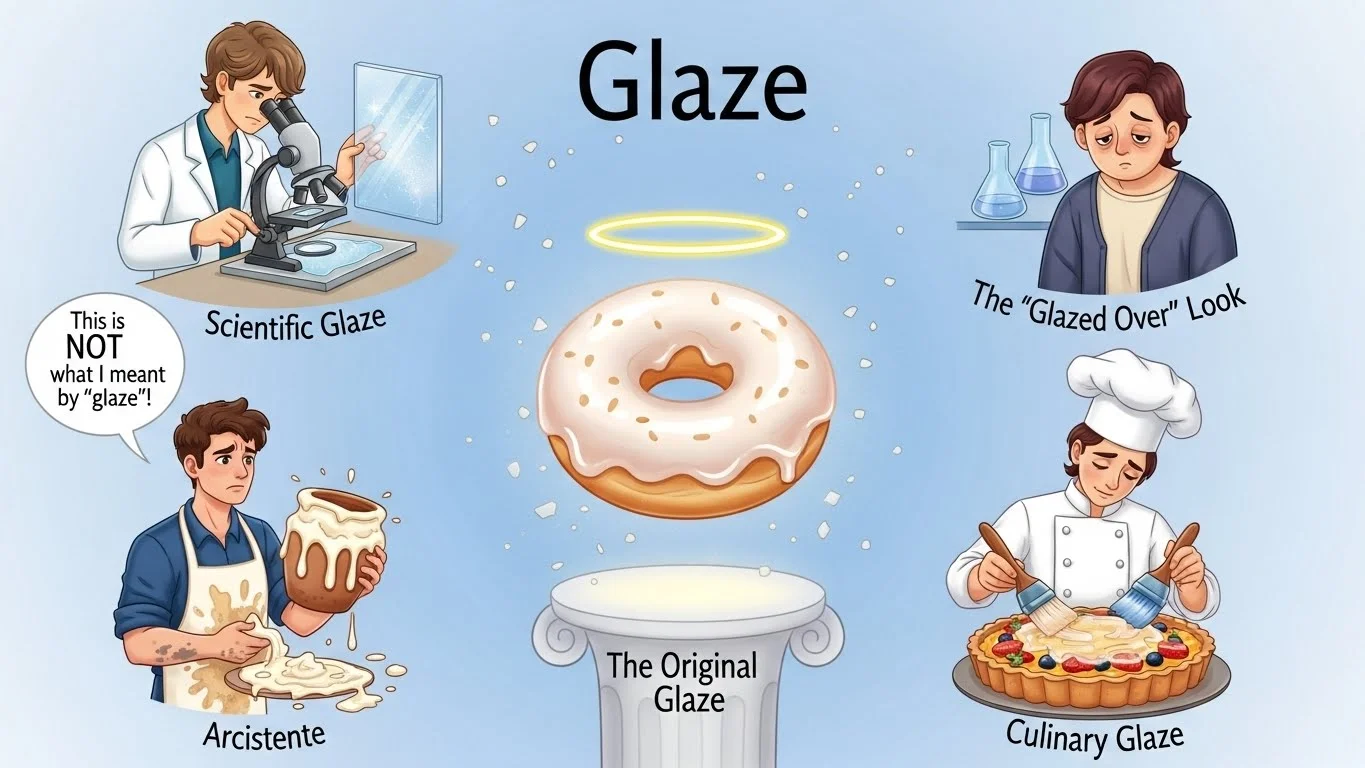
It can be something you add to food, pottery, or objects, or it can describe a look in someone’s eyes that appears dull or unfocused.
Basic Dictionary Meaning of Glaze
Dictionary definitions of glaze usually describe it as a thin, glossy layer applied to something.
The glaze meaning often involves covering, smoothing, or sealing a surface to change its appearance or texture.
Glaze Meaning in Cooking and Food
In cooking, a glaze is a shiny coating applied to food, often made from sugar, honey, sauces, or fat.
The glaze meaning here is to enhance flavor, appearance, and moisture, especially on meats, pastries, and desserts.
Glaze Meaning in Baking
In baking, glaze commonly refers to a thin icing poured over cakes, donuts, or pastries.
This glaze meaning focuses on sweetness, shine, and visual appeal rather than thickness.
Glaze Meaning in Meat and Savory Dishes
For savory dishes, a glaze is often brushed onto meat while cooking.
Here, the glaze meaning includes caramelization, flavor layering, and a glossy finish.
Glaze Meaning in Art and Painting
In art, a glaze is a transparent layer of paint applied over another layer.
The glaze meaning in painting is to add depth, richness, or color without hiding what’s underneath.
Glaze Meaning in Pottery and Ceramics
In pottery, glaze is a glass-like coating applied before firing.
This glaze meaning includes decoration, waterproofing, and surface protection for ceramic objects.
Glaze Meaning in Manufacturing and Materials
In manufacturing, glaze can refer to a glossy finish applied to tiles, paper, or surfaces.
The glaze meaning here relates to durability, smoothness, and visual quality.
Glaze Meaning as a Verb
As a verb, glaze means to coat something with a smooth or shiny layer.
For example, you can glaze a cake, glaze pottery, or glaze over details.
Glaze Meaning in Facial Expressions
When describing a person, glaze refers to a dull, blank, or unfocused look in the eyes.
This glaze meaning suggests boredom, shock, exhaustion, or lack of attention.
Glaze Meaning in Emotional Contexts
Emotionally, “to glaze over” means losing interest or mental focus.
The glaze meaning here is metaphorical, describing mental detachment rather than a physical coating.
Glaze Meaning in Everyday Speech
In daily conversation, glaze is often used casually.
People might say someone’s eyes glazed over during a long explanation, meaning they stopped paying attention.
Glaze Meaning in Modern Usage
In modern language, glaze keeps its core idea of covering or dulling.
Whether physical or emotional, the glaze meaning usually involves something becoming smooth, shiny, or less sharp.
Glaze Meaning vs Frosting
Glaze is thinner and shinier than frosting.
The glaze meaning emphasizes light coating, while frosting is thick and creamy.
Glaze Meaning vs Varnish
Glaze and varnish are similar but not identical.
Varnish is usually for protection, while the glaze meaning focuses on finish and appearance.
Common Misunderstandings About Glaze
A common misunderstanding is thinking glaze always refers to food.
In reality, the glaze meaning applies across art, emotions, and materials.
Is Glaze Always Shiny?
Not always, but most glazes create a smooth or glossy effect.
Even when describing eyes, the glaze meaning implies a smooth, glassy appearance.
Glaze Meaning in Idioms and Phrases
Phrases like “eyes glazed over” are common.
In these cases, the glaze meaning is symbolic rather than physical.
When Not to Use the Word Glaze
Avoid using glaze vaguely in technical writing unless the context is clear.
Because it has many meanings, clarity is important.

Why Glaze Meaning Depends on Context
The word glaze is flexible but consistent in concept.
Its meaning always connects to coating, covering, or dulling in some way.
Why Understanding Glaze Meaning Matters
Understanding glaze helps you interpret instructions, descriptions, and conversations accurately.
It prevents confusion between literal and metaphorical uses.