
What Is the Basic Meaning of Pedestrian?
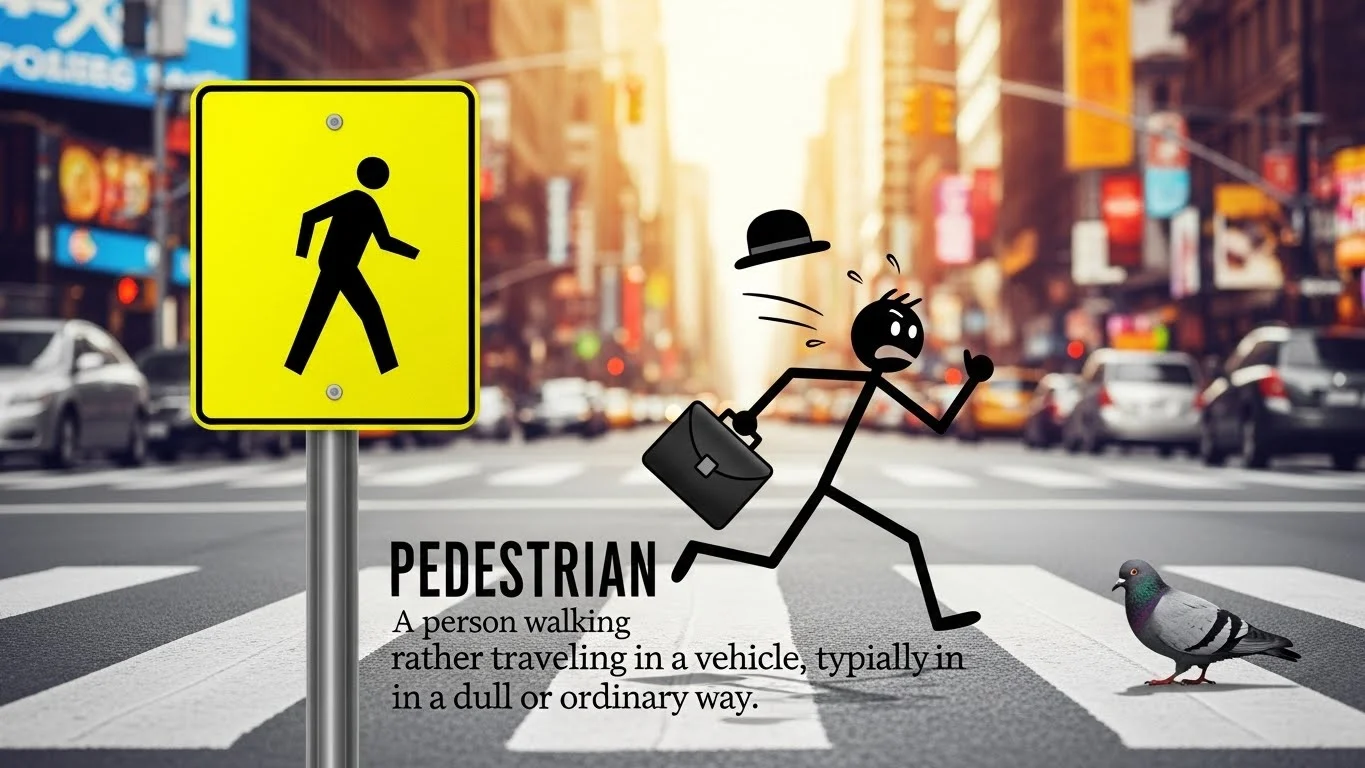
At its core, “pedestrian” refers to a person who is walking, especially on a street or in a city. It is the most common and straightforward use of the word.
Pedestrian in Daily Life
In everyday life, you see pedestrians crossing streets, walking on sidewalks, or strolling in parks. The term is often used in traffic rules to emphasize safety.
Pedestrian in Traffic Rules
Traffic signs and road regulations often use “pedestrian” to indicate areas meant for people walking. For example, “Pedestrian Crossing” signs alert drivers to stop or slow down.
Pedestrian vs. Driver
While a driver operates a vehicle, a pedestrian moves on foot. The distinction is important in safety rules and urban planning.
Pedestrian in Figurative Language
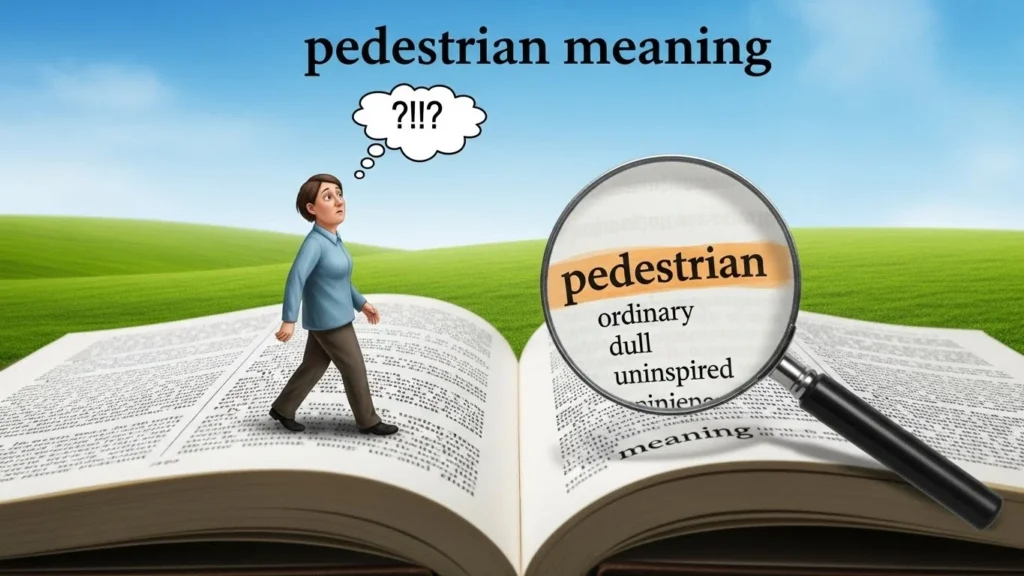
Beyond walking, “pedestrian” can describe something dull or ordinary. For example, a “pedestrian idea” means a common or unremarkable concept.
Modern Usage of Pedestrian
In contemporary English, the word can describe ideas, art, or performances that are uninspired or routine. It is often used in critiques or reviews.
Pedestrian in Literature
Writers sometimes use “pedestrian” metaphorically to highlight ordinary or unremarkable aspects of life. It helps contrast routine versus extraordinary experiences.
Common Misunderstandings
Many confuse “pedestrian” with “pedestrianized,” which refers to areas restricted to walking only. Another mistake is thinking it always has a negative meaning.
Pedestrianized Areas
A pedestrianized area is a street or zone where vehicles are not allowed, making it safer and more comfortable for walking.
Safety Tips for Pedestrians
Pedestrians should always use crosswalks, obey traffic signals, wear visible clothing at night, and stay alert for vehicles.
Pedestrian in Urban Planning
Urban designers focus on creating pedestrian-friendly areas with sidewalks, crossings, and traffic calming measures to encourage walking.
Pedestrian vs. Hiker
While pedestrians walk in cities or towns, hikers usually walk in nature trails, mountains, or countryside areas.
Pedestrian in Sports
In sports contexts, “pedestrian” can describe a player or performance lacking energy, excitement, or creativity.
Pedestrian in Technology
In autonomous vehicle development, “pedestrian detection” systems are crucial for identifying people on foot to prevent accidents.
Pedestrian in Fashion
Sometimes, the term is used figuratively in fashion to describe simple or unremarkable clothing styles.
Pedestrian Etiquette
Respecting others, walking at a safe pace, and avoiding distractions like phones are key rules for pedestrians in crowded areas.
Pedestrian Statistics
Cities often track pedestrian traffic to plan infrastructure, improve safety, and reduce congestion in busy areas.
How to Avoid Being “Pedestrian” Figuratively
To avoid pedestrian ideas or presentations, aim for originality, creativity, and engaging approaches in work or projects.

Fun Facts About Pedestrians
Many cities hold pedestrian days, events, or parades to promote walking and reduce vehicle traffic for environmental benefits.
Why Understanding Pedestrian Meaning Matters
Knowing both literal and figurative uses of “pedestrian” helps in communication, writing, urban navigation, and understanding modern critiques.