
What RGB Means
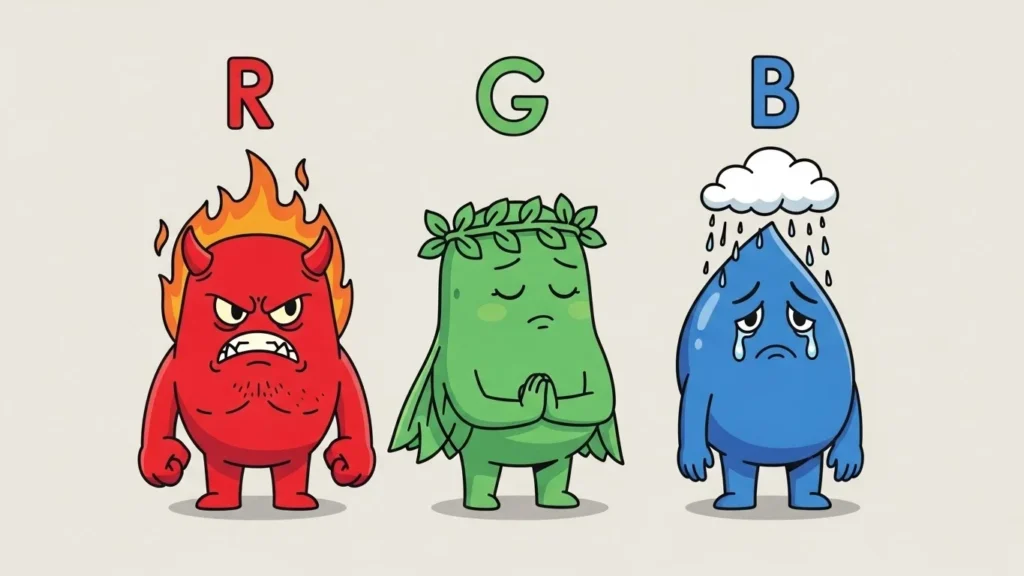
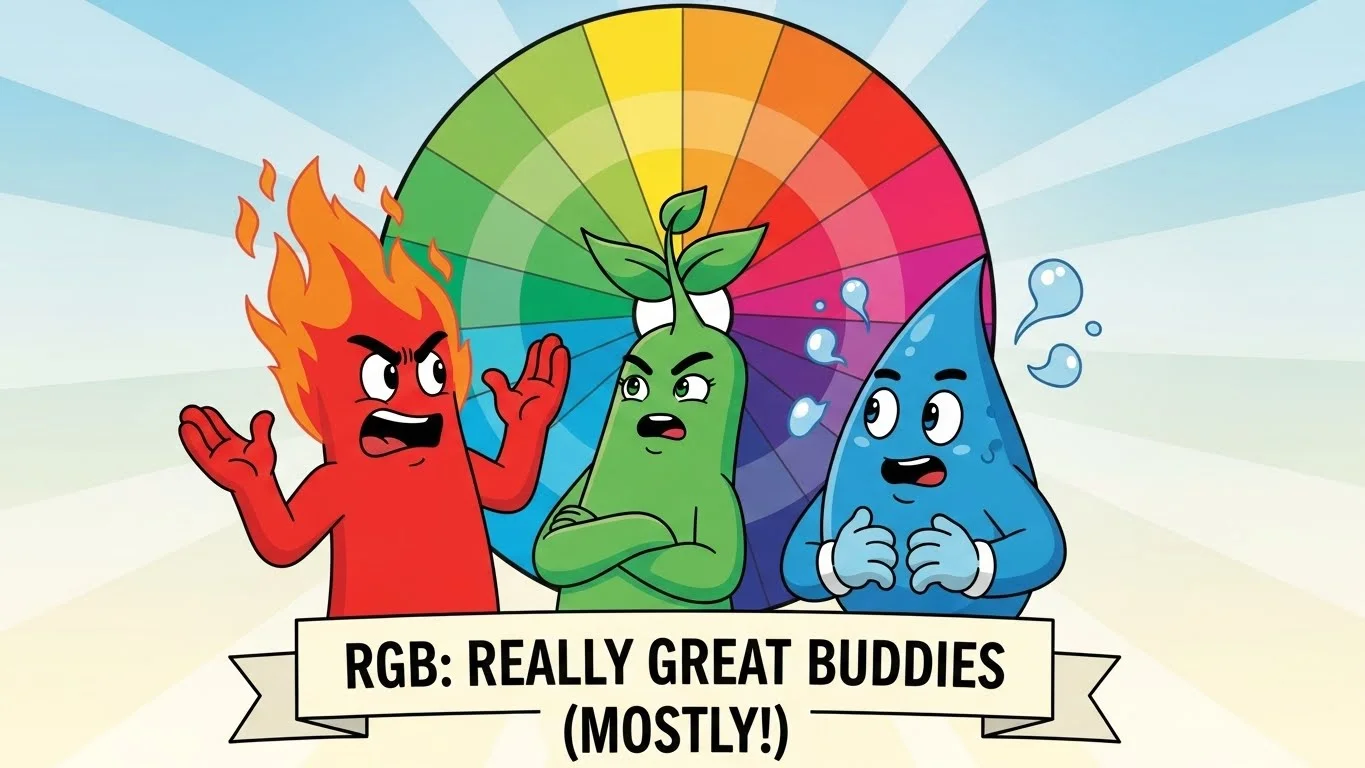
The RGB meaning comes from three primary colors: Red, Green, and Blue. RGB is a color model used to create colors by combining different amounts of red, green, and blue light.
When these three colors are mixed together in different strengths, they can produce millions of colors that you see on digital screens.
What RGB Stands For
RGB stands for:
R = Red
G = Green
B = Blue
These three colors are called additive primary colors, meaning they create colors by adding light together rather than mixing paint.
Why RGB Uses Red, Green, and Blue
Human eyes have special cells that detect red, green, and blue light. Because of this, screens use these three colors to match how our eyes naturally see color.
By adjusting the brightness of red, green, and blue light, screens can recreate almost any visible color.
How the RGB Color Model Works
In the RGB color model, each color has a value that controls how strong it appears. These values are combined to form a final color.
When all three colors are used together at full strength, the result is white. When none are used, the result is black.
RGB Values Explained Simply
RGB values are usually written as three numbers, such as:
RGB(255, 0, 0) = Red
RGB(0, 255, 0) = Green
RGB(0, 0, 255) = Blue
Each number ranges from 0 to 255, showing how much of each color is used.
What RGB Means in Daily Life
You interact with RGB every day, even if you don’t realize it. Examples include:
Phone and laptop screens
TVs and monitors
Digital photos and videos
Website colors
Any device that emits light usually uses RGB to display color.
RGB Meaning in Digital Screens
All modern screens use tiny pixels made of red, green, and blue subpixels. These subpixels turn on and off at different strengths to create images.
This is why RGB is essential for digital displays, from smartphones to large LED billboards.
RGB Meaning in Web Design
In web design, RGB controls background colors, text colors, and images. Designers often use RGB or HEX codes to ensure colors appear correctly across devices.
For example, CSS and design tools rely heavily on RGB values to define visual styles.
RGB Meaning in Graphic Design
Graphic designers use RGB when creating digital designs meant for screens. This includes:
Social media graphics
Digital ads
App interfaces
Website visuals
RGB is preferred because it matches how screens display color.
RGB Meaning in Photography
In digital photography, images are captured and stored using RGB color data. Camera sensors record light in red, green, and blue channels, which are combined to form full-color images.
Photo editing software allows adjustments to each RGB channel for color correction.
RGB Meaning in Video and Film
Video production also relies on RGB. Every frame of a video is made up of RGB pixels, allowing accurate color reproduction on screens.
Color grading tools often adjust red, green, and blue levels separately.

RGB Meaning in Gaming
In gaming, RGB is known both for screen color and lighting effects. Many gaming devices feature RGB lighting that changes color using the same RGB color system.
The visuals you see in games are also rendered using RGB color values.
RGB Meaning in LED Lighting
RGB LEDs combine red, green, and blue lights to produce different colors. These lights are popular in smart homes, decorations, and stage lighting.
By controlling RGB levels, users can choose millions of colors.
RGB vs CMYK: Key Differences
RGB is often confused with CMYK, but they serve different purposes:
RGB is used for screens and digital displays
CMYK is used for printing with ink
RGB adds light, while CMYK subtracts light by absorbing colors.
Why RGB Is Called an Additive Color Model
RGB is additive because colors are created by adding light together. The more light added, the brighter the color becomes.
This is different from paint mixing, where colors get darker when combined.
Common Misunderstandings About RGB
Some people think RGB is only for designers or tech experts. In reality, RGB affects anyone who uses digital screens.
Another misunderstanding is that RGB and HEX are different systems, when HEX is simply another way to write RGB values.
RGB Meaning in Modern Technology
RGB continues to be essential in modern technology, including:
Virtual reality
Augmented reality
Artificial intelligence imaging
Medical imaging
As screen technology improves, RGB remains the foundation of color display.
How RGB Affects Color Accuracy
Correct RGB values ensure colors look natural and consistent across devices. Poor RGB calibration can cause images to look too warm, too cool, or unnatural.
This is why professionals often calibrate screens.
RGB Meaning in Software and Apps
Most apps rely on RGB to display icons, buttons, and visuals. Developers use RGB values to maintain consistent branding and user experience across platforms.
RGB also plays a role in dark mode and accessibility settings.
Why RGB Still Matters in 2025
Despite new technologies, RGB remains the global standard for digital color. From phones to advanced displays, RGB continues to power visual experiences in everyday life.
Understanding RGB helps users make better choices in design, media, and technology.